When figuring out exactly what to eat in Rome, your focus should be on the traditional local dishes rather than generic Italian food. Roman cuisine is rooted in simple, high-quality ingredients like Pecorino Romano cheese, guanciale (cured pork cheek), and seasonal vegetables. From the four classic pastas to deep-fried street food, eating well here requires knowing what to order and where to find it.
For a complete overview of the city’s logistics and neighbourhoods, check out our comprehensive Rome guide. If you are travelling further afield, you can also explore our broader Italy guide.
The Philosophy of Roman Food: La Cucina Povera
To understand the local diet, you first need to understand the concept of la cucina povera, or “peasant cooking”. Historically, Rome was not a wealthy city for the average citizen. The local food culture was built on making the most of cheap, readily available ingredients.
This philosophy means nothing goes to waste. Tough cuts of meat are slow-cooked for hours, stale bread is repurposed into thick soups, and simple pasta shapes are elevated with sharp local cheeses and rendered pork fat. The beauty of Roman food lies in this simplicity; dishes rarely have more than four or five ingredients, meaning the quality of each component is paramount.
What to Eat in Rome: The Four Classic Pastas
Pasta in Rome is built on a strict hierarchy of ingredients. The city is famous for four specific pasta dishes, all sharing a common foundation. If you are mapping out your Rome Itinerary: How to Spend 1, 2 or 3 Days, make sure to schedule at least one traditional pasta meal per day.
Cacio e Pepe
The simplest of the four translates to “cheese and pepper”. It consists solely of pasta (usually thick tonnarelli noodles), aged Pecorino Romano, cracked black pepper, and starchy pasta water. These simple ingredients are vigorously emulsified into a rich, creamy sauce. There is absolutely no cream or butter involved.
Getting the emulsion right is notoriously difficult, making it a true test of a Roman chef’s skill. For a highly reliable and famous version, try Roma Sparita in Trastevere, where it is served in a crispy Parmesan bowl, or the historic Felice a Testaccio.
La Gricia
Often referred to as a “white amatriciana”, pasta alla gricia takes the base of cacio e pepe and adds crispy chunks of guanciale. The rendered pork fat mixes with the cheese and pasta water to create a rich, salty coating that clings to the noodles.
Rigatoni or mezze maniche are the standard pasta shapes used here, as their hollow centres and ridged edges catch the meat perfectly. Da Enzo al 29 in Trastevere serves a phenomenal gricia, though you should expect to queue for a table.
Carbonara
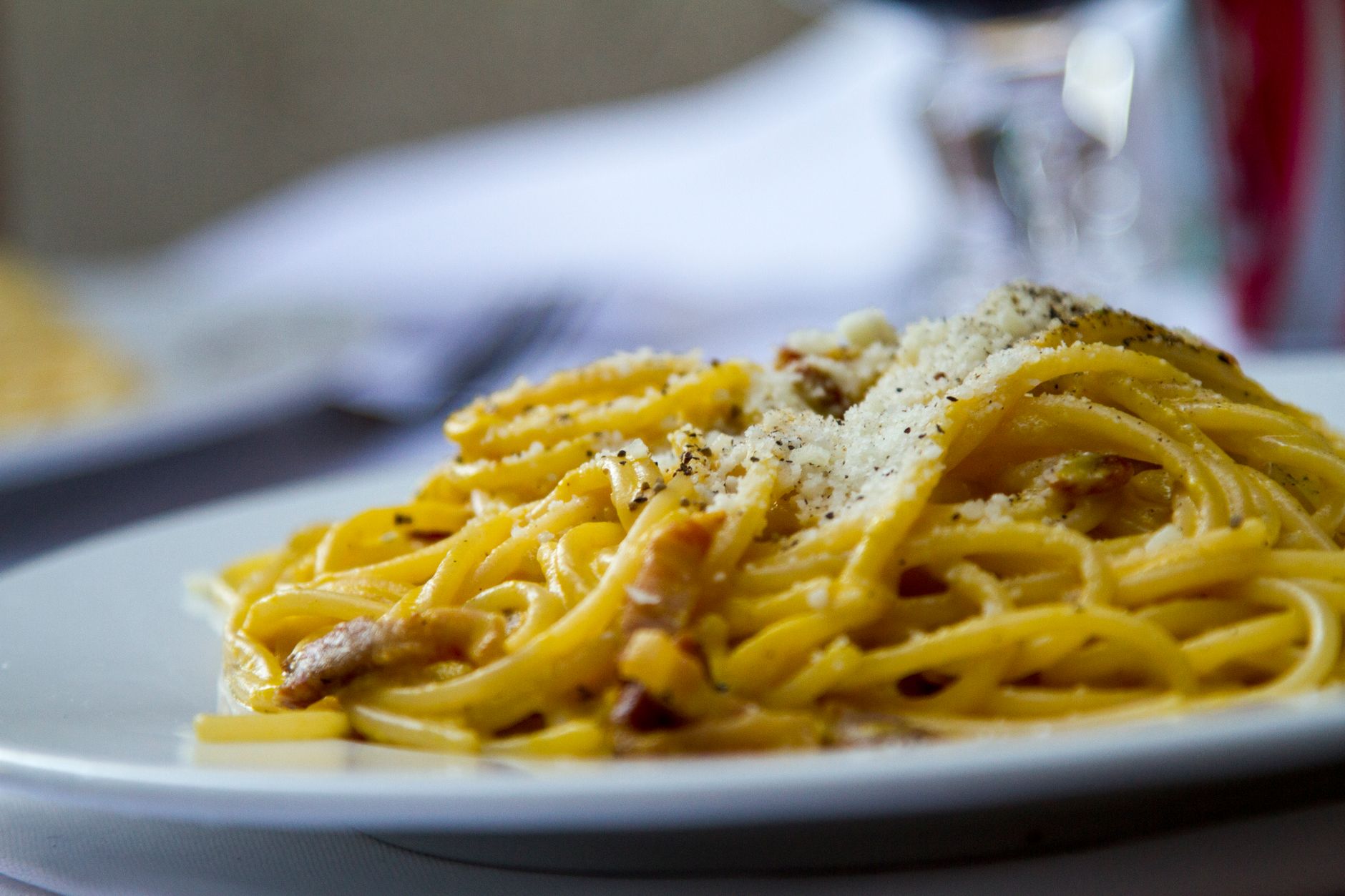
Authentic Roman carbonara contains no cream, no garlic, and certainly no peas. It relies entirely on egg yolks, Pecorino Romano, guanciale, and black pepper. The residual heat of the cooked pasta gently cooks the eggs into a thick, golden sauce.
Spaghetti or rigatoni are the traditional pairings. Roscioli Salumeria con Cucina, located near Campo de’ Fiori, serves one of the most famous, albeit expensive, versions in the city. For a more rustic setting, Flavio al Velavevodetto in Testaccio is an excellent choice.
Amatriciana
The only tomato-based sauce of the four classic pastas, amatriciana combines sweet crushed tomatoes with savoury guanciale, a heavy dusting of Pecorino Romano, and a hint of chilli flakes. Bucatini—a thick, hollow spaghetti—is the traditional pairing, though rigatoni is also common.
Armando al Pantheon serves an exceptional amatriciana just steps from the historic monument. It is one of the few truly excellent restaurants located immediately next to a major tourist attraction.
Street Food and Quick Bites
Rome has a strong culture of eating on the go, making it easy to grab an inexpensive, high-quality lunch between sightseeing stops.
Pizza al Taglio
Roman pizza is fundamentally different from Neapolitan pizza. Pizza al taglio (pizza by the slice) is baked in large rectangular trays and sold by weight. You indicate how big a slice you want, the server cuts it with scissors, weighs it, and heats it up.
The crust is airy, crisp, and strong enough to hold heavy toppings. Grab a slice from Bonci Pizzarium near the Vatican after exploring the Vatican Museums and Sistine Chapel. For a classic, unpretentious slice, Forno Campo de’ Fiori is a historic bakery serving simple pizza bianca (olive oil and salt) and pizza rossa (tomato sauce).
Supplì
A staple Roman street food, supplì are oblong, deep-fried rice balls. The classic version is filled with rice simmered in a meat and tomato ragù, with a core of mozzarella cheese that stretches like a telephone wire when you bite it in half (hence the traditional name, supplì al telefono).
You will find them in almost every pizzeria and deli, usually costing between $2 and $4. Supplizio in the historic centre elevates the humble supplì with high-end ingredients and offers variations like cacio e pepe.
Trapizzino
A modern addition to Roman street food, the trapizzino was invented in 2008. It is a triangular pocket of freshly baked pizza bianca dough stuffed with traditional Roman stews. Fillings include chicken cacciatore, meatballs in sauce, or braised oxtail.
It is the perfect way to taste slow-cooked Roman classics without sitting down for a formal meal. You can find Trapizzino locations in Testaccio, Trastevere, and near Termini station.
Traditional Roman Mains (Secondi)
Roman main courses are hearty and traditionally rely on cheaper cuts of meat, known as the “quinto quarto” (the fifth quarter).
Offal and the Quinto Quarto
The working-class neighbourhood of Testaccio is the historic home of Rome’s slaughterhouse, giving rise to dishes based on offal. Trippa alla Romana (tripe simmered in tomato sauce with wild mint and pecorino) and Coda alla Vaccinara (oxtail stewed for hours with celery, tomatoes, and pine nuts) are absolute staples.
Checchino dal 1887 in Testaccio is the traditional institution for these dishes, having served slaughterhouse workers over a century ago.
Saltimbocca alla Romana
If offal is not appealing, saltimbocca is a lighter, highly popular alternative. Thin slices of veal are topped with prosciutto and fresh sage, pinned together with a toothpick, and pan-fried in white wine and butter.
The name translates to “jumps in the mouth”, a nod to the punchy, savoury flavours. It is a quick-cooking dish found on almost every traditional trattoria menu.
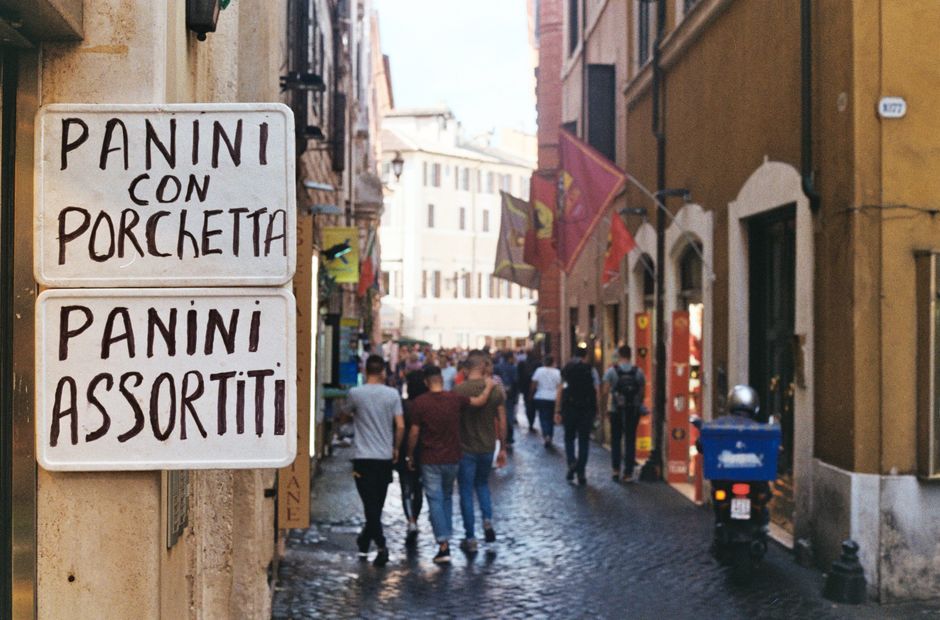
Seasonal Vegetables and Artichokes
Roman cuisine relies heavily on the seasons. Puntarelle (crisp chicory shoots dressed with anchovy and garlic) appear in winter, while courgette flowers stuffed with mozzarella and anchovies are battered and fried in summer. The availability of these dishes depends heavily on the season. To understand when local produce is at its peak, read our Best Time to Visit Rome: Month-by-Month Guide.
Carciofi alla Romana vs Carciofi alla Giudia
Artichokes (carciofi) are the true stars of Roman produce, and there are two distinct ways to eat them. Carciofi alla Romana are stuffed with garlic, wild mint, and parsley, then braised in olive oil and water until tender enough to cut with a fork.
Carciofi alla Giudia (Jewish-style artichokes) are flattened and deep-fried whole until the leaves become crispy like potato crisps, while the heart remains soft. The best place to eat the latter is in the Jewish Ghetto at historic restaurants like Nonna Betta or Ba’Ghetto.
Sweets, Pastries, and Gelato
A Roman breakfast is typically sweet, and gelato is a daily ritual for locals and visitors alike.
Maritozzo
The maritozzo is a sweet, yeasted bun sliced open and generously filled with barely sweetened whipped cream. It is a traditional Roman breakfast pastry, best eaten standing at a bar with a hot cappuccino.
Regoli Pasticceria, located near Piazza Vittorio Emanuele II, has been serving the city’s best maritozzi since 1916. Be prepared to get cream on your nose.
Artisanal Gelato
When deciding what to eat in Rome for dessert, gelato is the obvious choice. Look for gelaterias where the gelato is stored in metal tubs with lids (pozzetti), which indicates proper temperature control and natural ingredients. Avoid mountains of brightly coloured gelato piled high in display cases.
Otaleg in Trastevere and Neve di Latte near the MAXXI museum are excellent artisanal options. Avoid the overpriced tourist traps right on the main squares. If you are in the historic centre, read our Trevi Fountain tips to find better authentic gelaterias just a few streets away.
Local Food Markets
Exploring a local market is easily one of the best things to do in Rome. It is the best way to see Roman ingredients before they reach the kitchen.
Mercato di Testaccio
This modern, covered market is a brilliant mix of fresh produce stalls and excellent street food vendors. You can buy fresh pasta, local cheeses, and cured meats to take home. Box 15 (Mordi e Vai) is famous for sandwiches filled with traditional Roman stews, making it a perfect lunch stop.
Mercato Trionfale
Located just north of the Vatican, this is one of the largest neighbourhood markets in Italy. It has over 200 stalls selling everything from fresh fish to seasonal vegetables and bulk wine. It is a working market, largely untouched by tourism, offering a genuine slice of Roman daily life.
Understanding the Italian Menu
Roman menus follow a traditional Italian structure. You are not expected to order a dish from every course, but understanding the layout helps you navigate the meal.
| Menu Term | What It Means | Typical Roman Examples |
|---|---|---|
| Antipasti | Starters or appetisers | Bruschetta, fried courgette flowers, supplì, cured meats. |
| Primi | First courses (usually pasta or soup) | Carbonara, cacio e pepe, amatriciana, gricia. |
| Secondi | Main courses (meat or fish) | Saltimbocca, coda alla vaccinara, roast lamb (abbacchio). |
| Contorni | Side dishes (vegetables) | Puntarelle, braised artichokes, chicory sautéed with garlic. |
| Dolci | Desserts | Tiramisu, panna cotta, crostata (jam tart). |
Dining Etiquette and Tipping in Rome
Understanding local dining customs will help you navigate Roman restaurants without stress.
Meal Times
Romans eat late. Lunch is typically between 1:00 PM and 3:00 PM. Dinner service rarely begins before 7:30 PM, and locals usually book tables for 8:30 PM or 9:00 PM. If a restaurant is full at 6:30 PM, it is catering entirely to tourists.
Coperto and Tipping
Most traditional trattorias will add a “pane e coperto” (bread and cover charge) to your bill, usually costing between $2 and $4 per person. Because service staff are paid a standard wage, tipping is not mandatory in Italy. However, rounding up the bill or leaving a few euros in coins for good service is appreciated.
Coffee Rules
In Rome, a cappuccino is a breakfast drink. Ordering one after a meal or late in the afternoon will mark you as a tourist. After 11:00 AM, locals drink an espresso (simply called “un caffè”). You pay at the till first, then take your receipt to the barista and drink your coffee standing at the bar.
Vegetarian and Dietary Requirements
Despite the heavy use of pork in the classic pastas, Rome is highly accommodating for vegetarians. Cacio e pepe, pizza bianca, fried courgette flowers, and braised artichokes are all naturally meat-free. Most restaurants will happily modify a dish if asked.
For gluten-free (senza glutine) travellers, Italy is incredibly progressive. The Italian Celiac Association (AIC) trains and certifies restaurants across the country. You will find many traditional trattorias offering high-quality gluten-free pasta, and dedicated gluten-free bakeries are scattered throughout the city.
Plan Your Trip
Organising your meals around your sightseeing schedule is the best way to ensure you eat well. Being within walking distance of great trattorias is a major factor when choosing where to stay in Rome: best areas and hotels.
For dinner, cross the river and use our Trastevere guide to find the most authentic dining spots amidst the cobblestone streets. During the day, before heading to the Monti neighbourhood for a hearty lunch, make sure you have your Colosseum tickets and tours explained so you don’t miss your entry slot.
Finally, if you need a break from heavy Roman pastas, consider heading into the countryside on one of the best day trips from Rome for wine tasting in the Castelli Romani or fresh coastal seafood in Ostia.