The Vatican Museums and Sistine Chapel house one of the world’s largest and most significant art collections, spanning 7 km of galleries within Vatican City. You will walk through centuries of Roman sculptures, Renaissance frescoes, and papal history before reaching Michelangelo’s famous ceiling. Because it is one of the most visited sites in Europe, planning your tickets and timing is essential to avoid hours of waiting.
What to Expect Inside the Vatican Museums and Sistine Chapel
The Vatican Museums are not a single building, but a massive complex of interconnected papal palaces. The route is largely one-way, designed to funnel visitors toward the Sistine Chapel at the very end. You cannot visit the chapel on its own; you must walk through the museum galleries to get there.
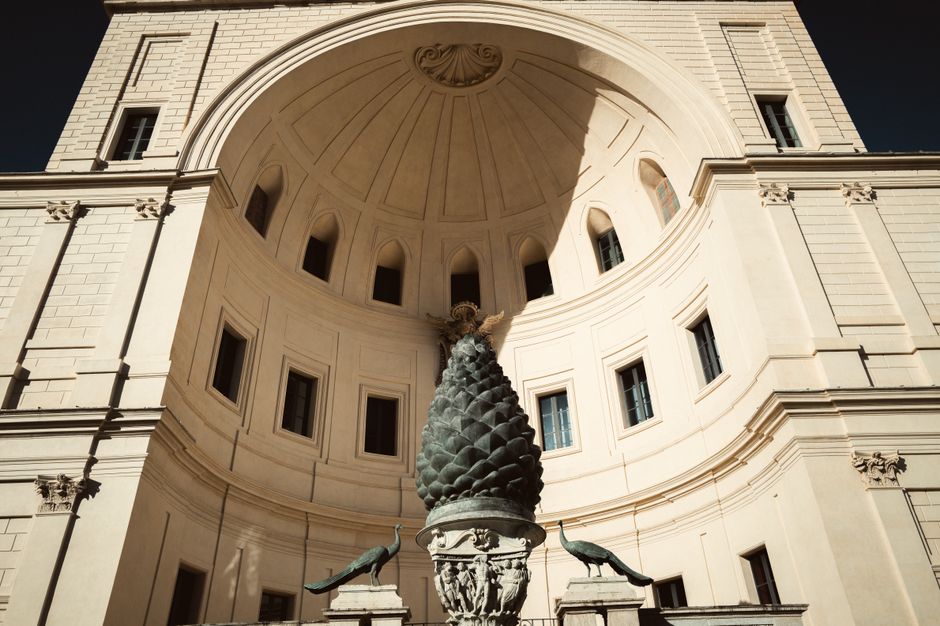
The sheer volume of art can be overwhelming. The collection was started by Pope Julius II in the early 16th century and has grown to include roughly 70,000 works. As you navigate the corridors, you will pass through several distinct museums and galleries. The Pio-Clementino Museum is a major highlight, home to classical Greek and Roman masterpieces like the Laocoön and His Sons and the Apollo Belvedere. From there, the path leads through the Pinecone Courtyard, named for the massive bronze pinecone dating back to ancient Rome.
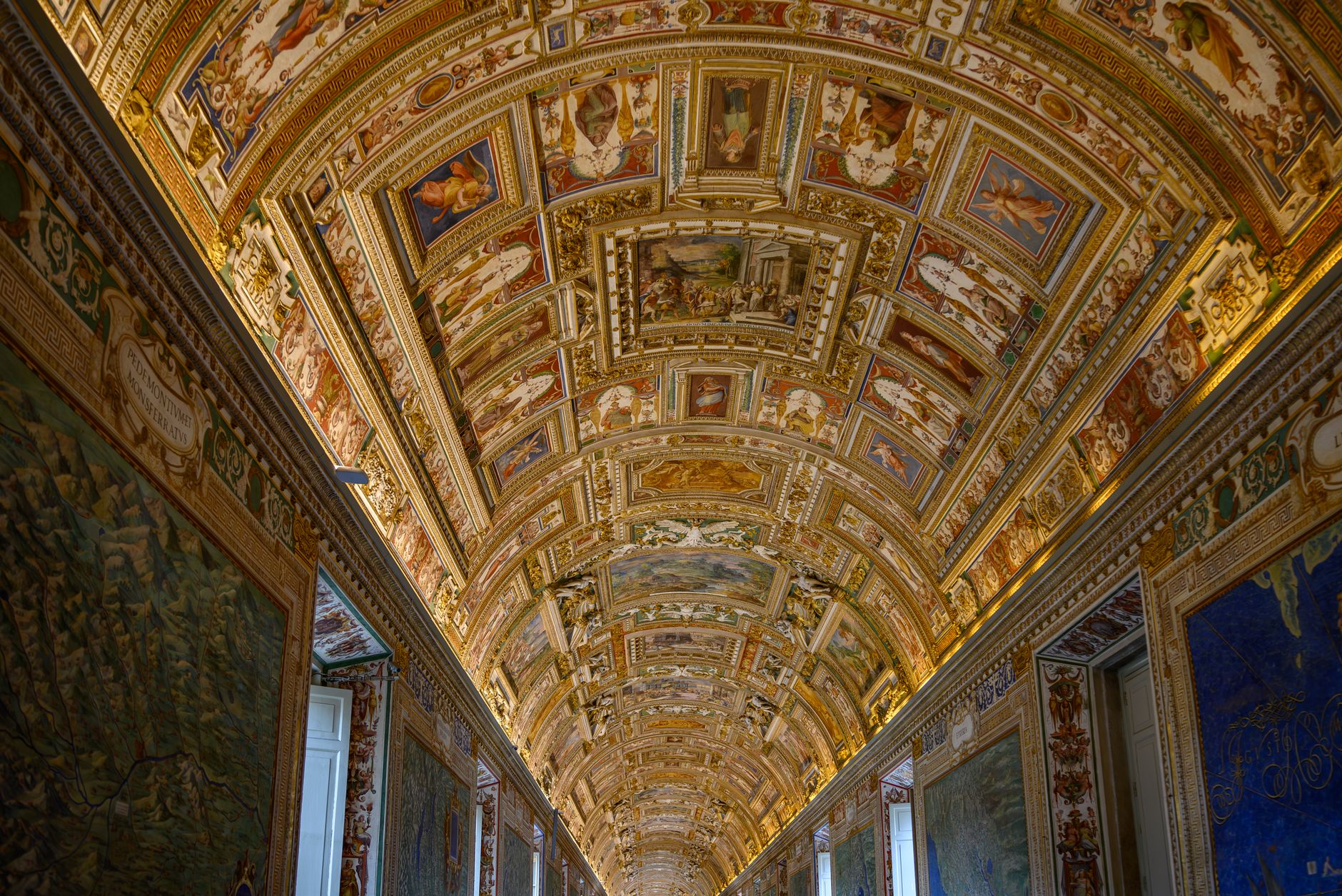
Further along, you will walk through three famous corridors: the Gallery of the Candelabra, the Gallery of Tapestries, and the Gallery of Maps. The latter is a stunning 120-metre corridor painted with topographical maps of Italy, commissioned in 1580. The ceiling here is so vibrant and detailed that many visitors mistake it for the Sistine Chapel itself.
Before reaching the end of the route, you will enter the Raphael Rooms. These four reception rooms were painted by Raphael and his workshop, featuring the iconic fresco The School of Athens. The Vatican is always at the top of the Best Things to Do in Rome, and the scale of these specific rooms is exactly why.
If you have extra time, you can also explore the Borgia Apartments, which feature stunning frescoes by Pinturicchio, and the Collection of Contemporary Art, which houses works by modern masters like Dalí, Chagall, and Matisse. At the very end of your visit, as you leave the museums, you will walk down the famous double-helix Bramante Staircase, designed by Giuseppe Momo in 1932.
The Sistine Chapel Experience
The Sistine Chapel is the final stop on the standard museum route. It serves as the Pope’s private chapel and the room where the papal conclave is held to elect a new pope. The walls feature frescoes by Renaissance masters like Botticelli and Perugino, but the main draw is Michelangelo’s work.
Michelangelo painted the ceiling between 1508 and 1512, depicting nine scenes from the Book of Genesis, including The Creation of Adam. Twenty-five years later, he returned to paint The Last Judgment on the altar wall, a massive and complex depiction of the second coming of Christ. The room is usually packed with people, and guards constantly patrol the floor, shushing the crowd and enforcing the strict no-photography rule. You will have time to stand and admire the frescoes, but you cannot sit on the floor or linger indefinitely.
How to Get There
The museum entrance is located on Viale Vaticano, which is a 15-minute walk from St. Peter’s Square. Do not go to the square if you are looking for the museum entrance; they are on completely different sides of the Vatican walls.
If you are taking public transport, ride Metro Line A to either Ottaviano or Cipro stations. From either stop, it is a straightforward 10-minute walk to the entrance. Alternatively, Tram 19 stops at Piazza del Risorgimento, just a 5-minute walk away. Taxis can also drop you right at the door on Viale Vaticano. If you want to be within walking distance for an early morning tour, look at the Prati neighbourhood in our guide on Where to Stay in Rome: Best Areas and Hotels.
Tickets and Costs
Booking in advance is mandatory. The Vatican recently introduced nominative tickets to stop scalpers, meaning your ticket must match your passport or physical ID exactly. You will be denied entry if the names do not match.
- Official Tickets: Standard entry is €20 plus a €5 online booking fee (around $26–$28 USD). Buy these directly on the official Vatican ticketing website. They sell out weeks in advance, especially during the spring and autumn peak seasons.
- Guided Tours: Expect to pay $60–$100 USD for a small-group tour. This is often worth the premium because a good guide will navigate the crowds, explain the context of the art, and keep you on pace.
- The Basilica Shortcut: Many guided tours use a dedicated passageway from the Sistine Chapel directly into St. Peter’s Basilica. This bypasses the massive security line in St. Peter’s Square, saving you up to an hour of waiting. Note that this door is strictly for guided tour groups; independent visitors are usually turned away and must exit the museums to queue in the square.
Just like the Vatican, the city’s ancient sites require advance planning. Read our Colosseum Tickets and Tours Explained to get your logistics sorted for the rest of your trip.
Opening Hours and the Best Time to Visit
The museums are open Monday to Saturday from 8:00 am to 7:00 pm, with the last entry at 5:00 pm. During the high season (March through October), Friday and Saturday hours extend to 8:00 pm, with the last entry at 6:00 pm.
| Day of the Week | Standard Hours | High Season (Mar-Oct) |
|---|---|---|
| Monday – Thursday | 8:00 am – 7:00 pm | 8:00 am – 7:00 pm |
| Friday – Saturday | 8:00 am – 7:00 pm | 8:00 am – 8:00 pm |
| Sunday | Closed | Closed |
The museums are closed on Sundays, except for the last Sunday of the month when entry is free from 9:00 am to 2:00 pm. Avoid this free Sunday unless you are on a strict budget, as the crowds are crushing and the queues wrap around the Vatican walls.
Mondays are notoriously busy because most other museums in Rome are closed. The best time of day to visit is either the earliest possible slot (8:00 am) or late in the afternoon (after 3:00 pm) when the large tour groups have moved on. Crowds vary wildly depending on the season, so consult our Best Time to Visit Rome: Month-by-Month Guide before booking.
How Much Time Do You Need?
Plan for at least three hours inside the Vatican Museums and Sistine Chapel. The route covers roughly 7 km, and you will be moving at the pace of the crowd through narrow corridors. If you are an art enthusiast, you could easily spend five hours here, especially if you take the time to explore the Pinacoteca (the Vatican Art Gallery) or the Gregorian Egyptian Museum, which are slightly off the main path. See how to fit this into your schedule with our Rome Itinerary: How to Spend 1, 2 or 3 Days.
Insider Tips and Mistakes to Avoid
Visiting the Vatican requires a bit of preparation. Here are the practical details you need to know before you arrive.
- Dress Code: The Vatican enforces a strict dress code. Shoulders and knees must be covered for both men and women. If you visit in the peak of summer when temperatures hit 35°C (95°F), wear light linen trousers or bring a lightweight scarf to drape over your shoulders before entering the chapel. If you fail the dress code, you will be forced to buy paper trousers or a plastic poncho from nearby vendors.
- No Photos in the Sistine Chapel: Photography is strictly forbidden inside the chapel. You can take photos everywhere else in the museums, but once you step through the chapel doors, put your phone away.
- Eat Before You Go: The cafeteria inside the museums is overpriced and underwhelming. Grab a slice of pizza or a coffee in the nearby Prati neighbourhood before you enter. Find out what to order in our What to Eat in Rome: Local Food Guide.
- Bring Your ID: Because of the new ticketing rules, you must bring your physical passport or a valid government ID. Digital copies are often rejected, and you will lose your ticket if you cannot prove your identity.
- Accessibility: The Vatican Museums are wheelchair accessible, and visitors with certified disabilities (over 74%) can enter for free along with one companion. There is a specific accessible route that avoids stairs, though it bypasses a few of the standard galleries.
What to Combine It With
Vatican City takes up a full half-day. After the museums, visit St. Peter’s Basilica. It is free to enter, though climbing the dome costs around $11 USD and requires a separate ticket purchased on-site. Inside the basilica, you will find Michelangelo’s Pietà and Bernini’s massive bronze Baldacchino over the papal altar. The dome climb involves 551 steps (or an elevator ride followed by 320 steps) and offers the best view of St. Peter’s Square and the city beyond.
From the square, walk down Via della Conciliazione to Castel Sant’Angelo, a towering cylindrical fortress on the banks of the Tiber River. Originally built as a mausoleum for the Roman Emperor Hadrian, it later served as a papal fortress and prison.
For dinner, head south along the river using our Trastevere Guide, or combine your Vatican morning with an evening stroll in the historic centre using our Trevi Fountain Tips.
Plan Your Trip
Getting your Vatican logistics right is the hardest part of planning a trip to the Italian capital. For a broader overview of the city’s transport and neighbourhoods, check out our Rome guide. If you are planning a wider trip, our Italy guide covers logistics for the whole country. Once you have seen the major city sights, consider escaping the crowds with one of the Best Day Trips from Rome.