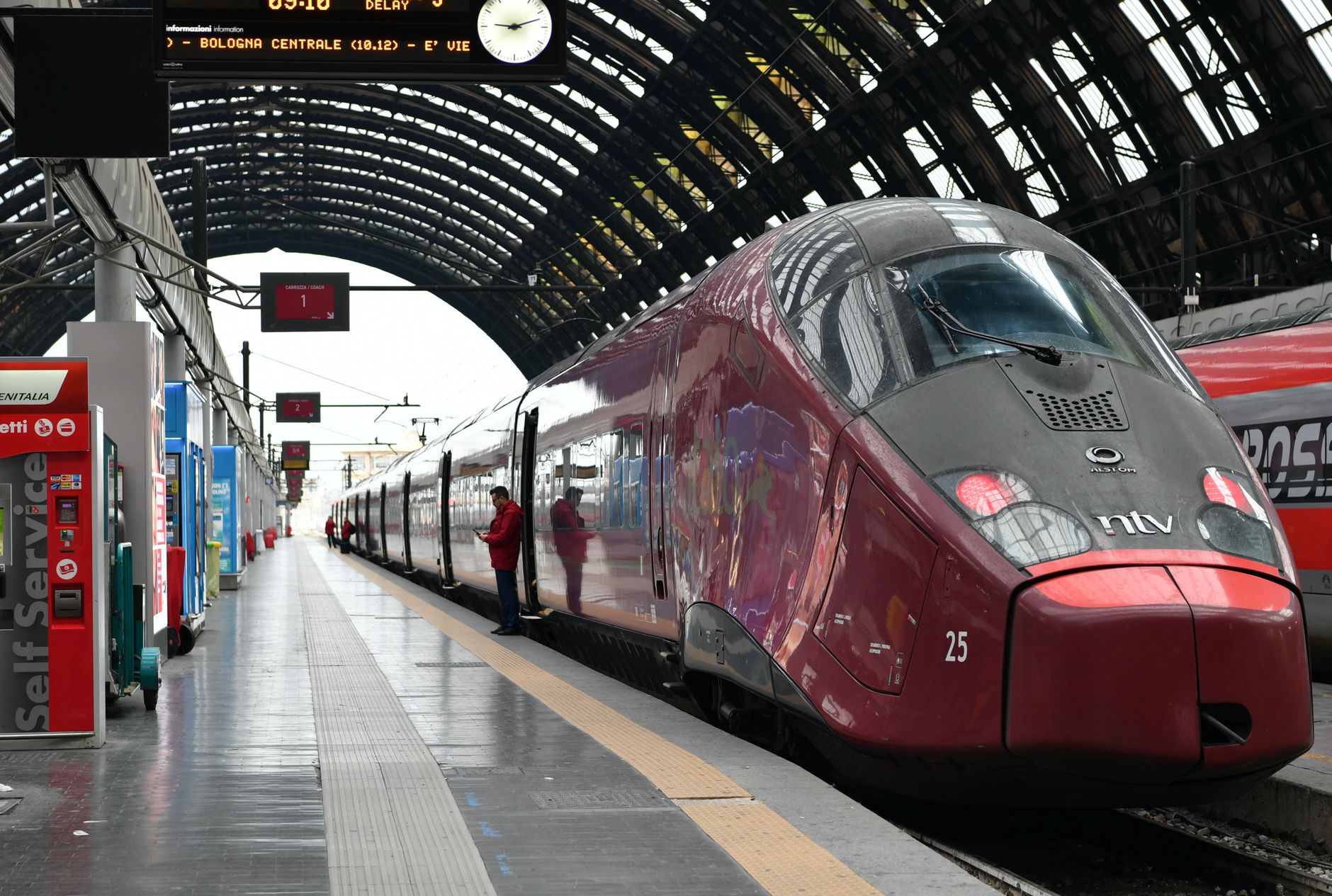
Train travel in Italy is the most efficient way to navigate the country, largely thanks to the high-speed rail network connecting major cities like Rome, Florence, and Milan. When booking, you will choose between the state-run Trenitalia, which operates both high-speed and regional trains, and the privately owned Italo, which exclusively runs high-speed routes. Both offer excellent service, so your choice usually comes down to schedule and price. Read our complete Italy guide to start planning your route.
Driving in Italian cities involves navigating restricted traffic zones (ZTLs), aggressive local traffic, and scarce parking. Trains bypass all of this, dropping you directly in the historic centre of your destination. For anyone moving between major hubs, the rail network is faster, cheaper, and far less stressful than renting a car or flying.
Whether you are mapping out a quick city break or a multi-week grand tour, understanding the logistics of the Italian railway system will save you time and money. If your trip extends beyond the Italian borders, you can also check our Europe guide for cross-border rail connections.
Trenitalia vs Italo: What is the Difference?
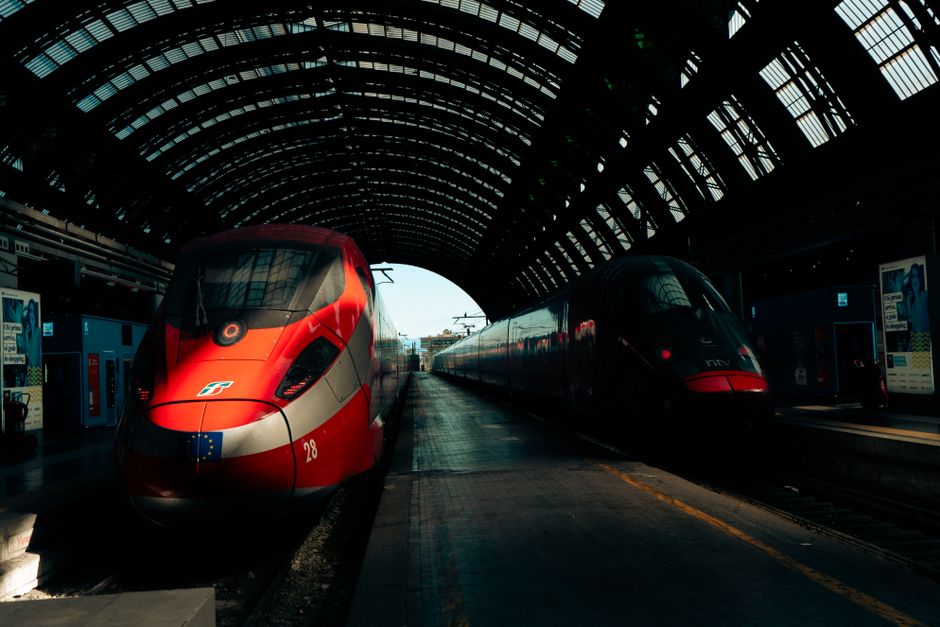
Italy is unique in Europe for having two competing high-speed rail operators on the same tracks. This competition keeps quality high and prices reasonable. Both companies operate sleek, modern trains that reach speeds of 300 km/h, but their networks differ significantly.
Trenitalia is the national state-owned railway. It operates everything from the flagship Frecciarossa (Red Arrow) high-speed trains to Intercity routes and slow regional commuter trains (Regionale). Trenitalia covers the entire country, meaning you can book a single ticket that takes you from a high-speed hub in Rome all the way to a tiny village in Tuscany.
Italo (run by Nuovo Trasporto Viaggiatori) is a private company that launched in 2012. It exclusively operates high-speed trains (using striking dark red AGV and EVO models). Italo only connects major cities and transport hubs like Turin, Milan, Venice, Bologna, Florence, Rome, Naples, and Salerno. They do not operate slow regional trains, though they do offer bus connections (Italobus) to a few off-network destinations.
| Feature | Trenitalia | Italo |
|---|---|---|
| Network Coverage | Entire country (High-speed, Intercity, Regional) | Major cities only (High-speed only) |
| High-Speed Models | Frecciarossa, Frecciargento, Frecciabianca | AGV, EVO |
| Ticket Classes | Standard, Premium, Business, Executive | Smart, Prima, Club Executive, Salotto |
| Wi-Fi | Free on Frecce and Intercity | Free on all trains |
Booking Train Travel in Italy
The golden rule for high-speed train travel in Italy is to book in advance. High-speed tickets use dynamic pricing, operating much like airline tickets. Booking opens about four to six months ahead of the travel date. A Rome to Florence ticket booked three months out might cost $20 to $30, but that same ticket purchased on the day of travel can easily exceed $60 to $80.
You can buy tickets directly on the official websites (trenitalia.com and italotreno.it) or use aggregator apps like Trainline and Omio. Aggregators charge a small booking fee but allow you to compare Trenitalia and Italo schedules side-by-side, which is incredibly useful for finding the best departure time. When budgeting for your trip, review our guide on the cost of a trip to Italy to see how transport fits into your daily spend.
Regional trains (Regionale, Regionale Veloce) are completely different. Their prices are fixed and based purely on distance. A ticket from Florence to Pisa costs the same whether you buy it three months in advance or three minutes before the train leaves. There is no financial benefit to booking regional trains ahead of time, and they never sell out because seats are unreserved.
Ticket Classes and Comfort
Both operators offer multiple classes of service. In Trenitalia’s Standard class and Italo’s Smart class, seats are arranged in a 2×2 configuration. These carriages are comfortable, air-conditioned, and feature power outlets and free Wi-Fi. There is ample luggage space above the seats and at the ends of the carriages.
Upgrading to Trenitalia Business or Italo Prima gets you wider leather seats in a 2×1 configuration, meaning more elbow room and quieter carriages. You also receive a complimentary welcome service with a drink and a small snack. The price difference between Standard and Business/Prima is often minimal if booked early—sometimes as little as $10 to $15—making it a worthwhile upgrade for longer journeys.
For ultimate luxury, Trenitalia’s Executive and Italo’s Club Executive offer massive reclining armchairs, hot meals served at your seat, and access to private station lounges. These tickets typically cost between $120 and $250 depending on the route.
Navigating Italian Train Stations
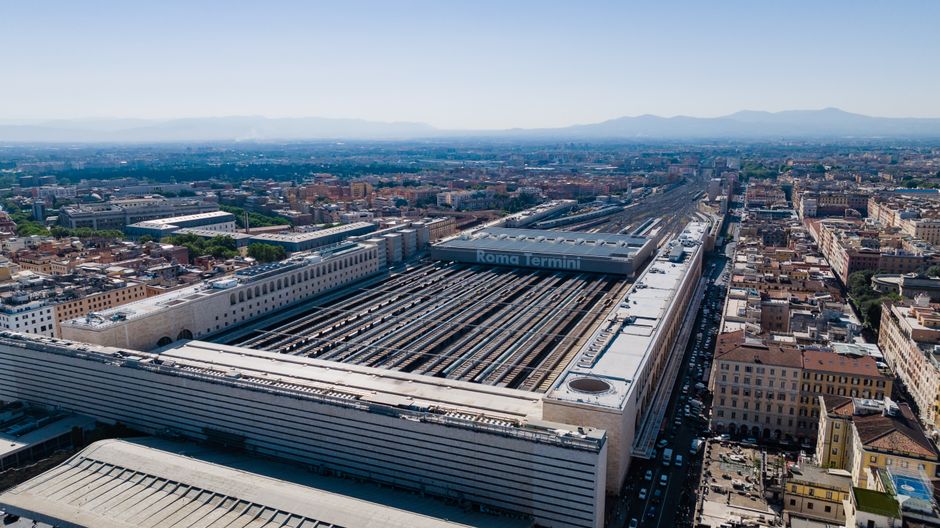
Italian train stations can be chaotic, especially in major tourist hubs. Pay close attention to station names when booking. Most cities have multiple stations, but you generally want the main central station. Look for Roma Termini (not Tiburtina), Firenze Santa Maria Novella or SMN (not Campo di Marte), and Venezia Santa Lucia (not Mestre, which is on the mainland).
When you arrive at the station, look at the large electronic departure boards (Partenze). Do not look for your final destination; look for your train number (Treno). A train terminating in Naples might be your train to Rome. The platform number (Binario) usually appears about 10 to 15 minutes before departure. Once it flashes on the screen, a mass migration of passengers will head towards the platform.
Major stations like Milano Centrale and Roma Termini have security gates before the platforms. You will need to show your ticket (a QR code on your phone is fine) to the staff or scan it at the electronic gates to access the boarding area. Keep an eye on your belongings in these crowded areas, and read our safety tips for travellers in Italy for advice on avoiding station pickpockets.
Validation and Check-in Rules
Ticket validation rules changed significantly recently, and getting this wrong can result in a hefty fine from the conductor. If you are travelling on a high-speed train (Frecciarossa, Italo) or an Intercity train, your ticket comes with a specific reserved seat, date, and time. You do not need to validate these tickets; simply show the QR code to the conductor on board.
Regional trains are where travellers make mistakes. If you buy a paper ticket for a regional train from a station machine, it does not have a specific time attached. You must stamp this ticket in one of the green and white validation machines on the platform before boarding. This prints the date and time on the ticket, activating it.
If you buy a digital regional ticket on the Trenitalia app or website, you do not stamp anything, but you must complete a digital “Check-in”. You will receive a link in your confirmation email or app. You must click this link to check in before the train’s scheduled departure time. The ticket will turn green, showing it is active.
Planning Your Rail Itinerary
Italy’s geography makes it perfect for a linear train itinerary. A classic route starts in Venice, moves south to Florence, continues to Rome, and finishes in Naples. High-speed travel times make this incredibly efficient: Venice to Florence takes 2 hours and 15 minutes, Florence to Rome takes 1 hour and 30 minutes, and Rome to Naples takes just 1 hour and 15 minutes.
If you are trying to figure out how many stops to include, check out our Italy itinerary guide for practical pacing. Remember to factor in the time it takes to get from the station to your accommodation. Most central stations are well-connected to local metro systems, trams, or walking paths.
When planning your dates, keep the climate in mind. High-speed trains are heavily air-conditioned, but waiting on platforms in August when temperatures reach 35°C (95°F) is exhausting. Travelling in the shoulder seasons is much more comfortable. Read more about the best time to visit Italy to plan your transport around the weather.
Regional Trains and Coastal Routes
While high-speed trains handle the long distances, regional trains are essential for reaching Italy’s famous coastal and lake regions. These trains are slower, stop at every local station, and lack reserved seating, but they offer some of the most scenic journeys in the country.
If you are heading to the Italian Riviera, you will rely on the Cinque Terre Express. This regional service runs constantly between La Spezia and Levanto, stopping at all five villages. It gets incredibly crowded in summer, but it is the only practical way to move between the towns. See our Cinque Terre guide for details on the local train pass.
For the southern coast, the high-speed network ends at Salerno or Naples. From there, you switch to regional trains, ferries, or buses. The Circumvesuviana commuter train connects Naples to Sorrento, while regional Trenitalia trains connect Salerno to Vietri sul Mare. Our Amalfi Coast travel guide breaks down these specific transit connections.
In the north, Trenord (a regional partner of Trenitalia) operates the routes from Milan to the lakes. The journey from Milano Centrale to Varenna-Esino takes just over an hour, dropping you right on the water. You can find the exact logistics in our Lake Como travel guide.
Essential Tips for Train Travel in Italy
Luggage management is entirely your responsibility on Italian trains. There are no porters, and there are no weight limits. However, you must be able to lift your bags up the steep steps onto the train and hoist them into the overhead racks. If you bring a massive, heavy suitcase, you will struggle. Pack light and use a four-wheel spinner case or a travel backpack.
Strikes (scioperi) are a reality of Italian public transport. They are usually announced well in advance and typically happen on Fridays. By law, essential commuter services are guaranteed to run between 6:00 to 9:00 and 18:00 to 21:00 on weekdays. High-speed Frecciarossa and Italo trains are rarely affected by general strikes, but regional trains often face cancellations. Always check the official websites if a strike is announced during your trip.
Before you book your tickets, ensure your travel documents are in order. Depending on your nationality, you may need to arrange an ETIAS authorisation or a Schengen visa before arriving in Europe. Review our Italy visa and entry requirements page to ensure you are cleared for travel.
Plan Your Trip
To get started, map out your major city stops and book your high-speed Trenitalia or Italo tickets about three months in advance for the best balance of price and schedule certainty. Leave your regional train tickets until you are actually in Italy, as buying them early offers no advantage. Download the Trenitalia and Italo apps to your phone before you leave home; they are invaluable for checking live platform numbers, managing digital check-ins, and tracking delays. For more practical advice on navigating the country, read our comprehensive Italy travel tips.