The Cinque Terre is a rugged stretch of the Italian Riviera coastline in Liguria, comprising five historic fishing villages: Monterosso al Mare, Vernazza, Corniglia, Manarola, and Riomaggiore. This Cinque Terre guide covers everything you need to navigate the steep cliffs, narrow alleys, and terraced vineyards. You will find practical details on the Cinque Terre Express train, hiking the Sentiero Azzurro (Blue Trail), and deciding which village makes the best base for your trip.
A Complete Cinque Terre Guide: The Five Villages
Each of the five villages has a distinct layout and atmosphere. Choosing the right one depends on your mobility, budget, and whether you prefer beach access or cliffside views.
Monterosso al Mare
Monterosso is the largest and flattest of the five villages. It is divided into the old town and the newer Fegina district by the Aurora Tower. Fegina has the only extensive sand beach in the area, lined with paid sunbeds and umbrellas during the summer. Because it lacks the steep staircases found in the other towns, Monterosso is the most accessible option if you have mobility concerns or heavy luggage.
Vernazza
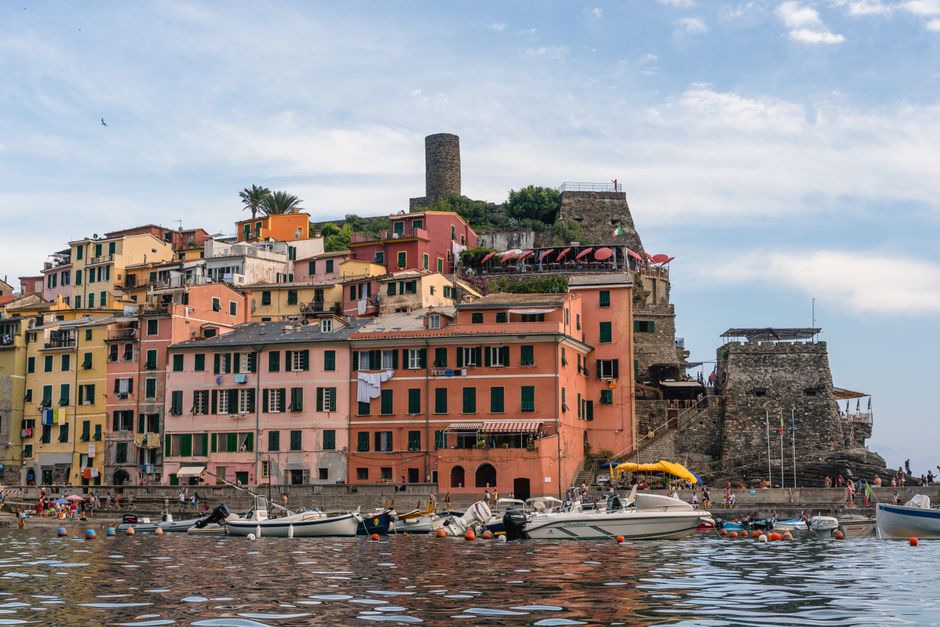
Often considered the most photogenic village, Vernazza centres around Piazza Marconi and a small natural harbour. The Church of Santa Margherita d’Antiochia sits right on the water, while colourful fishing boats bob in the bay. You can climb up to the Doria Castle ruins for panoramic views of the coastline, or hike the steep trail toward Monterosso for the classic overhead view of the town.
Corniglia
Corniglia is the only village without direct sea access. It sits on a promontory 100 metres above the water, surrounded by terraced vineyards. To reach the centre from the train station, you must climb the Lardarina, a brick stairway with 382 steps, or take a small shuttle bus. Because of this physical barrier, Corniglia is usually the quietest of the five towns and offers a more relaxed atmosphere.
Manarola
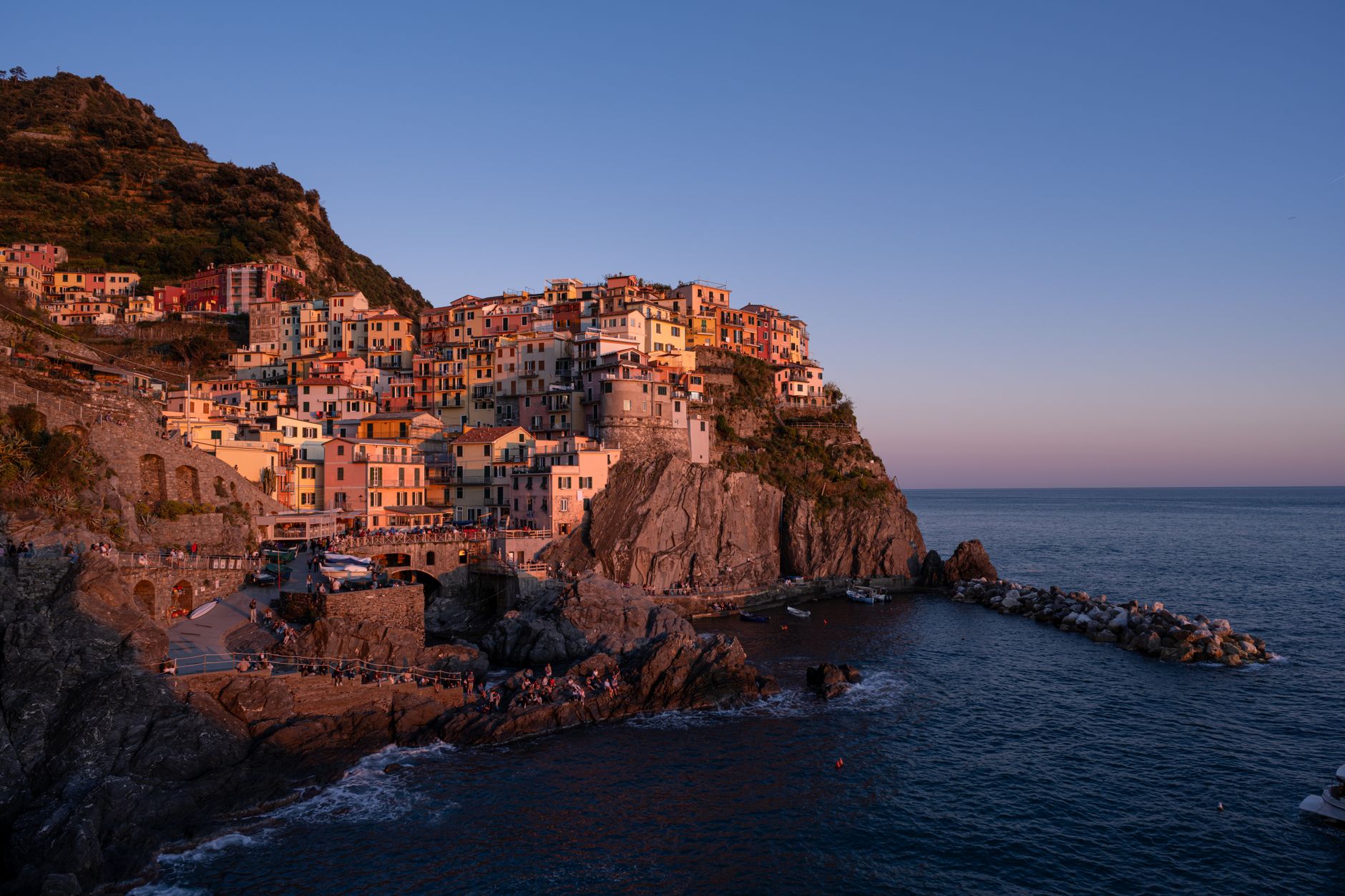
Manarola is famous for its steep vineyards that produce the local Sciacchetrà dessert wine. The main street leads down to a rocky harbour where locals sunbathe on the concrete slipway. The classic sunset viewpoint is from Punta Bonfiglio, a short paved path wrapping around the headland. This is also where you will find Nessun Dorma, a highly popular cliffside restaurant.
Riomaggiore
The southernmost village is characterised by tall, narrow houses painted in typical Ligurian colours, stacked tightly in a steep ravine. The main street, Via Colombo, is lined with takeaway seafood spots and local shops. Riomaggiore has a rocky beach just south of the harbour and serves as the starting point for the famous Via dell’Amore coastal path.
How to Get to the Cinque Terre
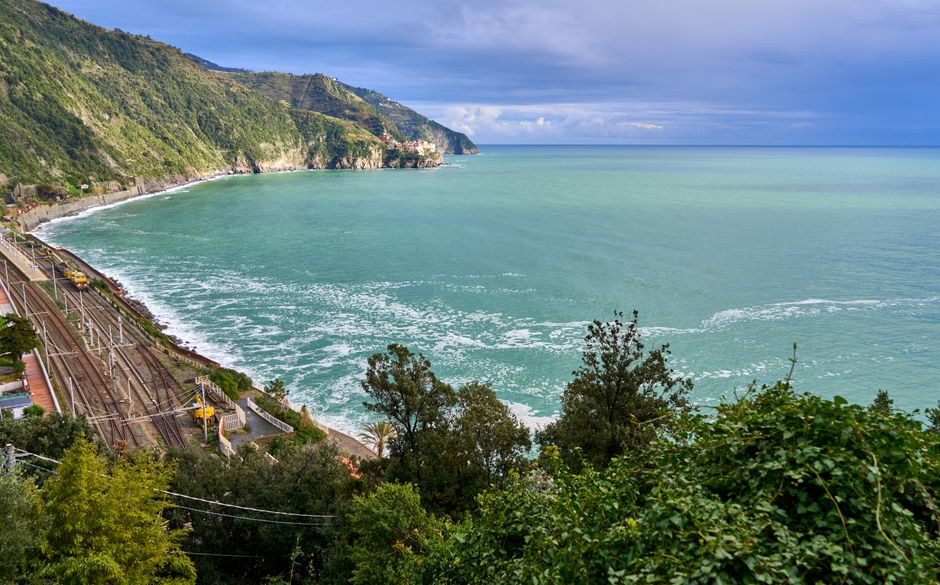
The closest airports are Pisa International Airport (PSA) and Genoa Cristoforo Colombo Airport (GOA). From either airport, you can reach the region by train in about 1.5 to 2 hours. Your primary transit hubs are La Spezia Centrale to the south and Levanto to the north. All long-distance trains stop at one of these two stations, where you transfer to the local commuter line.
Before booking your flights, check the current Italy visa and entry requirements to ensure you have the correct documentation for your passport. Understanding the regional rail network is essential, so read up on navigating train travel in Italy to make your transfer at La Spezia or Levanto seamless.
Getting Around: Trains, Boats, and Trails
Cars are a liability in this region. The villages are largely pedestrianised, and parking is expensive and located far above the town centres. You will rely entirely on public transport and your own feet.
The Cinque Terre Express Train
The Cinque Terre Express runs from mid-March to early November. Trains depart every 15 to 20 minutes and stop at La Spezia, Riomaggiore, Manarola, Corniglia, Vernazza, Monterosso, and Levanto. The journey between each village takes only 3 to 5 minutes. A single journey costs between $5 and $12 USD depending on the date and time of travel, as pricing is now based on peak and off-peak demand.
The Ferry Service
The Consorzio Marittimo Turistico Golfo dei Poeti operates passenger ferries from late March to October. The boats run between La Spezia, Portovenere, Levanto, and four of the Cinque Terre villages. Corniglia is excluded because it lacks a water landing. The ferry is slower and more expensive than the train, but it provides excellent views of the cliffs from the water.
Hiking the Sentiero Azzurro (Blue Trail)
The Sentiero Azzurro connects the villages along the coast. The sections from Monterosso to Vernazza (3.5 km) and Vernazza to Corniglia (3.5 km) involve steep, uneven stone steps and require sturdy footwear. The paved Via dell’Amore between Riomaggiore and Manarola fully reopened in 2024; it requires a specific time-slot reservation and an additional fee of around $10 USD (or $5 USD if you hold a Cinque Terre Card).
The Cinque Terre Card Explained
To access the Sentiero Azzurro trails, you must purchase a pass. There are two versions available at train stations, tourist information points, and online. Buying online saves you from standing in long queues at La Spezia Centrale.
| Pass Type | Estimated Cost (USD) | What is Included |
|---|---|---|
| Trekking Card | $8 – $18 per day | Access to all open Sentiero Azzurro trails, guided park tours, and local ATC shuttle buses. |
| Train Card (Treno MS) | $20 – $35 per day | Everything in the Trekking Card, plus unlimited travel on the Cinque Terre Express between La Spezia and Levanto. |
Local Food and Drink
Liguria is the birthplace of pesto. You will find pesto alla Genovese served over trofie, a short, twisted pasta native to the region. Street food consists of thick, oily focaccia and fritto misto (mixed fried seafood) served in paper cones. Monterosso is famous for its anchovies (acciughe), which are served marinated in lemon and olive oil, salted, or fried.
The steep terraces above the villages produce crisp white wines. The most famous local export is Sciacchetrà, a sweet dessert wine made from dried grapes. It is expensive due to the intense manual labour required to harvest the grapes on the steep cliffs.
Best Time to Visit and How Long to Stay
Summer brings temperatures of 25-30°C (77-86°F) and heavy crowds. The shoulder seasons of May, September, and October offer milder weather around 15-22°C (59-72°F), which is much safer and more comfortable for hiking the exposed coastal trails. Winter is quiet, but many hotels and restaurants close from November to March, and ferry services halt entirely. For a broader look at regional weather patterns, check the best time to visit Italy.
You need at least two full days to hike the main trails and see all five villages without rushing. If you are mapping out your wider route, see how to fit this region into a standard Italy itinerary.
Costs and Budgeting
The Cinque Terre is an expensive coastal destination. Expect to pay $150 to $400 USD per night for a mid-range guesthouse or hotel, with prices peaking in July and August. A sit-down dinner with local wine will cost $25 to $50 USD per person, though you can save money by eating takeaway focaccia for lunch. For a detailed breakdown of daily budgets, review our guide to Italy travel costs.
Mistakes to Avoid
- Bringing heavy luggage: Most villages require climbing steep hills or narrow staircases to reach accommodation. Pack a small carry-on or backpack. If you have large suitcases, use the luggage storage at La Spezia Centrale.
- Ignoring trail closures: Landslides frequently close sections of the Sentiero Azzurro. Always check the official Cinque Terre National Park website for daily trail statuses before setting off.
- Hiking in sandals: Park rangers will fine you for hiking the trails in flip-flops or open-toed sandals. Wear proper trainers or hiking boots.
For general advice on avoiding pickpockets on crowded trains, read about safety in Italy, and brush up on essential Italy travel tips before you arrive.
What to Combine it With
If you want to compare Italy’s most famous coastlines, head south to the Amalfi Coast. While the Cinque Terre is rustic and heavily focused on hiking, the Amalfi Coast offers wider roads, luxury hotels, and larger towns like Positano. For a different type of waterfront scenery, take the train north to Milan and connect to the alpine waters of Lake Como.
If you are planning a trip to Italy as part of a broader European itinerary, the Cinque Terre connects easily by rail to the French Riviera via Genoa, or south to Tuscany via Pisa and Florence.
Plan Your Trip
Book your accommodation at least six months in advance if travelling between May and September. Decide whether you want the flat convenience of Monterosso, the sunset views of Manarola, or the quiet isolation of Corniglia. Buy your Cinque Terre Train Card online to skip the ticket queues at La Spezia Centrale, and always carry a refillable water bottle for the public fountains found in every village square.