The best Christmas markets in Europe offer a mix of traditional crafts, regional food, and historic backdrops. Planning a winter trip requires knowing exactly when markets open, how to navigate the crowds, and which cities connect easily by rail. Start your planning with our overarching Europe guide, which covers general logistics for the continent.
If you are searching for the best Christmas markets in Europe, you will primarily be looking at Germany, Austria, and the Alsace region of France. These areas are the historical home of the Christkindlmarkt. While cities across the continent host winter fairs, Central Europe provides the authentic experience with centuries-old traditions, distinct regional foods, and strict rules on what vendors can sell.
Practical Essentials for Winter Fairs
Before booking flights, you need to understand how the market season operates. The schedule is short, the weather is cold, and the logistics require advance planning.
When Do They Open?
The vast majority of European Christmas markets open in the third week of November and close on the 23rd or 24th of December. A common mistake is planning a trip for the week between Christmas and New Year. By December 25th, most markets in Germany, France, and Austria are completely dismantled. If you are travelling after Christmas Day, you must look to cities like Budapest or Prague, which often keep their stalls running until early January.
Weather and Packing
Expect temperatures in Central Europe to range from 0°C to 5°C (32°F to 41°F) during late November and December. Rain is more common than snow in cities like Cologne and Strasbourg. Because you will spend hours standing on cold cobblestones, thermal base layers, waterproof boots, and thick woollen socks are mandatory. Umbrellas are difficult to manage in dense crowds, so pack a heavy waterproof coat with a hood.
Visas and Entry Requirements
Starting in mid-2025, visa-exempt nationals travelling to the Schengen Area will need pre-travel authorisation. This applies to citizens of the US, UK, Canada, and Australia. The process is done online and costs a small fee. For full details on how this affects your winter trip, read our guide to Schengen Visa and ETIAS: What Travellers Need to Know.
The Best Christmas Markets in Europe for 2026
The following cities host multiple markets within their centres. You can easily spend two or three days in each, walking between the different squares and neighbourhoods.
Strasbourg, France
Strasbourg calls itself the “Capital of Christmas” and hosts the oldest market in France, dating back to 1570. The city centre, located on the Grande Île, is entirely pedestrianised during the festival. The main draw is the towering Christmas tree in Place Kléber, which is illuminated every evening. You will find the largest concentration of stalls at Place Broglie, known as the Christkindelsmärik.
Food here leans heavily on Alsatian traditions. Look for bredele (small spiced biscuits), flammekueche (a thin wood-fired tart with cream, onions, and bacon), and hot cider. Strasbourg is roughly 400 km east of Paris and is accessible in 1 hour and 45 minutes via the high-speed TGV train.
Cologne, Germany
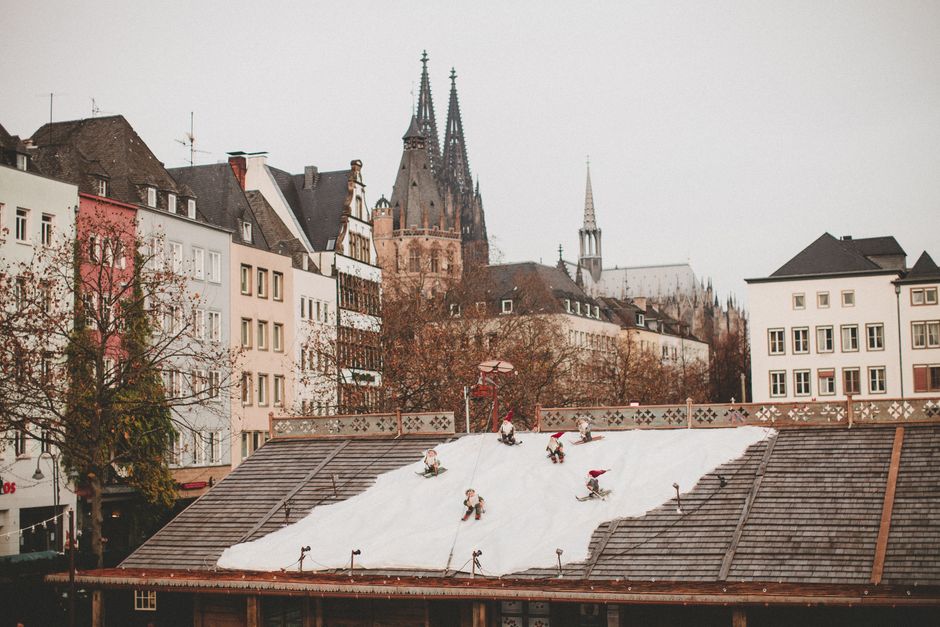
Cologne is home to several distinct markets, each with its own theme and custom-designed mugs. The most visually striking is the Markt am Kölner Dom, situated directly beneath the twin spires of the city’s massive Gothic cathedral. A massive net of fairy lights creates a canopy over the stalls.
A short walk away is Heinzels Wintermärchen in the Old Town, which features a large outdoor ice-skating rink and stalls dedicated to traditional crafts like blacksmithing and woodcarving. Cologne is a major rail hub, making it an easy 1-hour train ride from Frankfurt Airport.
Nuremberg, Germany
Nuremberg’s Christkindlesmarkt is strictly traditional. The city enforces rules forbidding the sale of mass-produced plastic toys or the use of pre-recorded Christmas pop music. The stalls, topped with red and white striped canvas, fill the Hauptmarkt square in front of the Frauenkirche.
You come to Nuremberg for two specific foods. First, the Nürnberger Rostbratwürste, which are small marjoram-spiced sausages traditionally served three to a bun (Drei im Weckla). Second, the Elisenlebkuchen, a soft, flourless gingerbread baked on a wafer. Nuremberg is 170 km north of Munich and takes just over an hour on the ICE train.
Vienna, Austria
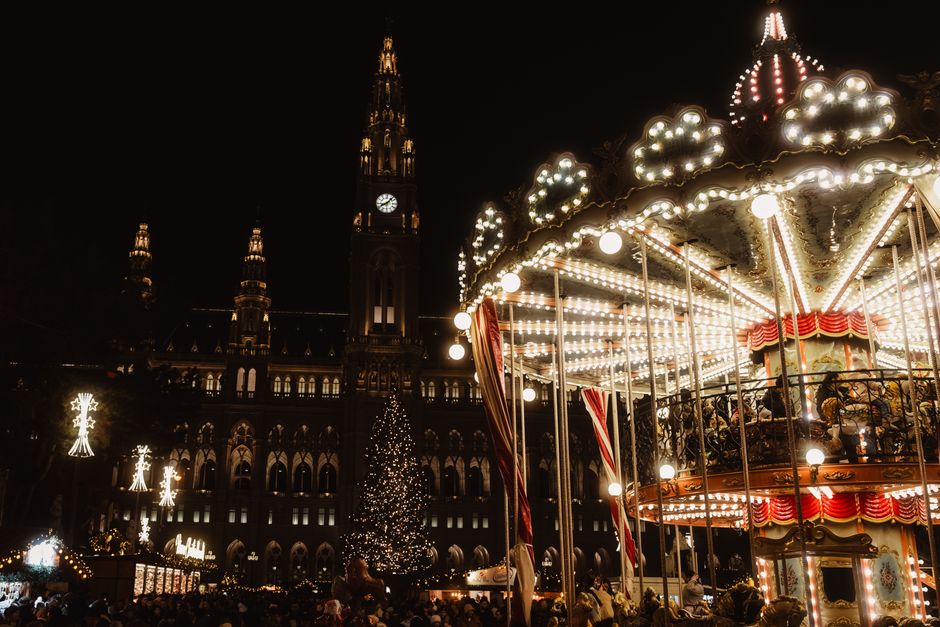
Vienna offers a more imperial backdrop. The most famous location is the Rathausplatz (City Hall Square), which features a massive illuminated archway, an ice path winding through the park, and dozens of stalls. However, locals tend to prefer the smaller, more atmospheric markets.
Head to the Spittelberg neighbourhood to find stalls set along narrow, Biedermeier-era streets. This market focuses heavily on local artisans and organic food. Another excellent alternative is the Art Advent market at Karlsplatz, which requires all food vendors to be certified organic and features a large central area filled with hay for children to play in. In Vienna, swap standard mulled wine for Punsch, which comes in various fruit flavours and is often spiked with rum.
Budapest, Hungary
If your travel dates push past Christmas Day, Budapest is your best option. The city’s two main markets usually operate until December 31st or January 1st. The Vörösmarty Square market focuses on traditional Hungarian crafts and hearty food. Just a few blocks away is the Advent Basilica market, famous for the 3D light shows projected onto the facade of St. Stephen’s Basilica every evening.
Hungarian market food is substantial. You will find Lángos (deep-fried flatbread topped with garlic, sour cream, and cheese), roasted goose thigh, and Kürtőskalács (chimney cake), a sweet dough roasted over open coals and rolled in cinnamon or walnuts.
Managing Costs and the Pfand System
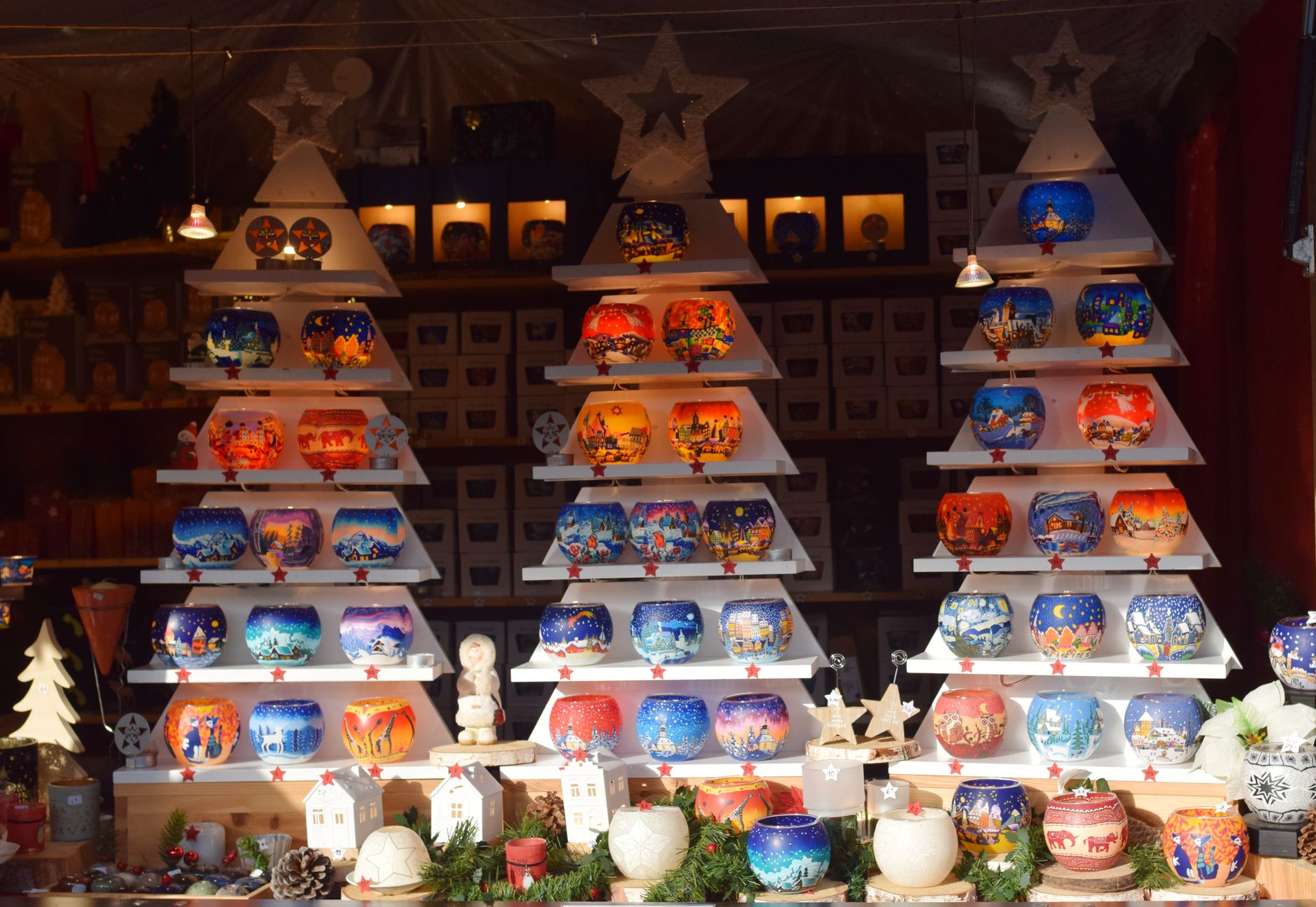
Entry to all public Christmas markets in these cities is completely free. You only pay for what you consume. When buying a hot drink, you will encounter the Pfand (deposit) system. You pay an upfront deposit for the ceramic mug. You can either return the mug to get your deposit back, or keep it as a cheap souvenir. Mug designs change every year and are specific to each individual market square.
| Item | Average Cost (USD) | Notes |
|---|---|---|
| Mulled Wine / Punsch | $4 – $8 | Prices vary by city; Vienna is typically the most expensive. |
| Mug Deposit (Pfand) | $3 – $6 | Fully refundable if you return the mug to the vendor. |
| Sausage / Hot Snack | $5 – $9 | Portions are usually large enough for a light lunch. |
| Pastry / Sweet Treat | $3 – $7 | Includes items like chimney cake, crepes, or gingerbread. |
| Public Toilet Entry | $0.50 – $1.50 | Always carry small coins for the restroom attendants. |
While card payments have become much more common since 2020, cash remains essential. Many smaller craft vendors and rural markets still operate on a cash-only basis. Withdraw euros (or Hungarian forints in Budapest) from a bank ATM upon arrival.
Logistics and Getting Around
The most efficient way to travel between these cities is by rail. Winter weather frequently delays flights and makes driving hazardous, but the European train network remains highly reliable in December. You can easily build an itinerary connecting Cologne, Nuremberg, and Munich, or take a route from Munich to Vienna and Budapest.
For a detailed breakdown of how to book tickets, reserve seats, and navigate the stations, read our guide on Travelling Europe by Train: Passes, Routes and Tips. Book your high-speed rail tickets at least two months in advance, as December is a peak travel season for locals returning home.
Common Mistakes to Avoid
Visiting only on weekends: Friday nights and Saturdays are incredibly crowded. Locals finish work and head straight to the squares. If you want to browse the craft stalls without being shoved, visit on a Tuesday or Wednesday morning.
Buying cheap imports: While strict markets like Nuremberg vet their vendors, others do not. Turn over wooden ornaments to check for a “Made in China” sticker. Authentic local crafts (like wooden smokers from the Erzgebirge region in Germany) will be significantly more expensive, but the quality is obvious.
Booking hotels late: Rooms in Strasbourg, Nuremberg, and Cologne sell out six to eight months in advance for December weekends. If you wait until September to book, you will be left with expensive luxury suites or hotels located far out in the suburbs.
Plan Your Trip
To make the most of your time, group your destinations logically. Do not try to fly between France and Hungary for a four-day trip. Instead, pick a region and use the trains to explore neighbouring towns. If you need help structuring your route, look at our 2 Weeks in Europe: 5 Itineraries guide, which can easily be adapted for winter travel.
Finally, if you want to expand your trip beyond the markets and see what else the continent has to offer during the colder months, review our list of the Best Countries to Visit in Europe to find destinations that match your travel style.