
Navigating Europe’s entry requirements has shifted significantly in 2026. This comprehensive Schengen visa ETIAS guide cuts through the confusion so you can focus on booking your flights and hotels. Depending on your passport, you will now need either a traditional Schengen Visa or the newly introduced ETIAS pre-authorisation to cross the border.
Europe has overhauled how it tracks visitors. If you are arriving at Paris Charles de Gaulle or Rome Fiumicino, the days of collecting passport stamps are gone. The Entry/Exit System (EES) is fully operational, meaning automated biometric scans—fingerprints and facial recognition—record your arrival and departure. Alongside this, the ETIAS rollout in late 2026 adds a digital pre-screening step for visa-exempt travellers.
Understanding the 2026 Border Changes
Before diving into the paperwork, you need to understand the current landscape of the Schengen Area. As of 2025, Bulgaria and Romania are fully integrated members, bringing the total number of Schengen countries to 29. This means you can drive the 390 km from Sofia to Thessaloniki or take a train from Bucharest to Budapest without stopping for passport checks.
However, crossing the external border into these 29 countries (plus Cyprus) requires passing through the new digital framework. The EES tracks exactly how long you stay, automatically calculating your allowance under the strict 90/180-day rule. If you overstay by even one day, the system flags you instantly upon departure, which can result in heavy fines or future entry bans.
The Schengen Visa ETIAS Guide: Which Do You Need?
Your passport determines your entry requirements. You will fall into one of two categories: visa-exempt or visa-required. Visa-exempt nationals, including citizens of the US, UK, Australia, New Zealand and Canada, no longer have unrestricted walk-up access to Europe. You must apply for an ETIAS (European Travel Information and Authorisation System) before boarding your flight.
If you hold a passport from India, China, South Africa or the Philippines, you are not eligible for ETIAS. You must apply for a traditional Schengen Visa through an embassy or an outsourced processing centre like VFS Global or TLScontact. If you are unsure where to start, our comprehensive Europe guide covers the foundational steps for international arrivals.
| Feature | ETIAS | Schengen Visa (Type C) |
|---|---|---|
| Who needs it? | US, UK, Australian, Canadian citizens | Indian, Chinese, South African citizens |
| Cost | €20 ($21-$23 USD) | €90 base ($95-$100 USD) + service fees |
| Validity | 3 years (or until passport expires) | Varies (typically covers the specific trip dates) |
| Processing Time | Minutes to 96 hours | 15 to 45 days |
| Application Method | 100% Online via official EU portal | In-person biometric appointment |
ETIAS Essentials: Costs and Timelines
The ETIAS system officially launches in the last quarter of 2026, followed by a transitional grace period before becoming strictly mandatory in 2027. The application is entirely digital. You fill out a form on your smartphone or computer, providing your passport details, occupation, and basic background information. You do not need to upload flight itineraries or hotel bookings.
The fee is €20 (roughly $21-$23 USD) for travellers aged 18 to 70. Applicants under 18 or over 70 are exempt from the fee, but they still require an approved ETIAS to travel. Once approved, the authorisation links electronically to your passport chip. It is valid for three years, allowing multiple entries, provided you respect the 90-day stay limit.
If you are travelling with family, each member requires their own ETIAS, including infants. You can submit applications on behalf of your children through the same portal. The system checks your details against databases like Interpol and Europol. While the vast majority of applications clear instantly, a flagged profile might require you to provide additional documentation or even attend an interview at a consulate, though this is rare.
Schengen Visa Logistics: The Traditional Route
Applying for a Schengen Visa is a much heavier administrative lift. The official application fee is €90 ($95-$100 USD) for adults and €45 ($47-$50 USD) for children aged 6 to 11. However, your actual out-of-pocket cost will be higher. Mandatory service centre fees (charged by VFS or TLS), passport courier services, and required travel insurance usually push the total cost to a range of $150-$250 USD per person.
You must apply to the country that is your primary destination. If you are spending five days in Italy and three days in France, you apply to the Italian consulate. You will need to provide a detailed day-by-day itinerary, proof of accommodation, return flight tickets, and bank statements proving you have sufficient funds (usually around €65 to €100 per day, depending on the country).
When compiling your dossier, precision is everything. Your passport must have at least two blank pages for the visa sticker. Your travel insurance must explicitly state that it covers the entire Schengen Area for repatriation and medical emergencies up to €30,000. If you are employed, you need a stamped letter from your employer granting leave; if self-employed, tax returns and business registration documents are mandatory.
Appointments at visa centres book up months in advance, especially before the peak summer season. You can submit your application up to six months before your intended travel date. Do not leave this until the last minute; processing alone takes a minimum of 15 days and can stretch to 45 days during busy periods.

Border Crossings and Transport Logistics
How you enter Europe dictates your border experience. Airports have adapted to the EES with rows of automated kiosks. At major hubs like Amsterdam Schiphol or Frankfurt Airport, you will scan your passport, look into a camera, and provide a fingerprint scan before approaching the border guard. This process adds a few minutes to your arrival, so factor this in if you are booking tight connections.
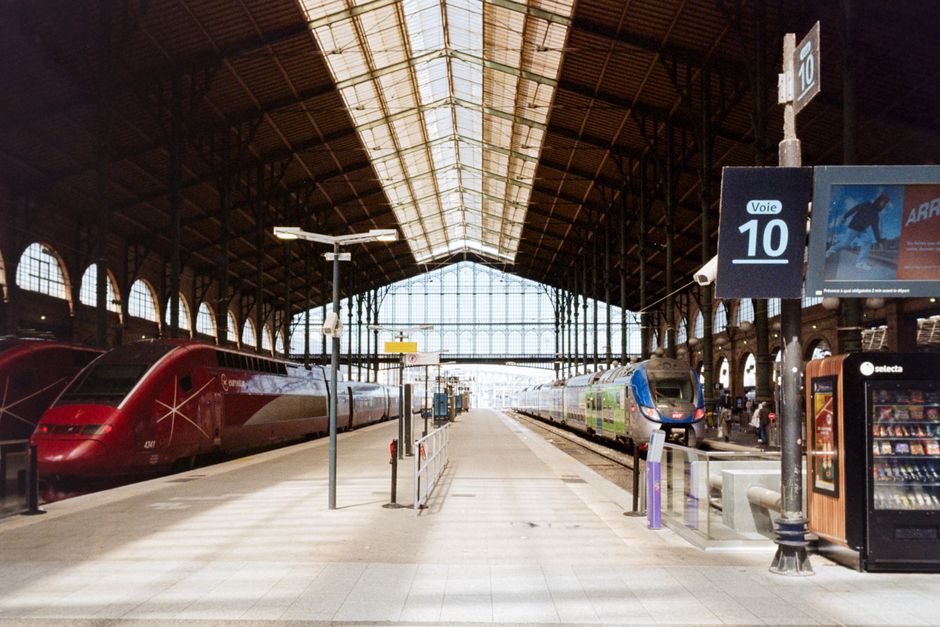
If you are taking the Eurostar from London St Pancras to Paris Gare du Nord, border controls are juxtaposed. You pass through UK exit checks and French Schengen entry checks (including biometric scans) before you even board the train in London. If you are arriving by road, such as taking a bus from London to Paris via the Dover-Calais ferry, you will exit your vehicle to process your biometrics at the port terminals.
Once you are inside the Schengen Area, internal borders are largely invisible. You can take a 350 km high-speed train from Munich to Prague, or drive across the Alps from Austria into Italy, without showing your passport. Transport logistics within the zone are incredibly efficient. To master the rail network, read our guide on Travelling Europe by Train: Passes, Routes and Tips.
Insider Tips and Mistakes to Avoid
The most common mistake travellers make is misunderstanding the 90/180-day rule. You are allowed to stay in the Schengen Area for 90 days within any rolling 180-day period. This is not per country; it is for the entire 29-country block. If you spend 60 days in Spain and 30 days in Portugal, you have exhausted your allowance and must leave the Schengen Area for 90 days before returning. Use the official EU calculator tool to track your days.
Another crucial detail is the difference between single, double, and multiple-entry visas. If your Schengen Visa is strictly single-entry, leaving the zone to visit London or Istanbul will invalidate your visa. You will not be allowed back in for your return flight. Always request a multiple-entry visa if your itinerary includes non-Schengen stops.
Finally, do not fall for unofficial websites. There is only one official portal for ETIAS (travel-europe.europa.eu/etias). Third-party agencies will charge you $100 USD or more for a $23 USD ETIAS, adding useless processing fees. Always check the URL before entering your credit card details.
Combining Visas with European Itineraries
Once your entry logistics are sorted, the fun part begins. Because both the ETIAS and the Schengen Visa allow free movement across 29 countries, you should take advantage of regional combinations. You do not need a separate visa to hop from the beaches of Greece to the fjords of Norway.
When mapping out your route, consider the Schengen entry and exit points. Open-jaw flights—flying into Rome and out of Paris—save you the time and expense of backtracking. If you are using a Schengen Visa, your point of entry does not strictly have to be the country that issued your visa, but it is highly recommended to avoid intense questioning at border control.
If you are short on time, focusing on a specific region minimises travel fatigue. You might pair the medieval towns of Belgium with the canals of the Netherlands. For route inspiration, check out our breakdown of the Best Countries to Visit in Europe. If you have a fortnight to spare, our 2 Weeks in Europe: 5 Itineraries offers step-by-step plans, from a classic London-Paris-Amsterdam loop to a deep dive into the Iberian Peninsula.
Winter travel requires entirely different planning. European winters are cold, with December temperatures in cities like Vienna and Munich regularly hovering around 0°C to 4°C (32°F to 39°F). However, this is the prime season for festive travel. If you are applying for a winter visa, ensure your itinerary includes the Best Christmas Markets in Europe, such as the Christkindlesmarkt in Nuremberg or the magical wooden chalets in Strasbourg.
Final Tips to Plan Your Trip
Check your passport validity today. To enter the Schengen Area, your passport must be valid for at least three months beyond your planned departure date from Europe, and it must have been issued within the last 10 years. If your passport is expiring soon, renew it before applying for an ETIAS or Schengen Visa, as both authorisations are digitally tied to your specific passport number.
Gather your documents early, buy comprehensive travel insurance that covers at least €30,000 in medical emergencies, and always maintain a digital backup of your approvals on your phone. With the administrative hurdles cleared, you are ready to enjoy the continent.