Deciding on the best countries to visit in Europe depends entirely on your travel style, budget, and the season. From the high-speed rail networks connecting France and Germany to the slow ferry routes weaving through the Greek Cyclades, the continent offers completely different logistical and cultural experiences within a two-hour flight. We have narrowed down the options based on reliable public transport, distinct regional cuisines, and straightforward logistics to help you plan your route.
Quick Picks by Travel Style
- For first-timers: Italy, France, and the Netherlands offer world-class sights and seamless transport.
- For lower budgets: Portugal, Slovenia, and Croatia provide incredible value for food and accommodation.
- For outdoor landscapes: Switzerland, Norway, and Austria feature dramatic alpine and fjord scenery.
- For food and wine: Spain, Italy, and France maintain the strongest regional culinary traditions.
The Best Countries to Visit in Europe
Italy
Italy remains a priority for many travellers because of its dense concentration of historical sites and distinct regional identities. A standard route connects Rome, Florence, and Venice via the Frecciarossa high-speed train, covering the 270 km between Rome and Florence in just 90 minutes. If you want to avoid the heaviest crowds, head south to Puglia for olive farms and limestone towns like Alberobello, or north to the Dolomites for jagged alpine hiking trails around Tre Cime di Lavaredo.
Food varies drastically by region. You will find heavy, butter-based dishes and stuffed pasta like tortellini in Emilia-Romagna, while Sicily relies on swordfish, capers, and citrus. In Rome, stick to the classic four pastas: cacio e pepe, carbonara, amatriciana, and gricia.
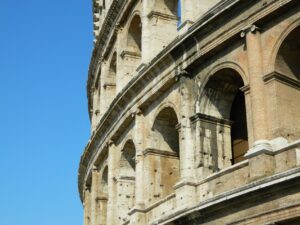
Summer brings intense heat, often exceeding 35°C (95°F) in July and August, alongside peak hotel rates. Late April to early June, or September to October, offer milder temperatures around 20°C to 25°C (68°F to 77°F) and more manageable queues at major sites like the Colosseum or the Uffizi Gallery.
Expect a daily budget of $150 to $300 per person. Accommodation in major centres drives costs up, but regional trains and local trattorias help keep spending manageable.
Spain
Spain operates on a later schedule than the rest of the continent, with lunches starting at 14:00 and dinners rarely booked before 21:00. The country is geographically diverse, ranging from the green, rain-swept coastlines of Galicia and the Basque Country in the north to the arid, Moorish-influenced plains of Andalusia in the south. The AVE high-speed train network makes it easy to travel the 500 km between Madrid and Seville in under three hours.
Regional food is a primary draw. In San Sebastián, you will eat pintxos—small bites like marinated anchovies or charred padrón peppers spiked on bread—while standing in crowded bars. Valencia is the true home of paella, traditionally made with rabbit and snails, rather than the mixed seafood versions sold in tourist centres.
Summer in the south is punishing, with temperatures in Seville frequently hitting 40°C (104°F). Spring (April and May) is the optimal time for Andalusia, coinciding with orange blossoms and major festivals like Seville’s Feria de Abril. Barcelona and Madrid remain viable year-round, though winters require a heavy coat.
Budget around $130 to $250 per day. Spain remains slightly cheaper than France or Italy, particularly when it comes to dining out and domestic transport.
France
France extends far beyond Paris, offering distinct regional cultures connected by the efficient TGV train network. You can travel from the capital to the Mediterranean port city of Marseille—a distance of 750 km—in just over three hours. Beyond the cities, the Dordogne offers medieval châteaux and prehistoric cave paintings at Lascaux, while Normandy provides stark historical context at the D-Day landing beaches alongside half-timbered towns like Rouen.
French dining is highly structured. Bakeries (boulangeries) supply daily baguettes and croissants, while bistros serve fixed-price menus (formules) at lunch. In Lyon, the country’s gastronomic capital, traditional bouchons serve heavy, meat-centric dishes like pike quenelles and pistachio sausages. In Brittany, you will find savoury buckwheat crêpes paired with local cider.
July and August are dominated by domestic holidays. Many city restaurants close in August as locals head to the coast. September is excellent for visiting wine regions like Bordeaux or Burgundy during the grape harvest (vendange), with temperatures hovering around 22°C (72°F).
Daily budgets range from $150 to $350. Paris and the French Riviera sit at the top end of this scale, while rural regions like Auvergne or Brittany are noticeably less expensive.
Portugal
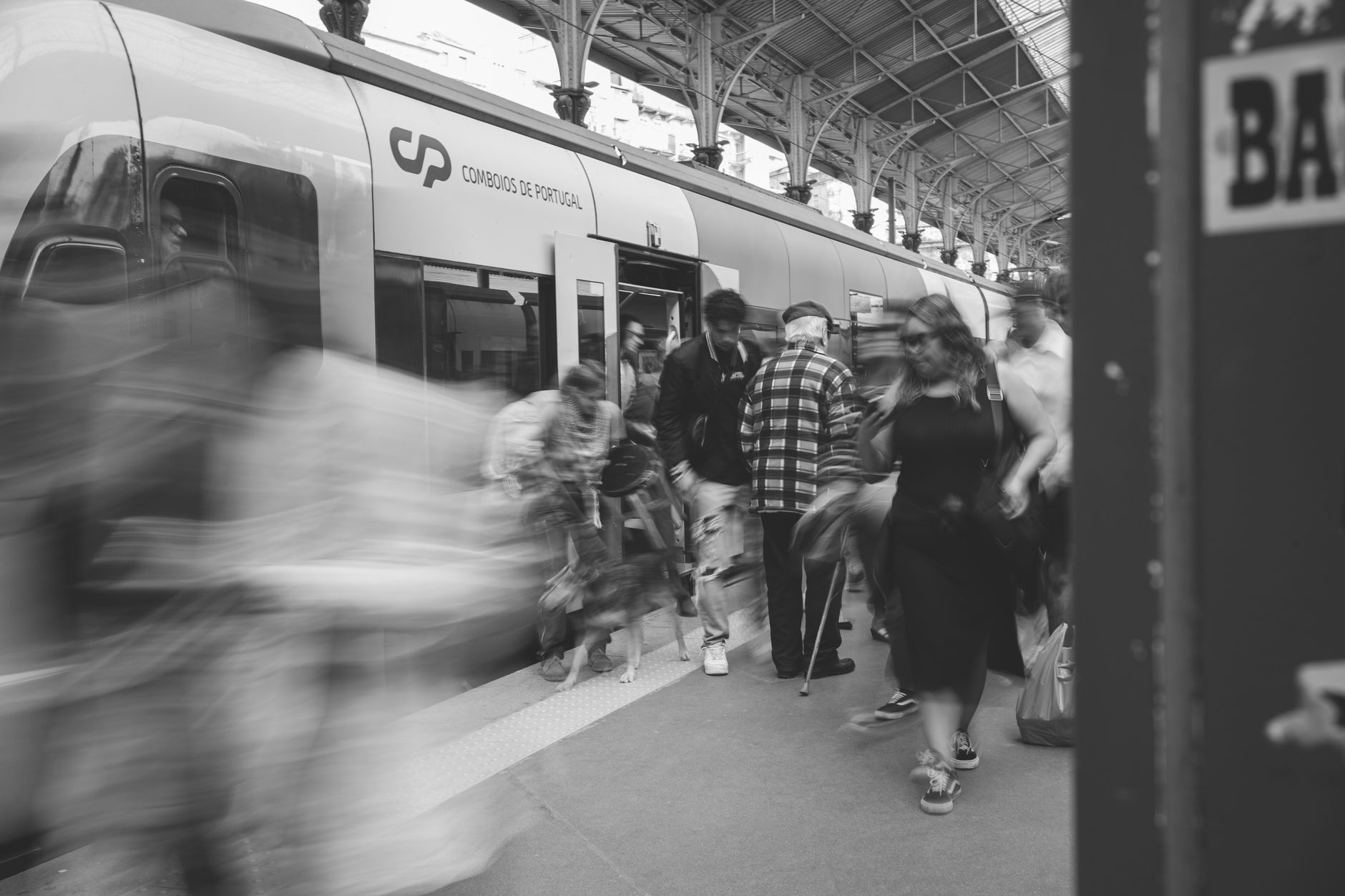
Portugal offers a slower pace and a lower cost of living compared to its western European neighbours. Most itineraries focus on the coastal axis between Lisbon and Porto, connected by the Alfa Pendular train in about three hours. The southern Algarve region draws crowds for its limestone cliffs and sea caves, but heading inland to the Alentejo reveals cork forests, vineyards, and fortified hill towns like Évora with far fewer tourists.
Seafood dominates the Portuguese diet. Bacalhau (salted cod) is supposedly prepared in 365 different ways, while fresh sardines are grilled outdoors during the June festivals of Santo António in Lisbon. In Porto, the signature dish is the francesinha, a heavy sandwich of cured meats and steak covered in melted cheese and a tomato-beer sauce.
The Atlantic breeze keeps coastal Portugal cooler than Mediterranean countries in summer, though inland temperatures easily reach 35°C (95°F). Spring and autumn provide ideal conditions for walking the steep, cobbled streets of Lisbon or hiking the Rota Vicentina along the southwest coast, with daytime highs around 23°C (73°F).
You can travel comfortably on $100 to $200 per day. Local dining (tascas) and public transport are highly affordable, though hotel prices in Lisbon have surged in recent years.
Switzerland
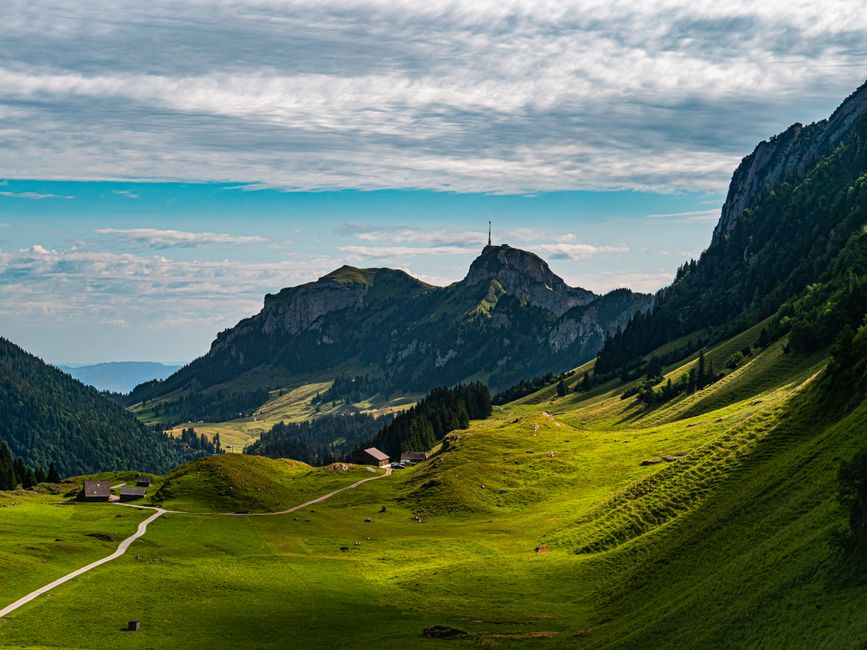
Switzerland is defined by its dramatic alpine geography and flawless public transport. The Swiss Travel Pass grants access to a dense network of trains, buses, and boats that run with absolute precision. The Bernese Oberland region, specifically towns like Grindelwald and Lauterbrunnen, provides access to the Eiger and Jungfraujoch via mountain railways. In the south, Zermatt offers car-free streets and direct views of the Matterhorn.
Swiss food is heavy, designed for cold weather and physical exertion. Fondue and raclette are staples in the French-speaking regions, while the German-speaking cantons favour rösti (pan-fried grated potatoes) served with veal in a cream sauce (Zürcher Geschnetzeltes). Grocery stores like Coop and Migros offer high-quality pre-made meals, which are essential for managing costs.
The best time to visit depends entirely on your activities. Ski season peaks from late December to March. For hiking, alpine trails are generally clear of snow from July to September, with daytime temperatures in the valleys around 25°C (77°F). Mountain passes often close from October to May.
Switzerland is exceptionally expensive. Expect a daily budget of $250 to $500. A simple restaurant meal often exceeds $30, and mountain cable cars can cost over $100 for a return ticket.
Greece
Greece requires a logistical shift, relying heavily on ferry networks rather than trains. Athens serves as the historical anchor, housing the Acropolis and world-class archaeological museums. From the port of Piraeus, Blue Star and Seajets ferries connect to the Cyclades. While Santorini and Mykonos draw the largest crowds, islands like Naxos, Milos, and Paros offer better beaches, lower prices, and quieter villages.
Greek tavernas focus on fresh, local ingredients. Meals often start with tzatziki, melitzanosalata (eggplant dip), and horiatiki (traditional Greek salad without lettuce). On the islands, grilled octopus and whole fish are priced by weight. Fast food means gyros—pork or chicken shaved from a spit, wrapped in pita with tomatoes, onions, and chips.
The ferry schedules dictate the travel season. Routes are vastly reduced from November to April. July and August bring the Meltemi winds to the Aegean Sea, which can cause rough ferry crossings, alongside temperatures of 33°C (91°F). May, June, and September offer the best balance of warm seas and reliable transport.
Budget $120 to $250 per day. Mainland Greece and lesser-known islands are highly affordable, but prices on Santorini and Mykonos rival the most expensive cities in Europe.
Germany
Germany is a country of distinct historical regions, heavily decentralised. Berlin in the east acts as a hub for modern history, art, and nightlife. In the south, Bavaria offers the traditional alpine aesthetic, with Munich acting as the gateway to Neuschwanstein Castle and the Alps. The ICE high-speed train network connects these hubs efficiently, covering the 600 km between Munich and Berlin in just over four hours.
Regional variations in food are stark. In Bavaria, expect pork knuckle (Schweinshaxe), pretzels, and wheat beer. Along the northern coast near Hamburg, pickled herring (Bismarckhering) and fish sandwiches (Fischbrötchen) are standard. Berlin is famous for currywurst and has a massive Turkish population that popularised the döner kebab.
Summer offers long days and beer gardens, with temperatures around 24°C (75°F). However, Germany is one of the top destinations for winter travel. Visiting the Best Christmas Markets in Europe during late November and December is a major draw, particularly in cities like Nuremberg, Cologne, and Dresden.
A daily budget of $130 to $250 works well. Berlin remains cheaper than Munich or Frankfurt, and the widespread availability of bakeries and casual eateries helps keep food costs down.
Norway
Norway is built for outdoor exploration, dominated by deep coastal fjords and high mountain plateaus. Bergen serves as the starting point for exploring the western fjords, including the Nærøyfjord and Geirangerfjord. Further north, above the Arctic Circle, the Lofoten Islands offer jagged peaks rising directly from the sea, accessible via flights to Bodø or Svolvær and the Hurtigruten coastal ferry.
Norwegian food is heavily reliant on the sea and preserved goods. Salmon (laks) and Arctic cod (skrei) are exceptional. You will also find unique local items like brunost (a sweet, brown whey cheese) and reindeer meat in the northern Sami regions. Alcohol is heavily taxed and only sold in state-run stores (Vinmonopolet), making drinking out very expensive.
Summer (June to August) is the only practical time for extensive hiking, with long daylight hours—including the Midnight Sun in the north—and temperatures around 18°C (64°F). Winter (December to March) is for chasing the Northern Lights in Tromsø and dog sledding, though daylight is limited to a few hours.
Norway requires a high budget, typically $200 to $400 per day. Transport and dining are costly, though the “Right to Roam” (allemannsretten) allows free wild camping if you want to reduce accommodation costs.
Croatia
Croatia’s long Adriatic coastline has made it a dominant summer destination. The southern Dalmatian coast features the walled city of Dubrovnik and the ruins of Diocletian’s Palace in Split. Inland, Plitvice Lakes National Park offers a network of terraced lakes and waterfalls connected by wooden boardwalks. The northern peninsula of Istria provides a quieter alternative, resembling rural Italy with its rolling hills and coastal towns like Rovinj.
The food reflects the country’s varied history. The coast focuses on Mediterranean seafood, black risotto (crni rižot) coloured with cuttlefish ink, and grilled fish. In Istria, truffles are shaved over handmade pasta (fuži). Inland regions like Zagreb serve heavier, Central European dishes like breaded meats and hearty stews.
Avoid July and August if possible. Cruise ships overwhelm Dubrovnik and Split, and temperatures exceed 32°C (90°F). September is ideal; the Adriatic Sea retains its summer heat for swimming, but the crowds thin out and accommodation prices drop.
Expect to spend $120 to $250 per day. Croatia adopted the Euro in 2023, and prices in major tourist hubs have aligned with Western Europe, though inland areas remain much cheaper.
Slovenia
Slovenia packs a massive geographical variety into a very small area. The capital, Ljubljana, is pedestrian-friendly and heavily influenced by the architecture of Jože Plečnik. Just 50 km northwest is Lake Bled, famous for its island church and cliffside castle. Beyond Bled, Triglav National Park and the emerald-green Soča River offer world-class hiking, rafting, and canyoning without the intense crowds of the Swiss or Austrian Alps.
Slovenian cuisine borrows from its neighbours—Italy, Austria, and Hungary—while maintaining local traditions. You will find excellent sausages (Kranjska klobasa), hearty stews (jota), and complex pastries like potica, a rolled dough filled with walnuts or tarragon. The western Goriška Brda region produces excellent, under-the-radar wines.
Summer is pleasant, with temperatures around 26°C (79°F), making it perfect for alpine activities. Autumn (September and October) brings brilliant foliage to the Julian Alps and fewer visitors to Lake Bled.
Slovenia is excellent for value, requiring a budget of $100 to $180 per day. It offers alpine scenery comparable to Austria or Switzerland at a fraction of the cost.
Austria
Austria provides a mix of imperial history and alpine infrastructure. Vienna is a city of grand palaces, classical music venues, and coffeehouse culture, connected to Salzburg—the birthplace of Mozart—by the efficient Railjet train in under three hours. In the west, the Tyrol region around Innsbruck offers steep alpine valleys and world-renowned ski resorts like St. Anton and Kitzbühel.
Traditional Austrian food is rich and filling. Wiener Schnitzel (breaded veal cutlet) and Tafelspitz (boiled beef with apple-horseradish sauce) are staples in Vienna. The dessert culture is serious; you must try Sachertorte (chocolate cake with apricot jam) and Apfelstrudel, ideally consumed in a traditional Kaffeehaus where you can sit for hours reading the newspaper.
Vienna is a year-round destination, but the Alps dictate the rest of the country’s seasons. Ski season runs from December to April. Summer (June to September) opens up the high-altitude hiking trails and mountain huts (Hütten), with valley temperatures around 25°C (77°F).
Budget $150 to $250 per day. Costs are similar to Germany, with Vienna being slightly more expensive for accommodation and dining.
Netherlands
The Netherlands is flat, densely populated, and heavily engineered, making it incredibly easy to navigate. Amsterdam is the primary entry point, known for its 17th-century canal ring and museums housing works by Van Gogh and Rembrandt. The NS train network is flawless; you can reach smaller, quieter cities like Haarlem, Utrecht, or Delft in under 45 minutes. Bicycles are the primary mode of local transport, with dedicated infrastructure everywhere.
Dutch food is practical. Street food includes raw herring served with onions and pickles, or hot stroopwafels (thin waffle cookies filled with caramel) straight from a market stall. Brown cafés (traditional pubs) serve bitterballen (deep-fried meat ragout balls) alongside local beers. For a larger meal, Indonesian food is highly popular due to colonial history, specifically the massive mixed meal called a rijsttafel.
Spring is a major draw. From late March to mid-May, the Keukenhof gardens open, and the tulip fields bloom. Summer temperatures average a mild 22°C (72°F), but rain is possible year-round.
Expect a daily budget of $150 to $250. Amsterdam is one of the most expensive cities in Europe for hotels, but transport and casual eating are very reasonable.
Comparing the Best Countries
| Country | Best For | Peak Season | Daily Budget (USD) |
|---|---|---|---|
| Italy | History, Art, Food | June – August | $150 – $300 |
| Spain | Tapas, Culture, Beaches | June – August | $130 – $250 |
| France | Food, Wine, Museums | July – August | $150 – $350 |
| Portugal | Value, Coastlines, Seafood | July – August | $100 – $200 |
| Switzerland | Alps, Hiking, Trains | July – Aug / Dec – Feb | $250 – $500 |
| Greece | Islands, Ruins, Ferries | July – August | $120 – $250 |
| Germany | Beer, Castles, Christmas | June – Aug / December | $130 – $250 |
| Norway | Fjords, Northern Lights | June – August | $200 – $400 |
| Croatia | Adriatic Sea, Walled Cities | July – August | $120 – $250 |
| Slovenia | Value Alps, Lakes | July – August | $100 – $180 |
| Austria | Palaces, Skiing, Cafés | July – Aug / Dec – Feb | $150 – $250 |
| Netherlands | Canals, Art, Cycling | April – May / July – Aug | $150 – $250 |
How to Combine Countries
Europe’s compact size makes border-hopping straightforward, but it requires logical routing. The Schengen Area allows borderless travel between most of these countries, though you must ensure your paperwork is in order. Be sure to review the requirements in our Schengen Visa and ETIAS: What Travellers Need to Know guide before booking flights.
For transport, rail is almost always the most efficient option for distances under 600 km. You avoid airport security and arrive directly in the city centre. Our guide on Travelling Europe by Train: Passes, Routes and Tips breaks down when to buy point-to-point tickets versus a Eurail pass.
If you are planning a multi-country trip, focus on regional clusters rather than flying across the continent every two days. You can easily pair Vienna, Ljubljana, and northern Italy, or connect London, Paris, and Amsterdam via the Eurostar. For specific route maps and daily pacing, look at our 2 Weeks in Europe: 5 Itineraries.
Plan Your Trip
Start by locking down your primary flight and your first three nights of accommodation. Once the anchor points are set, fill in the transport gaps. Head over to our main Europe guide for detailed city breakdowns, packing lists, and logistical advice to get your route finalised.