Planning a trip for cherry blossom season Japan requires precise timing, as the delicate pink blooms (sakura) sweep across the country from south to north. The season generally starts in Kyushu in late March and finishes in Hokkaido by early May. Tokyo and Kyoto usually peak around late March to early April, though recent years have seen these dates shift slightly earlier.
When is Cherry Blossom Season in Japan?
The progression of the blooms across the country is known as the sakura zensen, or the cherry blossom front. The blooming timeline is entirely dependent on the weather. A mild winter and warm spring will push the dates earlier, while a cold snap can delay the blossoms by a week.
During early spring, daytime temperatures in central Japan hover around 10°C to 15°C (50°F to 59°F), warming up to 18°C (64°F) by late April. You will need a medium-weight jacket for daytime viewing and extra layers for the evenings, which drop sharply in temperature.
The Japan Meteorological Corporation (JMC) releases its first official cherry blossom forecast in January, updating it weekly. For a broader look at the country’s climate throughout the year, read our guide on the Best Time to Visit Japan: Weather and Seasons by Region.
Average Blooming Dates by City
| City | Average First Bloom | Average Full Bloom (Mankai) |
|---|---|---|
| Fukuoka | March 21 | March 30 |
| Tokyo | March 23 | March 30 |
| Kyoto | March 26 | April 4 |
| Osaka | March 27 | April 4 |
| Kanazawa | April 3 | April 9 |
| Hirosaki | April 22 | April 27 |
| Sapporo | May 1 | May 5 |
Where to Go for Cherry Blossom Season Japan
You can find cherry trees in almost every city, town, and mountain pass across the country. To help you structure your trip, here are the most reliable and spectacular viewing locations, starting from the capital and moving outwards. For a complete overview of the country, start with our Japan guide.
Tokyo
Tokyo is often the first major city to see full bloom. Shinjuku Gyoen is the most practical park for visitors, featuring over 1,000 cherry trees of 65 different varieties. Because it has early and late-blooming trees, you have a wider window to see the pink canopy. Entry is roughly $3.50, and you must book a time slot online if visiting on a weekend during peak season.
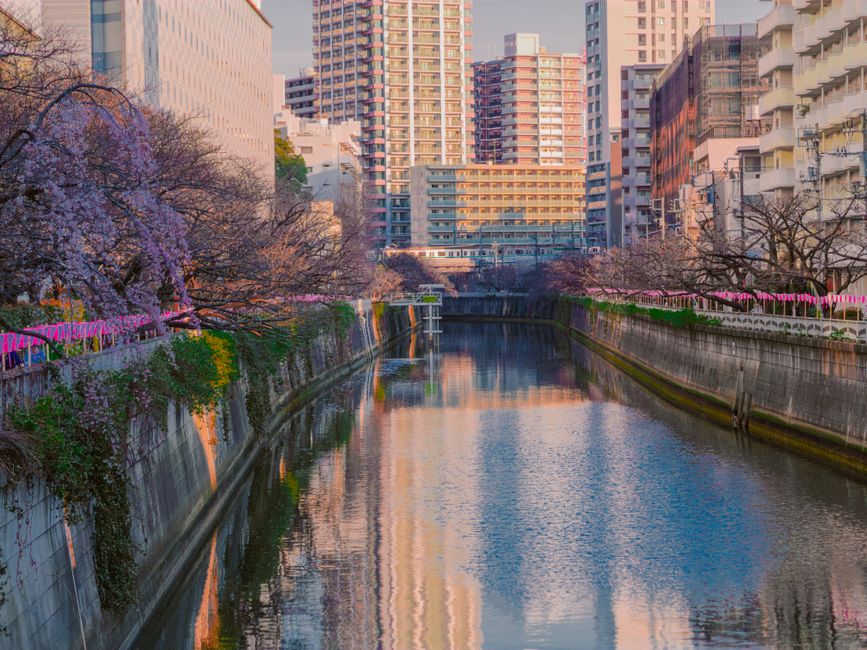
For a completely different atmosphere, walk the 4 km stretch of the Meguro River in the Nakameguro neighbourhood. The trees form a tunnel over the water, and they are illuminated at night (a practice known as yozakura). It gets incredibly crowded, so go early in the morning or embrace the slow shuffle in the evening.
Chidorigafuchi Moat, located northwest of the Imperial Palace, offers the chance to view the blossoms from the water. You can rent a rowboat for around $10 to $12 per half-hour during the sakura season, paddling right under the drooping branches.
Kyoto
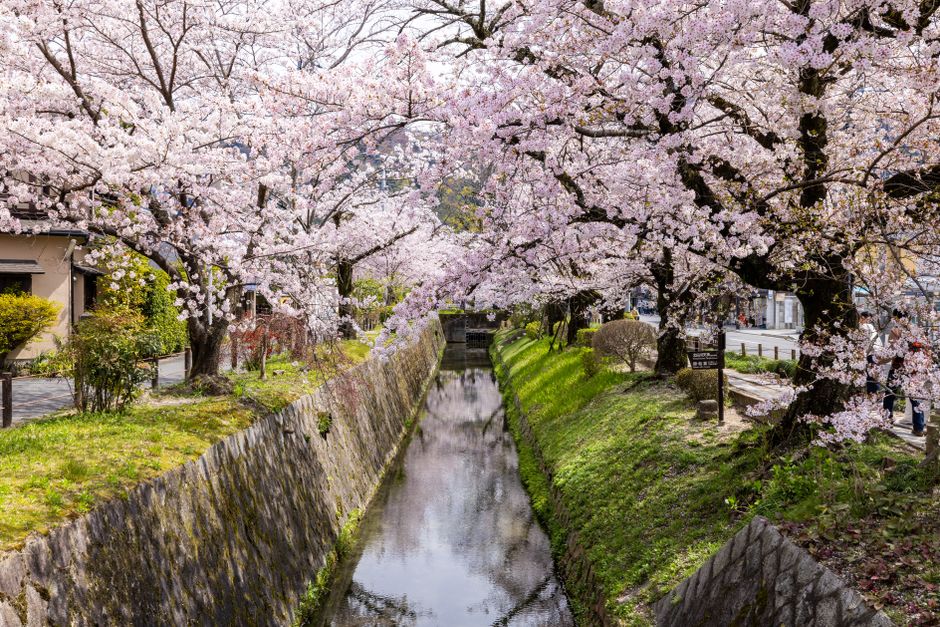
Kyoto integrates cherry blossoms into its ancient architecture. The Philosopher’s Path is a 2 km stone walkway following a canal between Ginkaku-ji (the Silver Pavilion) and the Nanzen-ji neighbourhood. Lined with hundreds of trees, it is stunning but narrow. Arrive before 7:30 AM to walk it without bumping elbows.
Maruyama Park is Kyoto’s primary spot for cherry blossom parties. The centrepiece is a massive, illuminated weeping cherry tree (shidarezakura). Food stalls set up around the park, selling yakitori, takoyaki, and draft beer. If you are trying to fit these spots into a broader trip, check our Japan Itinerary: 7, 10 and 14 Days.
Mount Fuji Area
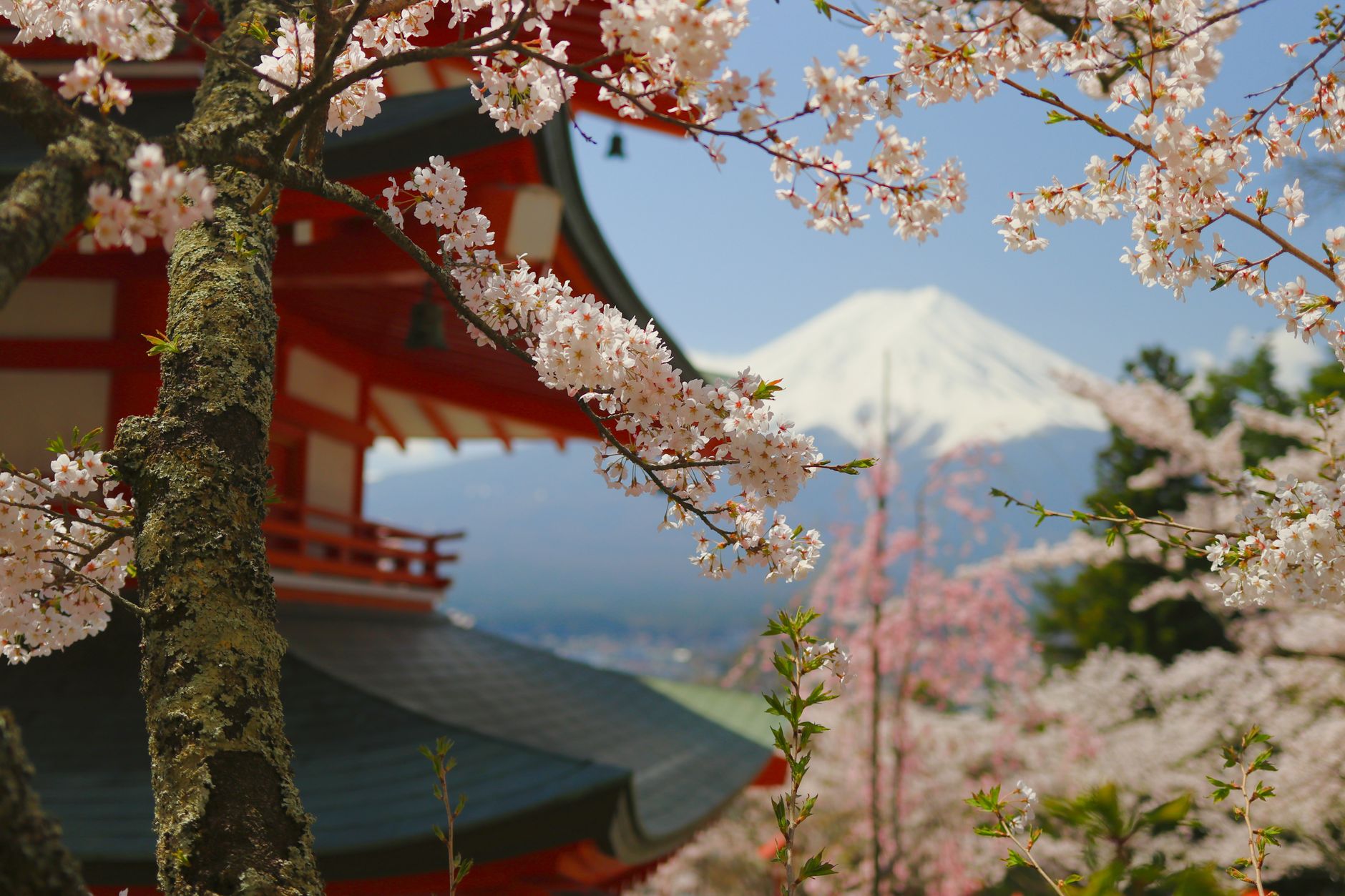
Seeing Mount Fuji framed by cherry blossoms requires clear weather and good timing. The Chureito Pagoda in Arakurayama Sengen Park is the classic viewpoint. You must climb nearly 400 steps to reach the observation deck behind the five-story red pagoda. During peak bloom, a queuing system is enforced at the top, limiting your time on the viewing deck to five minutes.
The northern shore of Lake Kawaguchiko also features a promenade lined with cherry trees, offering unobstructed views of the mountain across the water. Rent a bicycle to easily move between the different viewpoints along the lake.
Osaka and Nara
Osaka Castle Park contains over 4,000 cherry trees, particularly concentrated in the Nishinomaru Garden. The contrast of the pink flowers against the castle’s green roof and gold accents is striking.
For a landscape-scale view, take a 1.5-hour train ride from Osaka to Mount Yoshino in Nara Prefecture. The mountain is covered with 30,000 cherry trees divided into four altitude zones: Shimo (lower), Naka (middle), Kami (upper), and Oku (inner). Because of the elevation changes, the blooming period here lasts for nearly a month as the pink wave slowly climbs the mountain.
Tohoku and Hokkaido
If you are travelling in late April or early May, head north. Hirosaki Castle in Aomori Prefecture is famous for its petal-filled moats. When the blossoms start to fall, the water turns into a solid pink carpet, an effect called hanaikada (flower rafts).
In Hokkaido, Goryokaku Fort in Hakodate is a massive star-shaped citadel surrounded by 1,600 cherry trees. View it from the adjacent Goryokaku Tower to see the pink star outlined against the city. For more regional travel ideas, explore our broader Asia guide.
How to Plan Your Sakura Trip
The most important rule for a cherry blossom trip is booking early. Accommodation in Tokyo, Kyoto, and Osaka during late March and early April fills up six to nine months in advance. Prices for standard hotel rooms often double, meaning a basic business hotel in Kyoto that normally costs $100 a night can easily jump to $250 or more. For a breakdown of daily expenses, read our guide on Japan Travel Cost: How Much Does a Trip Cost?.
Because the blooming dates fluctuate, the best strategy is to book a base in Tokyo or Osaka and use the bullet train (Shinkansen) to take day trips to wherever the blossoms are peaking. Before you commit to transport tickets, review our analysis on the Japan Rail Pass: Is It Still Worth It? to see if regional passes offer better value for your specific route.
Ensure your paperwork is in order well before booking flights. Check the latest rules in our Japan Visa and Entry Requirements guide.
Hanami (Flower Viewing) Essentials
Hanami literally translates to ‘flower viewing’, but in practice, it means picnicking under the cherry trees with friends, food, and alcohol. It is a major cultural event.
To join in, buy a blue plastic tarp from a 100-yen shop or convenience store to sit on. Convenience stores (konbini) and supermarket basement floors (depachika) sell seasonal sakura-themed bento boxes, usually costing between $6 and $15. Grab some drinks, find an empty patch of grass in a designated hanami park like Tokyo’s Yoyogi Park or Kyoto’s Maruyama Park, and sit down.
There are strict rules for hanami. Never touch the cherry trees, pull on the branches, or pick the flowers. Do not place your tarp over the tree roots. Finally, public bins overflow quickly during this season, so you are expected to carry all your rubbish back to your hotel.
Insider Tips and Mistakes to Avoid
The biggest mistake travellers make is booking a rigid itinerary that relies on the blossoms peaking in a specific city on a specific day. Nature rarely cooperates. Keep your plans flexible. If you arrive in Tokyo and the trees are still bare, take a train south to the Izu Peninsula where early-blooming Kawazu cherry trees peak in February and early March. If you arrive too late, head north or into the mountains.
Crowds are guaranteed, but you can manage them by shifting your schedule. Major temples in Kyoto open at 6:00 AM. If you arrive at Kiyomizu-dera or the Philosopher’s Path at sunrise, you will share it only with local dog walkers and a few photographers. By 10:00 AM, those same spots are shoulder-to-shoulder. For more practical advice on navigating the country, read our Japan Travel Tips: What to Know Before You Go.
While Japan is incredibly secure, crowded festivals require basic situational awareness. Keep your belongings close in packed train stations and popular parks. Review our guide: Is Japan Safe to Visit? Safety Tips for Travellers.
What to Combine with Your Blossom Trip
Spring is the perfect time to experience a traditional Japanese hot spring (onsen). The weather is still crisp enough to make soaking in hot water enjoyable, and many outdoor baths (rotenburo) are surrounded by cherry trees. Hakone, located just an hour from Tokyo, is a popular choice, as is Kinosaki Onsen in the Kansai region. Before you strip off, familiarise yourself with the rules in our Onsen Etiquette: How to Use a Japanese Hot Spring guide.
If you are planning your first trip and want a structured route that balances sakura spots with major cultural sites, our 2 Weeks in Japan: First-Timer Itinerary covers the golden route from Tokyo to Hiroshima, mapping out exactly how to move between the cities efficiently.
Plan Your Trip
A successful cherry blossom trip requires preparation. Start tracking the official JMC forecasts in January to gauge the season’s timing. Secure your accommodation at least six months prior to arrival, prioritising hotels near major train stations to make day trips easier. Pack layers to handle the 10°C to 18°C temperature swings, buy your blue tarp at a local convenience store, and embrace the early mornings to experience the parks at their most peaceful.