The Tsukiji Outer Market is Tokyo’s premier destination for street food, fresh seafood, and Japanese culinary tools. While the wholesale operations moved to a new facility in 2018, this historic district remains packed with over 300 retail shops and restaurants. It is an essential stop for any comprehensive Tokyo guide, offering a dense, atmospheric look into Japan’s food culture.
Understanding the Tsukiji Outer Market
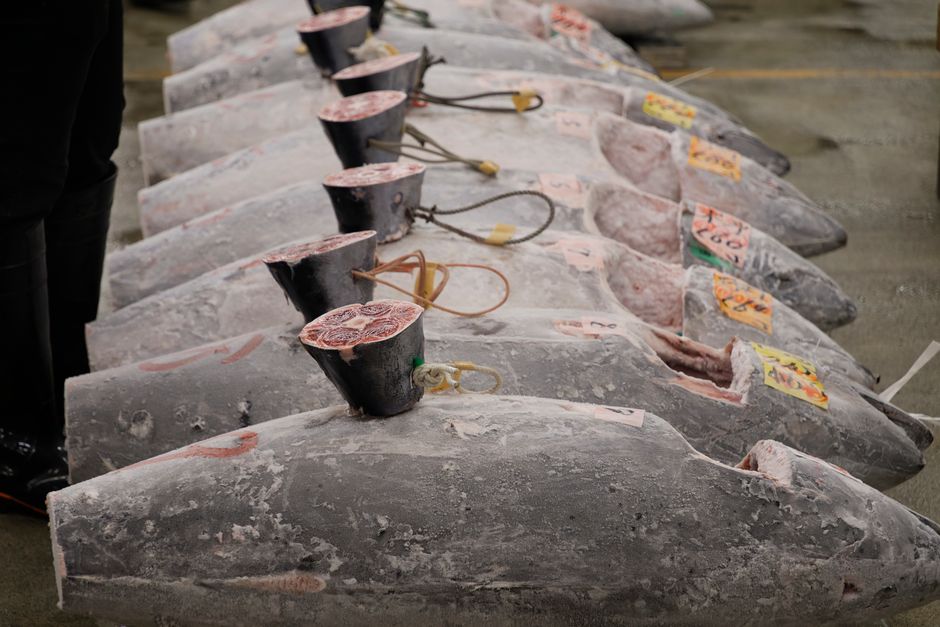
To understand the Tsukiji Outer Market (Jogai Shijo), you need to know a brief piece of recent history. For decades, Tsukiji was home to the largest wholesale fish market in the world. In October 2018, the inner wholesale market—where the famous early-morning tuna auctions took place—relocated to the modern Toyosu Market nearby.
However, the outer market never left. This grid of narrow alleys, bordered by Shin-ohashi-dori and Harumi-dori avenues, was always the retail arm of the district. Today, it operates exactly as it always has. You will find fishmongers selling cuts of tuna, produce vendors, knife artisans, and dozens of street food stalls catering to both locals and international visitors.
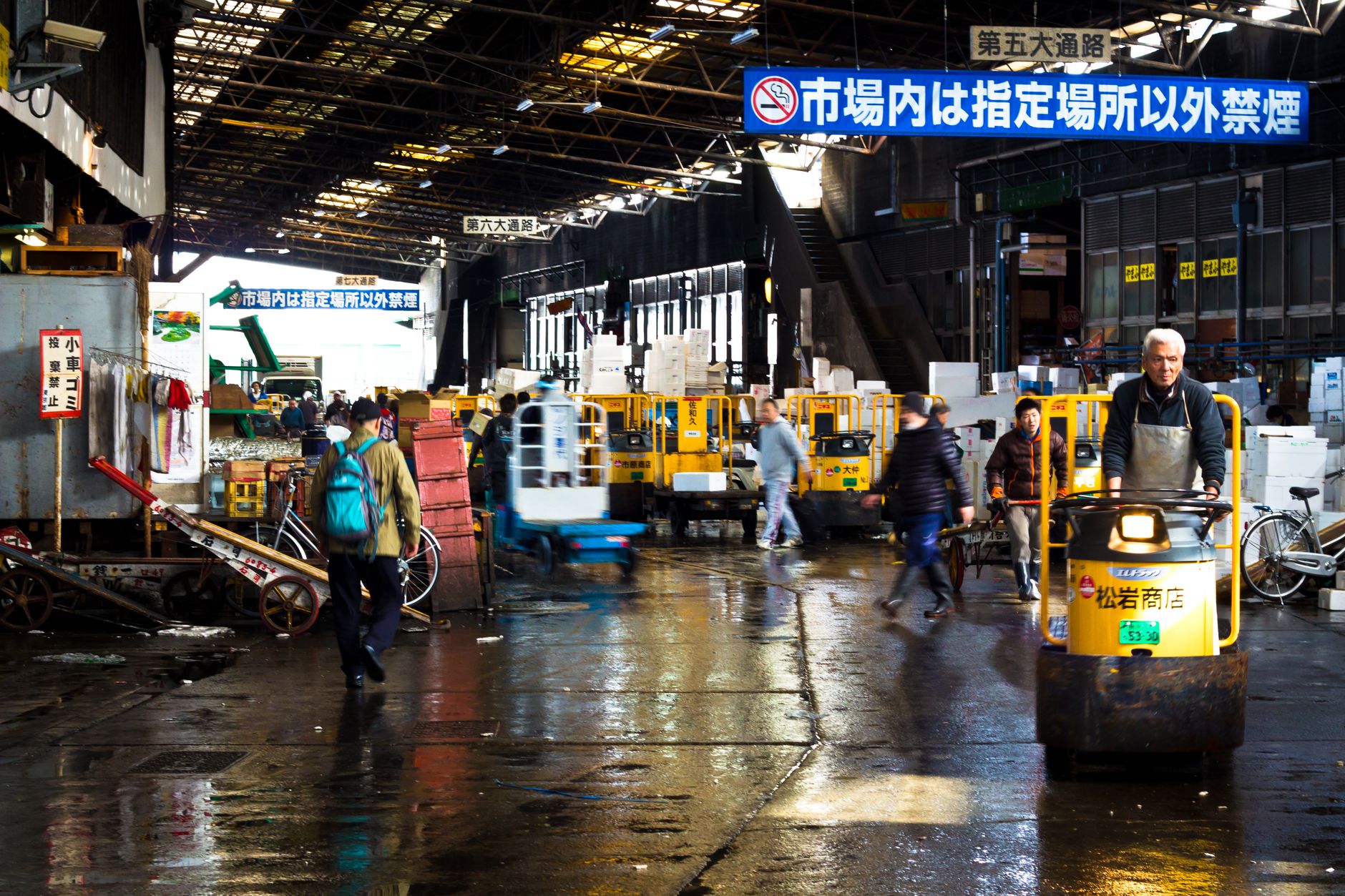
The neighbourhood is dense, loud, and visually overwhelming. Motorised carts occasionally weave through the wider streets, while the inner alleys are strictly pedestrian. At the far edge of the market sits the Namiyoke Inari Shrine, a small Shinto shrine dedicated to protecting the market’s merchants and sailors.
How to Get to Tsukiji Outer Market
Tsukiji is located in Chuo City and is highly accessible via the Tokyo subway system. Because the market alleys are narrow and crowded, arriving by public transport is the only sensible option. If you are reading any broader Japan guide, you will know that relying on the subway is standard practice here.
| Station | Subway Line | Walking Distance to Market |
|---|---|---|
| Tsukijishijo Station | Toei Oedo Line | 1 minute (Use Exit A1) |
| Tsukiji Station | Tokyo Metro Hibiya Line | 3 minutes (Use Exit 1 or 2) |
| Higashi-Ginza Station | Hibiya & Asakusa Lines | 5 minutes (Use Exit 6) |
If you are staying in the nearby Ginza district, you do not even need to take the train. The walk from central Ginza to the market entrance is roughly 1 km and takes about 15 minutes on foot. This makes it an easy morning activity if you are researching Where to Stay in Tokyo: Best Areas and Hotels and choose the Chuo area.
Opening Hours and Best Times to Visit
The Tsukiji Outer Market operates on an early schedule. Most shops and stalls open between 6:00 AM and 8:00 AM. By 2:00 PM, the vast majority of vendors have packed up for the day, and the area becomes a ghost town.
To get the best food without standing in hour-long queues, arrive between 7:00 AM and 8:00 AM. By 10:00 AM, the narrow alleys become shoulder-to-shoulder with crowds. The market is completely closed on Sundays, national holidays, and typically on the second and fourth Wednesdays of the month. Always check the official Tsukiji calendar online before your visit.
Weather also plays a factor in how enjoyable your morning will be. In the summer months, the market alleys trap humidity, with temperatures often reaching 30°C (86°F) by mid-morning. In winter, early mornings can drop to 2°C (35°F), making a hot bowl of soup highly appealing. For broader seasonal planning, consult the Best Time to Visit Tokyo: Month-by-Month Guide.
The Best Street Food at Tsukiji Outer Market
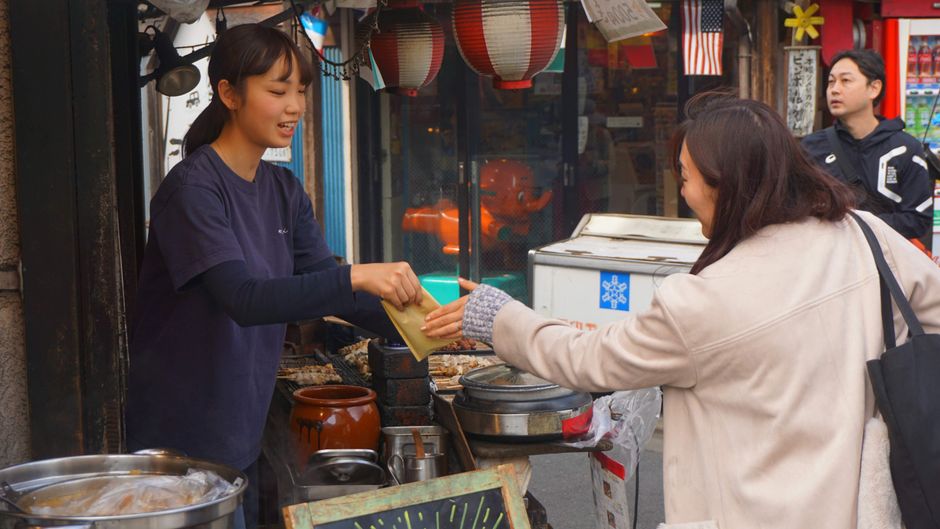
The main reason to visit is the food. Bring an empty stomach and expect to spend anywhere from $15 to $50 USD grazing across different stalls. Here are the specific items you should look for.
Tamagoyaki (Japanese Omelette)
Tamagoyaki is a sweet, rolled, dashi-infused omelette cooked in rectangular pans. Tsukiji is famous for it. You will see several stalls near the main intersection, with Yamachou and Marutake being the most prominent. You can watch the chefs rapidly rolling the egg layers behind glass. A freshly cooked stick costs around $1 to $2 USD (150-200 JPY) and is served piping hot.
Fresh Seafood and Kaisendon
You cannot leave without eating raw fish. Many stalls sell individual scallops, fresh oysters, or sea urchin (uni) served directly in the shell for $3 to $10 USD. If you want a sit-down meal, look for a Kaisendon (seafood rice bowl) restaurant. Tsukiji Itadori has several branches in the market serving bowls piled high with tuna, salmon roe, and crab for $15 to $30 USD. This area is a staple recommendation in any What to Eat in Tokyo: Local Food Guide.
Wagyu Beef and Meat Skewers
Despite being a seafood hub, Tsukiji excels at beef. Look for stalls grilling A5 Wagyu beef on skewers, lightly torched and seasoned with salt. These are expensive, often costing $15 to $25 USD for a single skewer, but the meat melts immediately. For a heavier, traditional breakfast, join the queue at Kitsuneya. This legendary corner stall serves horumon-don (beef offal stewed in red miso over rice) for about $6 USD. The stall has been using the same base broth for decades.
Sweets and Matcha
To finish your morning, seek out strawberry daifuku. Soratsuki is a popular vendor selling these chewy mochi buns stuffed with sweet red bean paste and topped with massive, perfectly uniform Japanese strawberries. They cost around $3.50 USD each. You will also find several tea merchants selling high-grade matcha lattes, both iced and hot, to wash down the rich food.
Shopping for Japanese Knives and Culinary Tools
Beyond food, Tsukiji is a working supply district for Tokyo’s chefs. It is one of the best places in the city to buy a high-quality Japanese chef’s knife (gyuto or santoku). Shops like Aritsugu and Masamoto have been forging blades for generations.
Prices for a carbon steel knife range from $80 to over $300 USD. If you purchase a knife, the shop staff will often hand-engrave your name into the blade while you wait. Remember to bring your passport, as many of these larger retail shops offer tax-free shopping for tourists.
You can also buy beautiful ceramics, lacquerware bowls, wooden bento boxes, and dried ingredients. Shops selling katsuobushi (dried bonito flakes) and kombu (kelp) line the outer edges of the market, offering the essential building blocks of Japanese dashi.
Essential Etiquette and Mistakes to Avoid
Tsukiji Outer Market has struggled with overtourism, leading local authorities to enforce strict rules. Following these guidelines ensures the market remains open and welcoming to international visitors.
- No eating while walking: This is the most strictly enforced rule. “Aruki-tabi” (eating while walking) is considered rude and creates a mess. When you buy street food, you must stand directly in front of the stall or in a designated eating area to consume it.
- Bring plenty of cash: While some sit-down restaurants and knife shops accept credit cards or IC cards (like Suica), 90% of the street food vendors only accept Japanese Yen. Bring plenty of 100 and 500 yen coins.
- Do not touch the seafood: Unless a vendor hands you a product, keep your hands off the displays. Raw fish is highly sensitive to temperature and contamination.
- Leave large luggage at the hotel: The alleys are incredibly narrow. Bringing a rolling suitcase or a massive backpack into the market will block traffic and frustrate vendors.
- Use the correct bins: Hand your rubbish back to the vendor you bought the food from. Do not dump oyster shells in a bin meant for plastic bottles.
Planning Your Tokyo Itinerary Around Tsukiji
Because Tsukiji is strictly a morning activity, it pairs perfectly with afternoon and evening destinations. A standard approach when mapping out your Tokyo Itinerary: How to Spend 1, 2 or 3 Days is to start here at 8:00 AM, finish by 10:30 AM, and then walk 1 km south to Hamarikyu Gardens. This traditional landscape garden offers a peaceful contrast to the chaotic market.
From the gardens, you can catch a water bus up the Sumida River, or take a short subway ride to Toyosu to experience teamLab Tokyo: Planets vs Borderless. The Planets exhibition is located just a few train stops away on the Yurikamome Line.
If you prefer to stay in central Tokyo, you can easily transition from a traditional morning in Tsukiji to looking at the Best Things to Do in Tokyo in the afternoon. You might head west across the city to experience the neon-lit energy of Shibuya Crossing and Shibuya Sky as the sun sets.
Alternatively, if your schedule is packed, you might reserve your mornings for out-of-town excursions. Tsukiji requires a dedicated morning, which means it will compete for time with a Mount Fuji Day Trip from Tokyo or other Best Day Trips from Tokyo. Plan to visit the market on a day when you are staying strictly within city limits.
Plan Your Trip
To get the most out of the Tsukiji Outer Market, preparation is key. Set your alarm early, wear comfortable shoes, and ensure you have at least 5,000 JPY in small bills and coins before you arrive. Map your route to either Tsukijishijo or Tsukiji station the night before so you can navigate the morning commuter rush with ease. By arriving early and respecting the local etiquette, you will experience one of Tokyo’s most vibrant and enduring food traditions.