The best day trips from Cusco include the Sacred Valley ruins of Pisac and Ollantaytambo, the high-altitude hike to Rainbow Mountain, and the steep trek to the turquoise waters of Humantay Lake. For a quieter experience, the South Valley offers impressive Inca water terraces at Tipón and pre-Inca sites without the heavy crowds. Most of these destinations are within a two to three-hour drive from the city, making them easy to tackle as full or half-day excursions.
Before you start booking excursions, read our comprehensive Cusco guide and our wider Peru guide to get your bearings. You will also need to factor in your arrival date, as acclimatisation is vital before attempting any hikes above 4,000 metres. Let’s look at the logistics, travel times, and DIY options for the top day trips.
The Classic: The Sacred Valley
The Sacred Valley follows the Urubamba River and sits at a lower altitude than Cusco, making it an ideal first day trip. The main route covers Pisac (33 km away) and Ollantaytambo (72 km away). Both feature massive Inca fortresses and agricultural terraces. A secondary route, often called the VIP tour, takes you to the circular agricultural terraces of Moray, the Maras salt mines, and the weaving village of Chinchero.
Pisac Ruins and Market
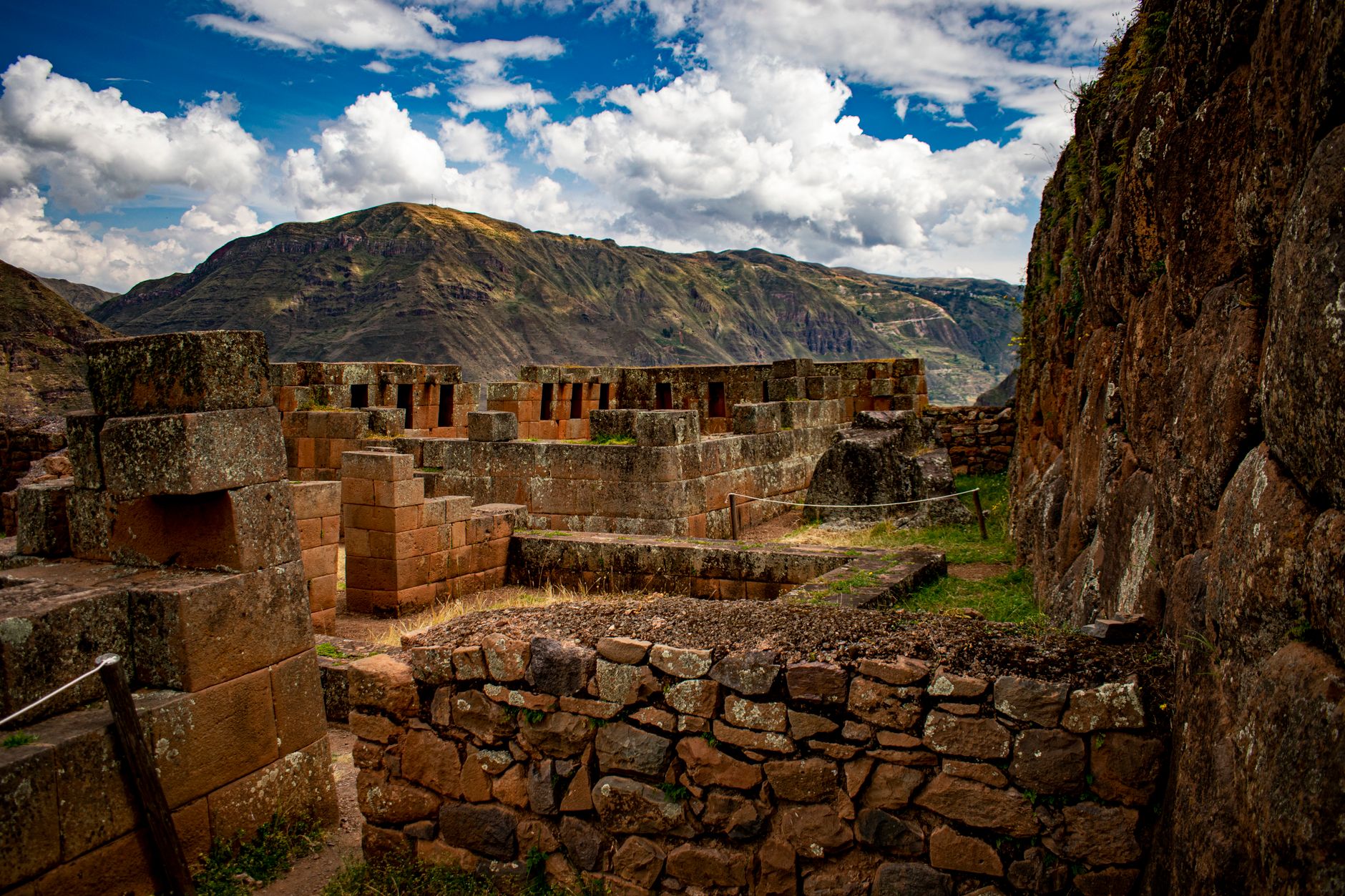
Pisac is famous for two things: its sprawling hilltop archaeological site and its vibrant artisan market. The ruins sit high above the modern town, featuring some of the finest Inca stonework and plunging agricultural terraces. You can take a taxi up to the ruins and hike the steep, scenic trail back down to the town square. The market operates daily, but it expands significantly on Sundays, filling the streets with vendors selling alpaca jumpers, ceramics, and fresh produce.
Ollantaytambo Fortress
Ollantaytambo is a living Inca town, where locals still use the original stone streets and water channels. The fortress here was the site of a major Inca victory against the Spanish. Climbing the steep terraces to the unfinished Temple of the Sun will leave you breathless, both from the altitude and the sheer scale of the pink granite blocks. Many travellers use Ollantaytambo as a transit hub, but the ruins easily warrant a dedicated half-day visit.
Moray, Maras, and Chinchero
Moray consists of deep, bowl-like depressions lined with concentric terraces. The Incas likely used this site as an agricultural laboratory, as the temperature varies by up to 15°C (27°F) from top to bottom. Nearby, the Maras salt mines feature thousands of shallow pools carved into the hillside, where local families have harvested salt since pre-Inca times. Chinchero, sitting at 3,762 metres, is renowned for its traditional textile cooperatives where you can watch weavers dye alpaca wool using natural ingredients like cochineal insects.
You can easily visit the Sacred Valley on your own using local colectivos (shared minivans). For Pisac, catch a colectivo from Puputi Street in Cusco for about $1.50 USD. For Ollantaytambo, grab one from Pavitos Street for around $3-4 USD. Alternatively, a guided tour takes the hassle out of transport but limits your time at each site. Read our dedicated Sacred Valley guide for detailed transit routes.
To enter the ruins at Pisac, Ollantaytambo, Moray, and Chinchero, you must buy the Boleto Turístico del Cusco (Cusco Tourist Ticket). In 2026, the full 10-day ticket costs 130 PEN (approx $35 USD). Maras requires a separate community entrance fee of 10 PEN (approx $3 USD).
The Colourful Peaks: Rainbow Mountain and Palccoyo
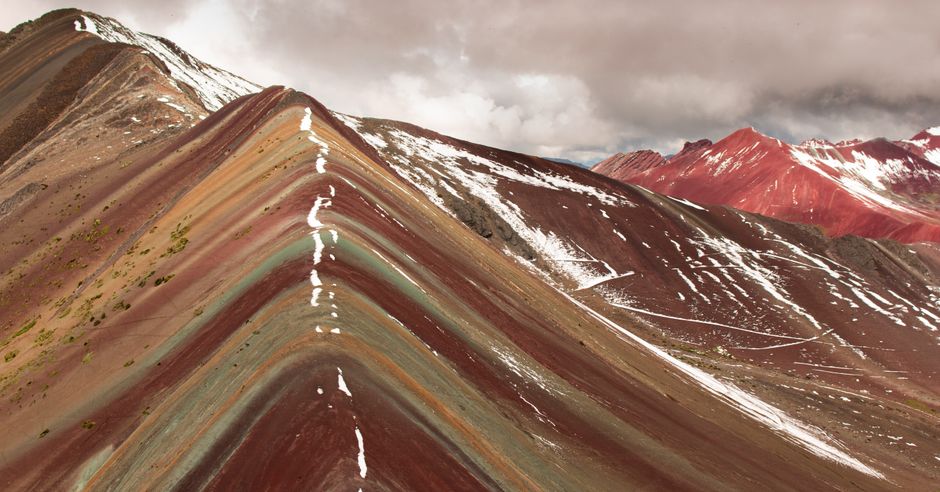
Rainbow Mountain (Vinicunca) is arguably the most famous day trip from Cusco, located about 140 km southeast of the city. The mineral-striped peak sits at a staggering 5,036 metres. Tours usually depart Cusco between 3:00 AM and 4:00 AM, driving three hours to the trailhead in Cusipata.
Hiking Vinicunca
The hike itself is only about 7 km round trip, but the extreme altitude makes it incredibly challenging. The final ascent is steep and sandy, testing your lungs with every step. At the summit, you are rewarded with vivid stripes of red, yellow, and turquoise minerals, backed by the snow-capped Ausangate glacier. Many tours offer an optional 45-minute extension to the Red Valley (Valle Rojo), a dramatic rust-coloured canyon that sees a fraction of the crowds.
The Palccoyo Alternative
If you want a less crowded, easier alternative, book a trip to Palccoyo. It sits slightly lower at 4,900 metres and requires only a 45-minute, relatively flat walk. Instead of one peak, Palccoyo lets you see three different coloured mountains, plus a unique stone forest. The drive takes slightly longer (about 3.5 hours), but the relaxed pace makes it a much better option for families or those struggling with the thin air.
Because of the logistics and remote dirt roads, visiting the coloured mountains requires booking a guided tour (usually $30-50 USD). Whichever you choose, read up on preventing altitude sickness in Cusco before you go.
The Glacial Waters: Humantay Lake
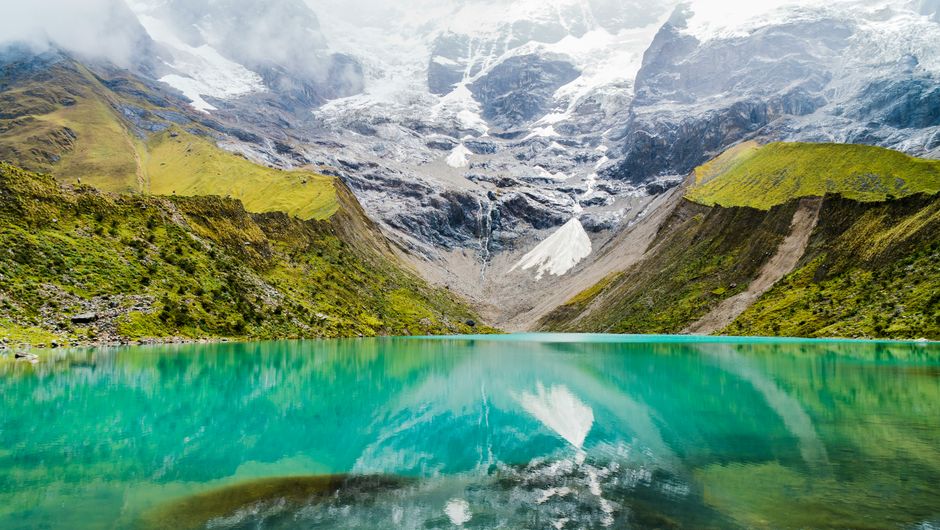
Humantay Lake is a vivid turquoise glacial lake sitting at 4,200 metres in the Vilcabamba mountain range. It is located about 120 km northwest of Cusco. The drive takes three hours, ending at the Soraypampa trailhead (3,800 metres).
The Steep Ascent
From Soraypampa, the hike is short but brutally steep. You will climb 400 vertical metres over 1.5 to 2 hours. The trail is a clear mountain path that climbs steadily through open highland grassland before the lake comes into view across the final ridge. The reward is a close-up view of the Humantay glacier dropping directly into the mineral-rich water. You can hire a horse from local muleteers for the ascent (around $20-25 USD), but you must walk back down.
Spiritual Significance
The lake has deep spiritual significance for local Quechua communities. It is considered a sacred site, and the tradition of leaving an apacheta (a small stone offering) at the lakeside is still practised by visitors today as a gesture of respect for the Pachamama (Mother Earth). If you choose to participate, select a rock from the path, give thanks for your safe arrival, and place the stone gently on an existing pile at the water’s edge.
Like Rainbow Mountain, Humantay Lake is best done with a tour group due to the remote trailhead. Expect to pay a 20 PEN ($5.50 USD) community fee in cash at the gate, which is sometimes excluded from the base tour price.
The Quiet Alternative: The South Valley
If you want to escape the crowds, head to the South Valley. This route covers Tipón, Pikillaqta, and Andahuaylillas, all within 40 km of Cusco. It is a fantastic half-day trip that highlights engineering and architecture completely different from the Sacred Valley.
Tipón and Pikillaqta
Tipón showcases advanced Inca hydraulic engineering with working water channels, fountains, and perfectly manicured agricultural terraces. The water still flows today, demonstrating the Incas’ mastery over their environment. Pikillaqta, just down the road, is a sprawling pre-Inca city built by the Wari culture. Its rigid, grid-like layout and multi-story adobe walls offer a stark contrast to the organic, stone-carved architecture of the Incas.
Andahuaylillas and Local Food
Andahuaylillas is home to the San Pedro Apóstol Church, famously dubbed the “Sistine Chapel of the Andes” for its spectacular 17th-century murals and gold-leaf altar. The South Valley is also famous for its regional food. Stop in the town of Oropesa to buy massive, sweet chuta bread straight from the traditional ovens, or visit the roadside restaurants in Tipón, which are renowned for serving the best roasted guinea pig (cuy) in the region.
You can visit the South Valley via a half-day guided tour or by taking a local bus from Avenida de la Cultura in Cusco. Tipón and Pikillaqta are included in the full Boleto Turístico. The church in Andahuaylillas charges a separate entry fee of about $4 USD.
Guided Tours vs DIY Travel
Deciding whether to book a tour or travel independently depends entirely on the destination. The Sacred Valley and the South Valley are incredibly easy to navigate on your own. Colectivos run constantly throughout the day, allowing you to set your own pace, linger at the ruins, and avoid the rushed schedules of large bus tours. You will save money and have a much more authentic experience interacting with locals on public transport.
However, for Rainbow Mountain and Humantay Lake, guided tours are the most practical option. The trailheads are located at the end of remote, poorly maintained dirt roads with no reliable public transport. Hiring a private taxi for the day will cost significantly more than a group tour (which typically includes transport, breakfast, lunch, and a guide with emergency oxygen). If you prefer flexibility, book a private tour rather than attempting to navigate the mountain roads yourself.
Comparing the Best Day Trips from Cusco
Use this table to weigh up travel times, altitudes, and the best way to get there. Keep in mind that travel times are one-way from the city centre.
| Destination | Distance / Drive Time | Max Altitude | Best Way to Visit |
|---|---|---|---|
| Sacred Valley (Pisac/Ollantaytambo) | 33-72 km (1-2 hours) | 2,972 m (Pisac) | DIY via colectivo or guided tour |
| Rainbow Mountain (Vinicunca) | 140 km (3 hours) | 5,036 m | Guided tour |
| Palccoyo Alternative | 125 km (3.5 hours) | 4,900 m | Guided tour |
| Humantay Lake | 120 km (3 hours) | 4,200 m | Guided tour |
| South Valley (Tipón) | 25 km (45 mins) | 3,400 m | DIY via local bus or half-day tour |
Overnight Extensions
Some day trips from Cusco work better as overnight stays, saving you hours of backtracking. Ollantaytambo in the Sacred Valley is the main departure point for trains to Aguas Calientes. Instead of returning to Cusco, spend the night in Ollantaytambo, explore the ruins in the late afternoon when the tour buses leave, and catch an early train the next morning. Read our guide on getting to Machu Picchu from Cusco for train schedules and trekking options.
Similarly, the Soraypampa trailhead for Humantay Lake is also the first campsite for the multi-day Salkantay Trek. If you plan to hike to Machu Picchu via the Salkantay route, you will visit Humantay Lake on day one anyway, so there is no need to book it as a separate day trip.
Integrating Day Trips into Your Schedule
When planning your Cusco itinerary, order your day trips by altitude. Spend your first day exploring the city at 3,400 metres. Check off the best things to do in Cusco, like visiting the Qorikancha and grabbing lunch at the San Pedro Market Cusco.
On day two, head down into the Sacred Valley (2,800 metres) to acclimatise further. Save the high-altitude hikes like Humantay Lake (4,200 metres) and Rainbow Mountain (5,036 metres) for day four or five. Your experience will be much more enjoyable when your lungs have adjusted to the thin air.
You should also consider the weather. The best time to visit Cusco for clear skies and dry trails is between May and September. During the rainy season (December to March), trails to Humantay and Rainbow Mountain become muddy, and the colourful peaks are often covered in snow.
Plan Your Trip
Base yourself near the Plaza de Armas or in the San Blas neighbourhood for easy access to tour agencies and colectivo stops. Our guide on where to stay in Cusco breaks down the best boutique hotels and quiet streets. After a long day of hiking, you will want a hearty meal; check out what to eat in Cusco for the best spots to try alpaca steak or traditional lomo saltado.
Finally, always carry cash (Peruvian Soles) on your day trips. Community fees, toilets at trailheads, and snacks from rural vendors cannot be paid for with a card. Pack layers, as temperatures can swing from freezing at dawn to 20°C (68°F) under the midday Andean sun.