Choosing between the great migration kenya vs tanzania comes down to your travel dates. The wildebeest herds spend roughly nine months of the year in Tanzania’s Serengeti National Park and just two to three months in Kenya’s Masai Mara National Reserve. If you are travelling between January and July, Tanzania is your only option, while August to October offers the chance to see the herds in both countries.
The migration is not a single event, but a continuous, year-round circular journey driven by rainfall and the search for fresh grazing. Over 1.5 million wildebeest, accompanied by 200,000 zebras and 350,000 gazelles, move across the Mara-Serengeti ecosystem. Understanding where they are at any given time is the most critical part of planning your wider Africa guide and safari logistics.
The Great Migration Kenya vs Tanzania: Core Differences
While the Masai Mara and the Serengeti share an unfenced border, the safari experience in each country feels distinctly different due to geography, scale, and park management.
Tanzania: The Serengeti Advantage
The Serengeti is massive, covering 14,763 sq km. Because it hosts the herds for the vast majority of the year, Tanzania offers more variety in migration experiences. Here, you can witness the massive calving season on the short-grass plains of Ndutu in the south, the dramatic Grumeti River crossings in the Western Corridor, and the Mara River crossings in the north (Kogatende).
Because the park is so large, vehicle density is generally lower than in Kenya, especially outside the central Seronera region. However, the sheer size means you must book accommodation in the correct sector for your travel month, or you risk being a six-hour drive away from the herds.
Kenya: The Masai Mara Advantage
At 1,510 sq km, the Masai Mara is roughly one-tenth the size of the Serengeti. The herds typically arrive here between August and October. The smaller area means wildlife is highly concentrated. You do not have to drive far to see predators, and the open plains make spotting big cats significantly easier.
The Masai Mara is also easier and cheaper to reach by road from the capital, Nairobi. The downside to this accessibility and smaller size is higher vehicle density. During the peak river crossing months, it is common to see dozens of vehicles lined up at the Mara River waiting for the herds to cross.
Month-by-Month Migration Guide
The herds follow a general pattern, though exact timing shifts slightly each year depending on the rains. If you are deciding on the Best Countries to Visit in Africa based on wildlife, use this timeline to pinpoint your location.
| Month | Country | Primary Location | Key Event |
|---|---|---|---|
| January – March | Tanzania | Southern Serengeti & Ndutu | Calving season; predator action |
| April – May | Tanzania | Central & Western Serengeti | Heavy rains; herds moving north |
| June – July | Tanzania | Western Corridor | Grumeti River crossings |
| August – October | Kenya & Tanzania | Masai Mara & Northern Serengeti | Mara River crossings |
| November – December | Tanzania | Eastern & Central Serengeti | Herds moving south for short rains |
January to March: The Calving Season (Tanzania)
The herds gather in the Ndutu region of the Ngorongoro Conservation Area and the southern Serengeti plains. In February, around 8,000 wildebeest calves are born every day. This abundance of vulnerable prey draws high concentrations of lions, cheetahs, and leopards. The short grasses make predator viewing exceptional. Kenya’s Masai Mara is practically empty of the migrating herds during this time.
April to June: The Trek North (Tanzania)
As the southern plains dry out, the herds move through the central Serengeti (Seronera) towards the Western Corridor. This period coincides with East Africa’s long rains (April and May). Many mobile camps close, and roads can become impassable. By June, the herds reach the Grumeti River. While not as famous as the Mara River, the Grumeti crossings are spectacular and feature some of the largest crocodiles in Africa.
July to October: The River Crossings (Kenya & Tanzania)
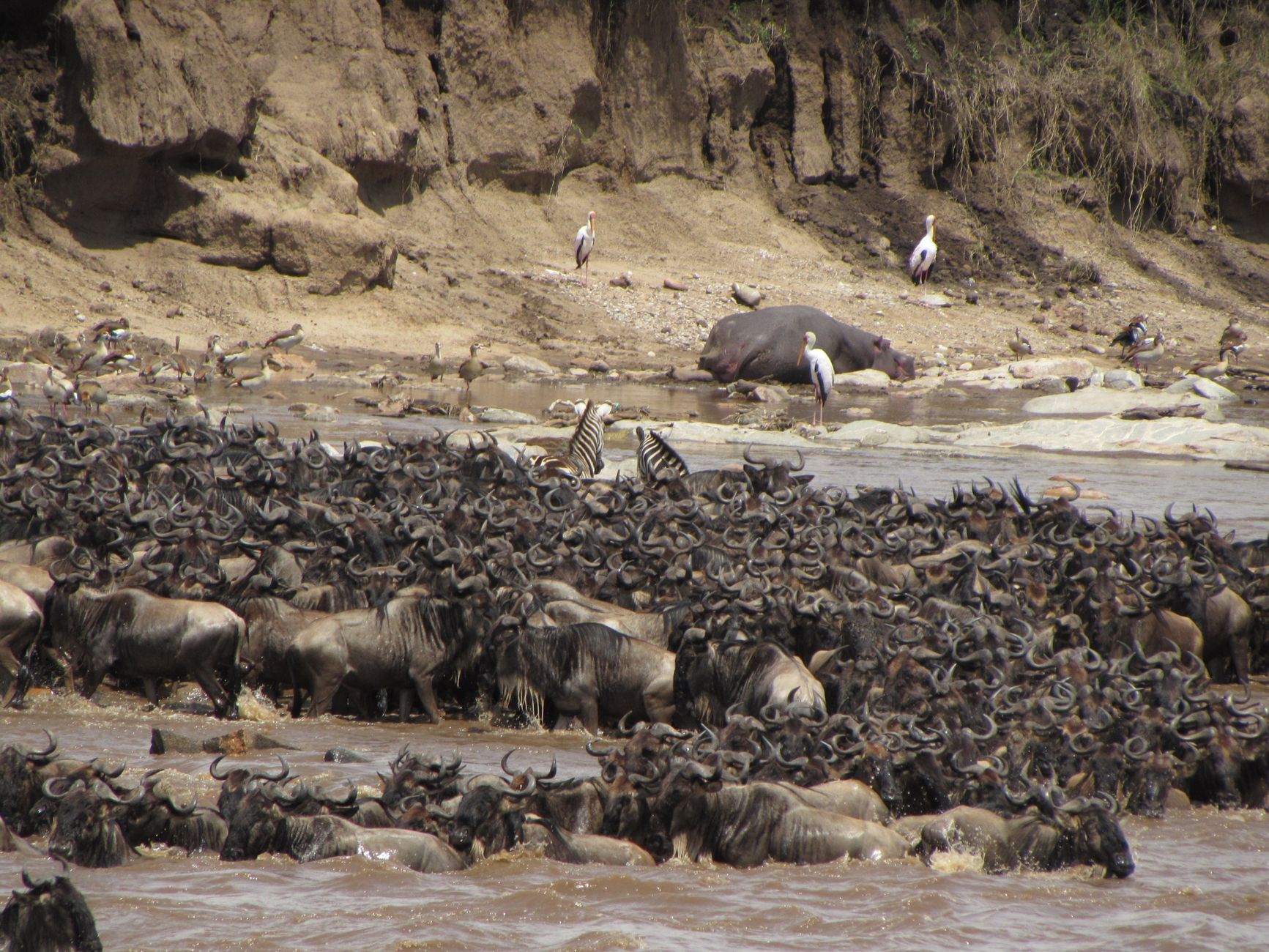
This is the most famous phase of the migration. The herds reach the northern Serengeti and begin crossing the Mara River into Kenya’s Masai Mara. The river zigzags across the border, meaning crossings happen in both countries. You can stay in the Kogatende region of Tanzania or anywhere in the Masai Mara to witness this. By October, the grazing in the Mara is depleted, and the herds prepare to head south again.
November to December: The Journey South (Tanzania)
Triggered by the short rains, the wildebeest leave Kenya and move rapidly south through the eastern side of the Serengeti, passing through Namiri Plains and central Seronera, aiming to reach the southern Ndutu plains by late December to begin the cycle again.
Logistics: Getting There and Costs
When searching for the Best Safari Destinations in Africa: Where to Go and When, budget and travel logistics often dictate the final choice between Kenya and Tanzania.
Accessing the Masai Mara (Kenya)
International flights land at Jomo Kenyatta International Airport (NBO) in Nairobi. From Nairobi, driving to the Masai Mara covers roughly 270 km and takes five to six hours. The road is paved until the final stretch near the reserve gates.
Alternatively, you can fly from Nairobi’s domestic Wilson Airport to various Mara airstrips (like Keekorok, Ol Kiombo, or Angama). The flight takes 45 minutes and costs $200 to $250 one way.
Park fees in Kenya increased significantly recently. Entering the Masai Mara National Reserve costs $100 per adult per day from January to June, and $200 per adult per day during the high season from July to December.
Accessing the Serengeti (Tanzania)
The main gateway is Kilimanjaro International Airport (JRO), followed by a transfer to the town of Arusha. Driving from Arusha to the central Serengeti covers 325 km and takes seven to eight hours, passing through the Ngorongoro Conservation Area.
Because of the massive distances, most travellers take light aircraft flights from Arusha Airport to Serengeti airstrips (like Seronera, Ndutu, or Kogatende). These flights take 1 to 2 hours and cost $300 to $450 one way.
Serengeti National Park fees are currently $70 per adult per 24 hours. Tanzania also charges an 18% VAT, bringing the daily total to $82.60. If you stay in the Ndutu area between January and March, you will pay Ngorongoro Conservation Area fees instead, which are similar.
Mistakes to Avoid When Booking
Chasing river crossings exclusively. The Mara River crossings are dramatic, but they are entirely unpredictable. Herds can stand at the riverbank for days before turning back. If you travel in August or September, enjoy the sheer volume of wildlife rather than spending eight hours a day baking in a vehicle waiting for a crossing that might not happen.
Booking too late. The best migration camps—especially the mobile camps that pack up and move two or three times a year to follow the herds—have only 8 to 12 tents. For travel between July and October, or during the February calving season, you need to book 9 to 12 months in advance.
Staying in permanent lodges in the wrong sector. If you book a permanent lodge in the southern Serengeti in August, you will be a six-hour drive from the herds in the north. Always match your accommodation location to your travel month.
What to Combine With Your Migration Safari
A migration safari is intense, with early mornings and long days on bumpy roads. Most travellers combine it with other landscapes or a beach break when building Africa Itineraries: Classic 2-Week to 1-Month Routes.
If you choose Kenya, combine the Masai Mara with Amboseli National Park for views of Mount Kilimanjaro and large elephant herds, or head to the Laikipia Plateau for rhino tracking. Finish your trip on the white sands of Diani Beach.
If you choose Tanzania, the Serengeti pairs perfectly with the Ngorongoro Crater and the baobab-studded landscapes of Tarangire National Park. For post-safari relaxation, direct flights connect Serengeti airstrips to the island of Zanzibar in just over two hours.
Plan Your Trip
Before you book flights, ensure you are up to date on your Vaccinations and Health Prep for Travel in Africa. Both the Masai Mara and the Serengeti are malaria zones, so consult a travel clinic regarding antimalarial medication.
Pack in layers. While daytime temperatures in the dry season (July to October) reach a comfortable 25°C (77°F), early morning game drives are bitterly cold. Temperatures frequently drop to 10°C to 15°C (50°F to 59°F) before sunrise, so a fleece, windbreaker, and warm hat are essential. Finally, remember that light aircraft flights in both countries strictly enforce a 15 kg (33 lb) luggage limit, and your bags must be soft-sided to fit into the cargo pods.