Choosing between Australia or New Zealand depends primarily on your available time and preferred climate. Pick Australia if you want tropical reefs, red desert outback, and warm coastal cities, provided you have at least three weeks to manage the vast flight distances between states. Choose New Zealand if you prefer a cooler climate, dramatic alpine fjords, and the ability to drive between glaciers and volcanoes within a single, compact two-week road trip.
Both destinations serve as the cornerstone for most international travellers exploring the region. As the foundation of our Oceania guide, understanding the logistical differences between these two nations will dictate your entire itinerary. While they sit relatively close to one another on a map, the travel experience, daily costs, and transport methods vary drastically.
Australia or New Zealand: The Practical Essentials
The flight across the Tasman Sea takes roughly three to four hours, meaning you can easily transit between Sydney and Auckland. However, treating them as a single destination is a common logistical error. Australia is a massive continent spanning 7.6 million square kilometres, requiring domestic flights to move between major hubs. New Zealand is a compact archipelago where driving is the primary mode of transport.
Entry requirements differ for both. Australia requires an Electronic Travel Authority (ETA) or eVisitor visa for most nationalities, which you must apply for via the official Australian Government app before departure. New Zealand requires an NZeTA (New Zealand Electronic Travel Authority) and payment of the International Visitor Conservation and Tourism Levy (IVL). Both processes are entirely digital and usually approved within 72 hours.
Australia: Vast Landscapes and Coastal Cities
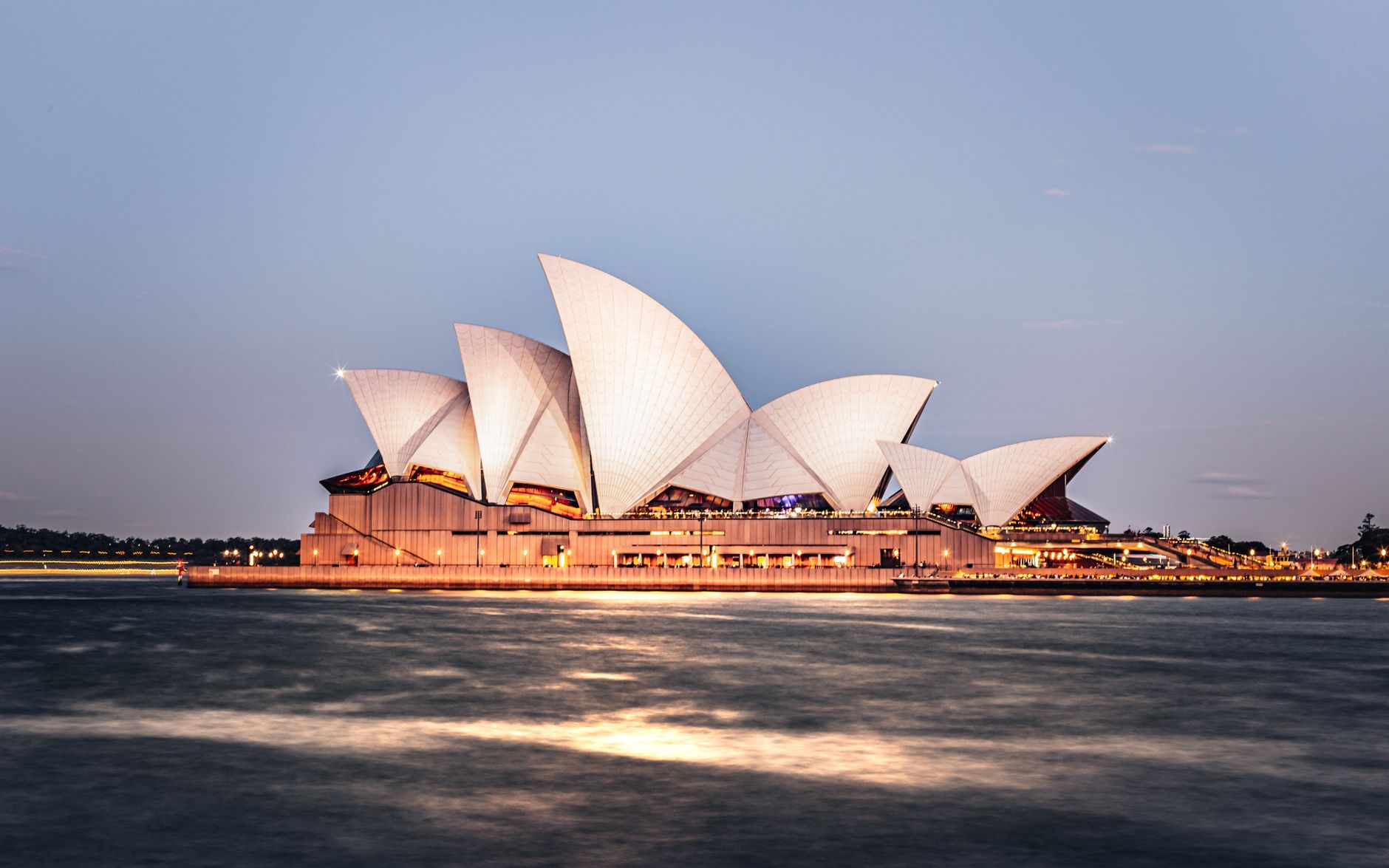
Australia delivers sheer scale. A standard itinerary involves hopping between distinct climate zones. You might start in New South Wales, spending four days in Sydney to walk the Bondi to Coogee coastal path and take the commuter ferry across the harbour to Manly. From there, you face a three-hour flight to the Red Centre to see Uluru and Kata Tjuta, followed by another flight north to Queensland.
In Tropical North Queensland, Cairns and Port Douglas serve as launchpads for the Great Barrier Reef and the ancient Daintree Rainforest. Because the distances are so vast—driving from Sydney to Cairns covers 2,400 km and takes 26 hours of continuous driving—relying on domestic carriers like Qantas, Virgin Australia, or Jetstar is mandatory for most two- or three-week trips.
Exploring Beyond the East Coast
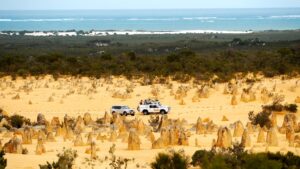
Beyond the east coast, Western Australia offers an entirely different scale of isolation and beauty. Flying into Perth gives you access to the Margaret River wine region and the coral atolls of Ningaloo Reef, where you can swim with whale sharks from March to July. However, adding Western Australia to an east coast itinerary requires a five-hour domestic flight, further underscoring the need for ample time.
Tasmania, Australia’s island state, provides a stark contrast to the mainland’s red deserts. Hobart offers a thriving culinary scene and the provocative MONA museum, while Cradle Mountain provides rugged, temperate wilderness hiking. Tasmania’s climate is much cooler, making it an excellent summer refuge when the mainland swelters.
Engaging with the world’s oldest continuous living culture is a vital part of any Australian itinerary. Prioritise Indigenous-led experiences, such as walking through the Daintree Rainforest with a Kuku Yalanji guide or learning about the Tjukurpa (creation stories) from the Anangu traditional owners at the base of Uluru.
Australian Costs and Weather
Daily costs in Australia range from $150 to $300 USD per person. A mid-range hotel in Melbourne or Sydney typically costs $150 to $250 USD per night. Dining out is heavily influenced by the country’s cafe culture; a flat white coffee costs around $3.50 to $4.50 USD, while a standard pub meal or casual dinner runs $20 to $35 USD.
The best time to visit depends entirely on which half of the country you target. The tropical north (Cairns, Darwin, Broome) is best during the dry season from May to October, with temperatures averaging 20 to 30°C (68 to 86°F). The southern states (New South Wales, Victoria, Tasmania) offer the best weather from September to April, with averages of 15 to 26°C (59 to 79°F).
New Zealand: Alpine Peaks and Compact Itineraries
New Zealand packs extreme geographical diversity into a much smaller footprint. Divided into the North Island and South Island, the country is designed for road trips. You can rent a car or campervan in Auckland and drive through rolling green hills to the geothermal geysers of Rotorua and the volcanic plateau of Tongariro National Park within a matter of days.
North of Auckland, the subtropical Bay of Islands offers excellent sailing and historical context at the Waitangi Treaty Grounds, the birthplace of modern New Zealand. Māori culture is deeply integrated into everyday life here. In Rotorua, you can attend a traditional hangi (a feast cooked in an earth oven) and visit a marae (meeting grounds) to gain a deeper understanding of indigenous traditions.
Driving the South Island
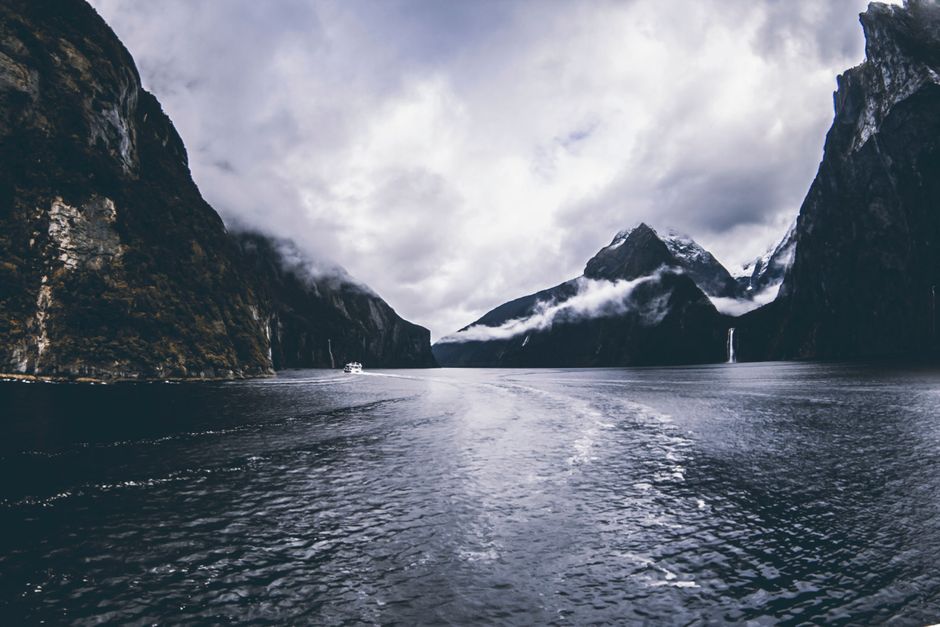
The South Island is defined by the Southern Alps. After taking the Interislander or Bluebridge ferry across the Cook Strait from Wellington to Picton, the landscape shifts to deep fjords, glaciers, and alpine lakes. Driving times here can be deceptive. A 100 km route through mountainous areas like Arthur’s Pass or the road to Milford Sound can easily take two hours due to winding, single-lane highways and frequent stops for single-lane bridges.
On the South Island, the rugged West Coast is a sparsely populated stretch of highway trapped between the Tasman Sea and the Southern Alps. Here, you can hike to the terminal faces of the Franz Josef and Fox Glaciers or explore the peculiar limestone formations of the Punakaiki Pancake Rocks.
New Zealand’s food and wine scene is heavily focused on local, high-quality produce. You will find world-class Sauvignon Blanc in the Marlborough region at the top of the South Island, and exceptional Pinot Noir in Central Otago near Queenstown. Seafood lovers should seek out native green-lipped mussels and, if visiting between March and August, the highly prized Bluff oysters.
New Zealand Costs and Weather
Budgeting for New Zealand requires $130 to $280 USD per day. Campervan rentals are highly popular but vary wildly in price, from $80 USD per day for a basic sleeper in winter to over $250 USD per day for a fully self-contained motorhome in January. Fuel is significantly more expensive here than in Australia, currently averaging around $1.60 to $1.80 USD per litre.
Weather in New Zealand is notoriously changeable. The summer months from December to March offer the most reliable conditions for hiking and outdoor activities, with temperatures sitting between 15 and 25°C (59 to 77°F). If you are visiting for winter sports in Queenstown or Wanaka, aim for July and August when temperatures drop to 0 to 10°C (32 to 50°F).
Comparing the Two: Which Deserves Your Time?
If you only have two weeks, New Zealand offers a more cohesive experience. You can comfortably loop the South Island, taking in Christchurch, Aoraki/Mount Cook, Queenstown, and Fiordland National Park without stepping foot in an airport. Attempting a two-week trip in Australia means spending a significant portion of your holiday checking in for domestic flights and navigating airport transfers.
Both consistently rank highly among the best countries to visit in Oceania, but they cater to different travel styles. Australia leans heavily into beach culture, coastal drives, and remote, arid wilderness. New Zealand is geared towards high-adrenaline activities, multi-day alpine hikes (the Great Walks), and dramatic, moody landscapes.
| Feature | Australia | New Zealand |
|---|---|---|
| Minimum Time Needed | 3 to 4 weeks | 10 to 14 days |
| Primary Transport | Domestic flights | Rental car or campervan |
| Top Landscapes | Coral reefs, red deserts, white sand beaches | Glaciers, fjords, volcanic plateaus, alpine lakes |
| Wildlife | Kangaroos, koalas, quokkas, diverse marine life | Kea birds, kiwi, marine mammals, sheep |
| Climate | Mostly hot and dry, tropical in the north | Temperate, highly variable, alpine in the south |
Common Itinerary Mistakes to Avoid
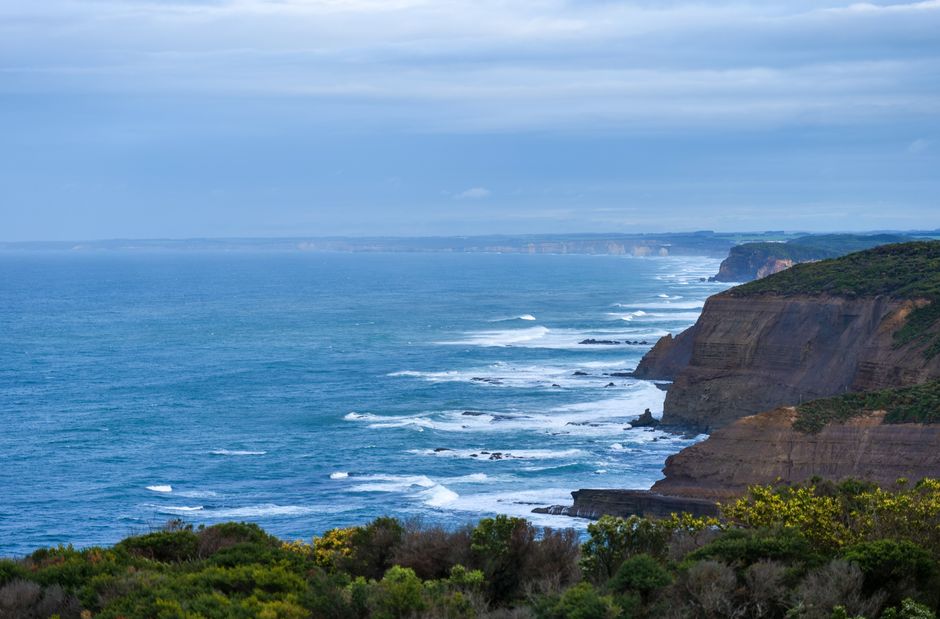
The most frequent error travellers make in Australia is underestimating the driving distances. Planning to drive from Sydney to Melbourne sounds simple, but the coastal route via the Great Ocean Road takes at least three to four days to do properly. Stick to flying between major state capitals unless you have dedicated a month or more to a road trip.
In New Zealand, the biggest mistake is failing to book ahead during the peak summer season (December to February). Spots on the Milford Track or Routeburn Track sell out within hours of opening, usually six months in advance. Similarly, ferry crossings across the Cook Strait and campervan rentals must be secured months prior to arrival.
Another error is assuming the weather will be hot. While Australia delivers intense summer heat, New Zealand has a maritime climate. Even in January, a southerly front can drop temperatures in Queenstown to single digits (Celsius). You must pack layers, including a high-quality windproof and waterproof jacket, regardless of the month you visit.
Combining Your Trip with the Wider Region
Due to the long-haul flights required to reach this part of the world from North America or Europe, many travellers break up the journey. Major airlines like Fiji Airways and Air Tahiti Nui offer free or low-cost stopovers. You can easily consider adding one of the best South Pacific islands for a holiday to your itinerary to recover from jet lag before tackling a busy road trip.
If you want to try island hopping in the South Pacific, flying into Auckland provides excellent connectivity. New Zealand serves as a major aviation hub for direct flights to Fiji, Samoa, Tonga, and the Cook Islands. Australia offers similar routes from Sydney and Brisbane, alongside direct access to Vanuatu and New Caledonia.
Younger travellers under the age of 30 (or 35 for certain nationalities) often choose not to decide between the two at all. If you have a year to spare, review the requirements for working holiday visas in Australia and New Zealand. Holding a visa for one country often makes it financially viable to live and work in one while taking short holidays to the other.
Plan Your Trip
Decide on your primary mode of transport first. If you want a classic campervan holiday, New Zealand is the superior choice for a two-week timeframe. If you prefer city-hopping, world-class dining, and snorkelling in warm waters, book a multi-city flight itinerary for Australia.
Secure your international flights into major hubs like Sydney (SYD), Melbourne (MEL), or Auckland (AKL) to find the most competitive fares. Once your dates are locked, immediately apply for the relevant electronic travel authorities and secure your rental vehicles. Both countries operate on a strict peak season during the Southern Hemisphere summer, so last-minute bookings often result in paying premium rates or missing out entirely.