South Pacific island hopping requires a reality check regarding geography. Unlike tightly packed regions in Europe or the Caribbean, the Pacific Ocean covers a massive area where neighbouring countries can be a five-hour flight apart. To plan a successful trip, you must decide whether you want to explore multiple islands within one country or take on the logistics and expense of flying between different island nations.
Before booking flights, it helps to understand the sheer scale of the region. You can read more about the geography and distinct subregions in this comprehensive Oceania guide.
Single-Country vs. Multi-Country Itineraries
The most common mistake travellers make is trying to cram Fiji, Vanuatu, and French Polynesia into a two-week holiday. There are very few direct flights between these nations. Instead, you usually have to route back through major regional hubs like Nadi (Fiji), Auckland (New Zealand), or Brisbane (Australia).
If you have less than three weeks, stick to single-country island hopping. You will spend your time actually on the islands rather than in transit lounges. If you have a month or more, multi-country itineraries become viable. To decide which nation suits your travel style, review the best countries to visit in Oceania.
Top Single-Country South Pacific Island Hopping Routes
Fiji: The Mamanuca and Yasawa Islands
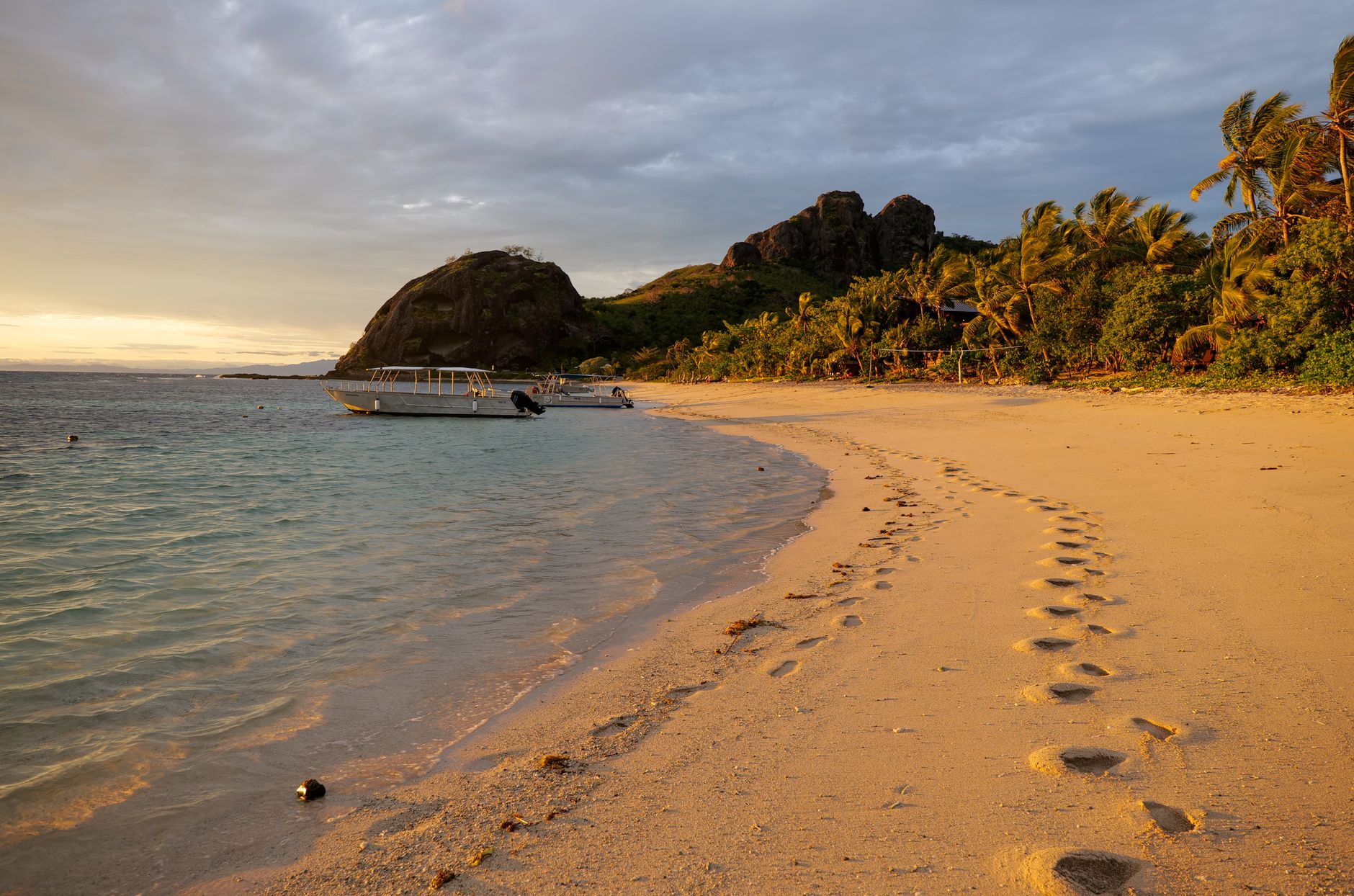
Fiji offers the most accessible and budget-friendly island hopping in the South Pacific. The Mamanuca and Yasawa island chains string out to the northwest of the main island, Viti Levu. You do not need to fly between them; instead, you rely on a daily catamaran service.
The Yasawa Flyer, operated by South Sea Cruises, departs Port Denarau (near Nadi) every morning. It travels up the island chain, stopping at various resorts, and returns in the afternoon. You can buy individual sector tickets or a flexible Bula Pass (ranging from $150 to $250 USD for 5 to 15 days), which allows you to hop on and off. Distances are short; the first Mamanuca islands are just 45 minutes from the port, while the furthest Yasawa islands take about five hours.
French Polynesia: The Society Islands
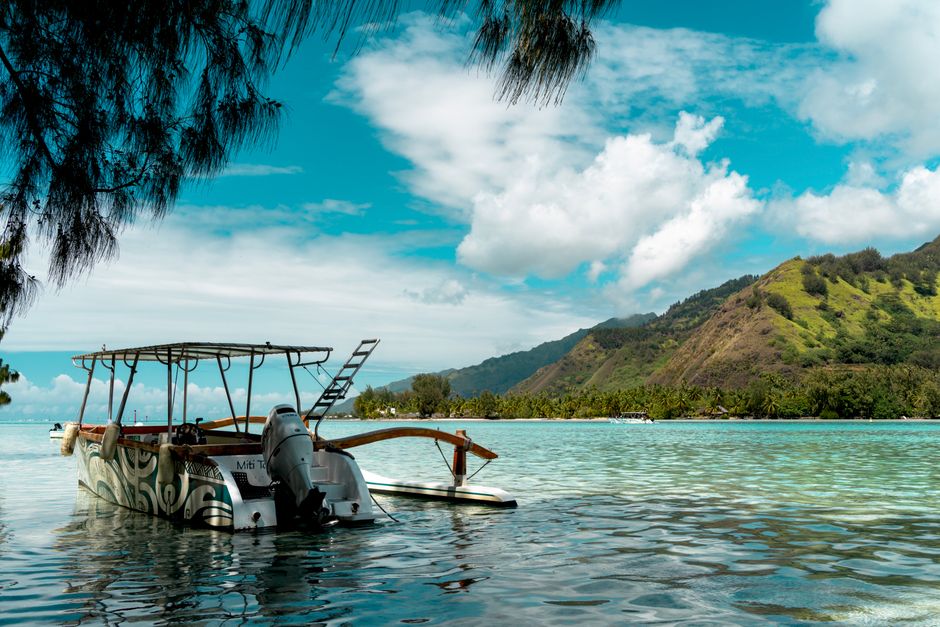
French Polynesia covers an area roughly the size of Western Europe, so flying is mandatory for most routes. The exception is the route from the main island of Tahiti (Papeete) to Moorea, which is a simple 30-minute ferry ride across the channel.
For the rest of the Society Islands, you will use Air Tahiti. They offer multi-island flight passes that are significantly cheaper than buying individual tickets. The popular Bora Bora Pass (roughly $450 to $550 USD) allows you to visit Moorea, Huahine, Raiatea, Maupiti, and Bora Bora. You must travel in one continuous direction without backtracking. If you want to know which specific stops to include, check out the best South Pacific islands for a holiday.
Samoa: Upolu to Savai’i
If you want a straightforward, two-island itinerary, Samoa is highly practical. The country consists primarily of two main islands: Upolu (home to the capital, Apia, and the international airport) and the larger, more traditional island of Savai’i.
The passenger and vehicle ferry operates between Mulifanua Wharf on Upolu and Salelologa on Savai’i. The crossing takes 90 minutes and costs around $5 to $10 USD for a foot passenger. Ferries run several times a day, making it easy to spend a week driving around Upolu before taking your rental car across the strait for another week on Savai’i.
The Cook Islands: Rarotonga to Aitutaki
The Cook Islands offer a streamlined island hopping experience. All international flights land in Rarotonga. From there, the standard addition is a domestic flight to Aitutaki, famous for its massive turquoise lagoon.
Air Rarotonga operates this route multiple times a day. The flight takes 45 minutes and costs between $150 and $250 USD return. While there are other islands in the Southern and Northern Groups (like Atiu or Mangaia), flights are less frequent and serve a much more rugged, off-the-grid travel style.
Multi-Country South Pacific Island Hopping Logistics
If you are determined to visit multiple countries, you need to base your route around airline networks rather than geography. You cannot simply charter a boat from Fiji to Vanuatu; the distance is over 1,000 km.
Fiji Airways is the dominant regional carrier. Nadi International Airport serves as the central hub for the Pacific. From Nadi, you can catch direct flights to Port Vila (Vanuatu), Apia (Samoa), Nukuʻalofa (Tonga), and Honiara (Solomon Islands). A multi-country trip usually looks like a hub-and-spoke model: fly into Nadi, spend a week in Fiji, fly to Samoa for a week, fly back to Nadi, and then fly onward to your next destination.
Transport Options and Estimated Costs
Transport costs vary wildly depending on the infrastructure of the island group. Here is a breakdown of common routes and typical expenses.
| Route / Service | Transport Type | Est. Travel Time | Estimated Cost (USD) |
|---|---|---|---|
| Fiji: Port Denarau to Yasawa Islands | Ferry (Yasawa Flyer) | 2 to 5 hours | $100 – $200 (Passes available) |
| Tahiti to Moorea (French Polynesia) | Ferry (Aremiti / Terevau) | 30 to 40 minutes | $15 – $20 one way |
| Society Islands Flight Pass (Air Tahiti) | Domestic Flights | Varies (45 min legs) | $450 – $600 total |
| Rarotonga to Aitutaki (Cook Islands) | Domestic Flight | 45 minutes | $150 – $250 return |
| Upolu to Savai’i (Samoa) | Car/Passenger Ferry | 90 minutes | $5 – $10 one way |
| Nadi (Fiji) to Apia (Samoa) | International Flight | 2 hours | $200 – $350 one way |
Best Time of Year for South Pacific Island Hopping
The South Pacific has two distinct seasons. The dry season runs from May to October. This is the best time for island hopping. Humidity is lower, rainfall is minimal, and daytime temperatures sit comfortably between 24°C and 28°C (75°F to 82°F). Sea conditions are also much calmer, which is vital if your itinerary relies on ferries or small boats.
The wet season spans from November to April. Temperatures push past 30°C (86°F) with high humidity. This is also cyclone season. While you can find travel deals during these months, island hopping becomes risky. Ferries are frequently cancelled due to high swells, and domestic flights can be grounded for days during severe tropical depressions.
Mistakes to Avoid
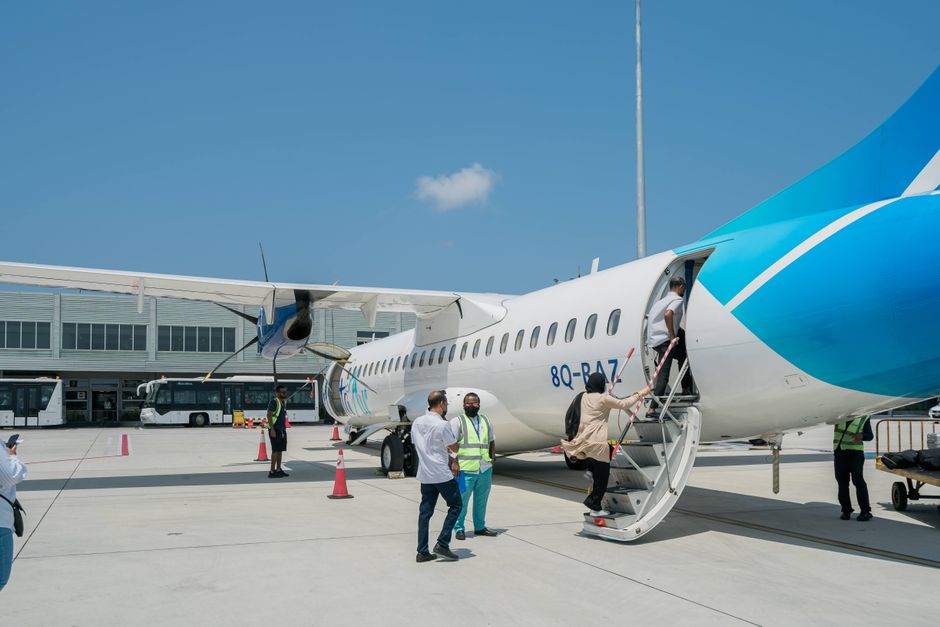
Overpacking: Domestic airlines in the Pacific use small turboprop aircraft. Air Tahiti and Air Rarotonga often enforce strict baggage limits of 10kg to 15kg for checked bags. If you pack a massive 25kg suitcase, you will face hefty excess baggage fees, or your bag may simply be left behind due to weight restrictions. Pack light and use local laundry services.
Ignoring Sunday closures: In countries like Tonga, Samoa, and parts of Fiji, Sunday is strictly observed as a day of rest and churchgoing. Domestic flights do not operate in Tonga on Sundays. Ferries run on reduced schedules, and shops and restaurants outside of major resorts will be closed. Plan your transit days for mid-week.
Booking tight connections: “Island time” is a genuine logistical factor. Ferries break down, domestic flights are delayed by passing storms, and schedules change without notice. Never book a domestic island flight on the same day as your international departure. Always spend your final night on the island where your international airport is located.
Combining Your Trip with Larger Hubs
Because direct flights from Europe or North America to the smaller Pacific islands are rare, you will likely transit through Australia or New Zealand. Many travellers choose to turn this transit into a larger itinerary.
Auckland, Sydney, and Brisbane offer the widest variety of connections to the Pacific. If you are debating where to base your larger trip, read Australia or New Zealand: Which to Visit First? to figure out which hub works best for you. Younger travellers planning extended trips often use these countries as a financial base to fund their island hopping; if that applies to you, check the requirements for working holiday visas in Australia and New Zealand.
Plan Your Trip
Start by choosing one primary archipelago. Map out the domestic transport schedules before you book your international flights, as ferries and local flights do not operate every day. Check visa requirements for each specific nation you plan to enter, as the South Pacific is not a single border zone. Finally, secure comprehensive travel insurance that explicitly covers remote medical evacuation, as many smaller outer islands only have basic medical clinics.