Securing machu picchu tickets requires navigating a strict system of three circuits and ten sub-routes implemented to protect the 15th-century Inca citadel. You must book your specific circuit, date, and entry time months in advance through the official Peruvian Ministry of Culture website.
What is Machu Picchu and Why Go?
Perched at 2,430 metres in the Andes above the Urubamba River, Machu Picchu is the crowning architectural achievement of the Inca Empire. Built in the 15th century under the rule of Emperor Pachacuti, it was mysteriously abandoned during the Spanish conquest. Because the conquistadors never found it, the site survived largely intact until it was brought to global attention in 1911 by Hiram Bingham.
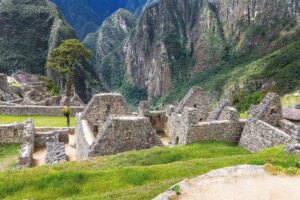
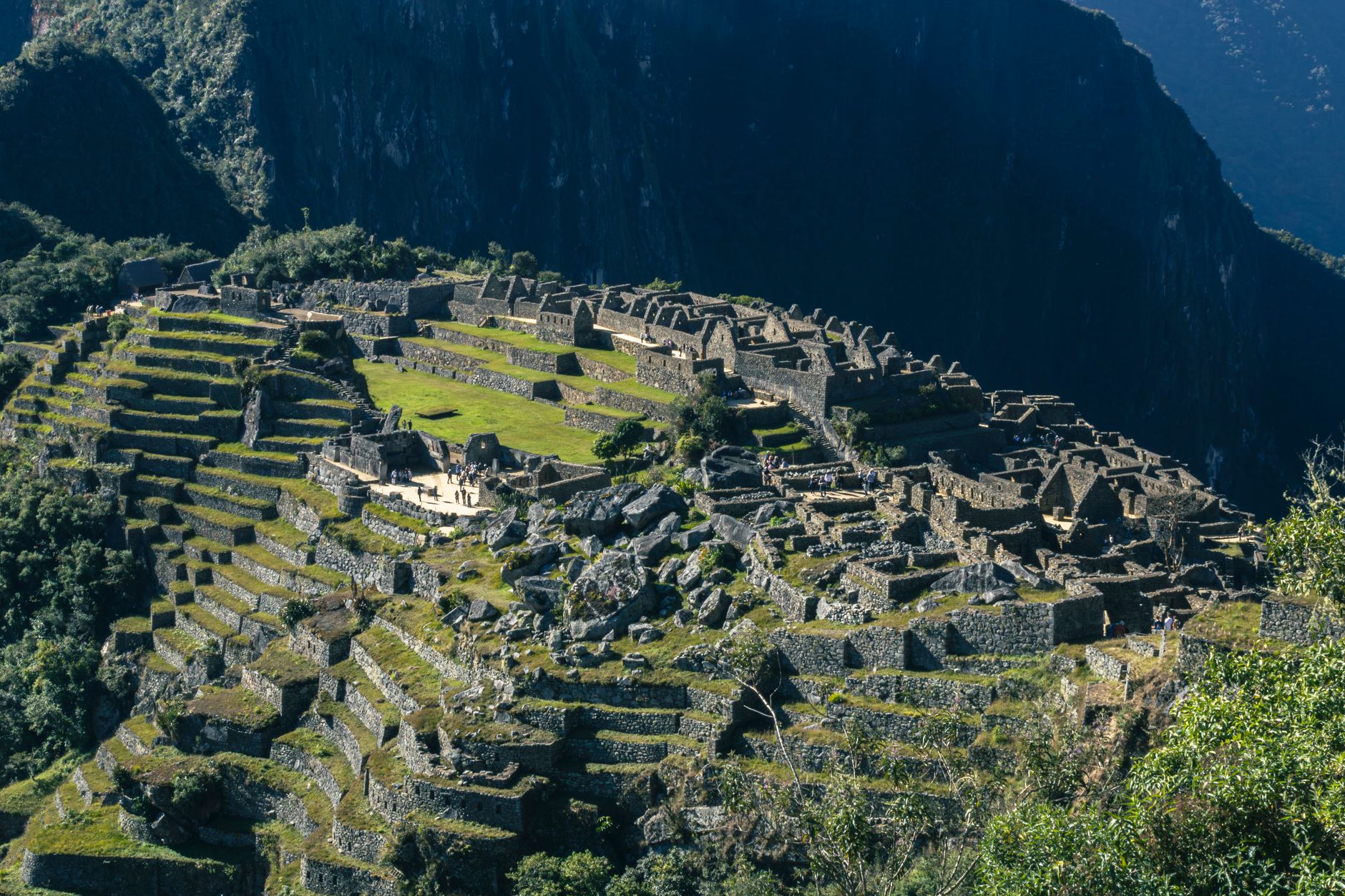
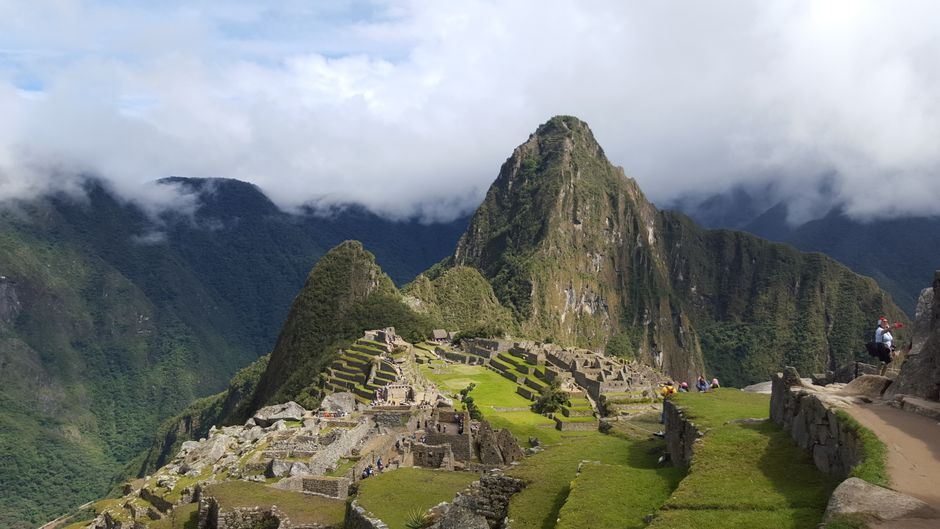
Beyond its historical weight, the physical setting is striking. The citadel sits on a narrow saddle between two jagged peaks—Machu Picchu Mountain and Huayna Picchu—surrounded by dense, steep cloud forest. It is the undisputed highlight of the region, drawing visitors to marvel at the dry-stone walls fused without mortar, the precision of the Temple of the Sun, and the astronomical alignment of the Intihuatana stone.
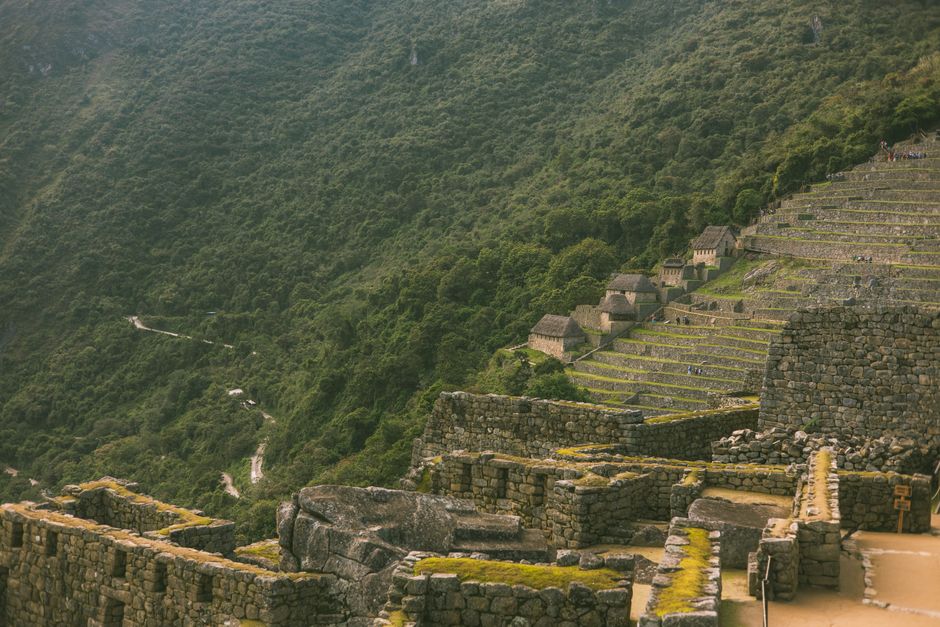
The site is divided into two main areas: the agricultural terraces that cascade down the mountainside, and the urban sector containing plazas, temples, and residential quarters. Understanding this layout is crucial, as your ticket dictates exactly which sectors you are allowed to explore.
How to Get There
Reaching the ruins is a multi-step journey that requires careful coordination. There are no direct roads from major cities to the site. Most travellers start in Cusco (which sits at a breathless 3,400 metres), taking a collectivo or private taxi 60 km into the Sacred Valley to the town of Ollantaytambo.
From Ollantaytambo, you board a train for a scenic 1.5-hour ride along the rushing Urubamba River. Two operators, PeruRail and Inca Rail, run this route, offering everything from basic carriage seats to luxury observatory wagons with panoramic windows. The train drops you in Aguas Calientes (also known as Machu Picchu Pueblo), the bustling, pedestrian-only gateway town at the base of the mountain.
From Aguas Calientes, you have two choices to reach the entry gates. You can hike the steep, uneven stone stairs through the jungle for about 90 minutes, which is physically demanding in the humidity. Alternatively, you can buy a ticket for the Consettur bus. The bus takes 25 minutes to zigzag up the winding Hiram Bingham road directly to the entrance. Be prepared to queue for the bus as early as 4:30 AM if you have a 6:00 AM entry ticket. If you are doing a multi-day hike, read our Inca Trail vs Alternative Treks guide to understand which routes walk you straight through the Sun Gate.
Machu Picchu Tickets and Circuits Explained
In recent years, the Peruvian government overhauled the entry system to prevent overcrowding and preserve the fragile stonework. They introduced three main circuits, which are further divided into ten specific sub-routes. You must choose your exact route when purchasing machu picchu tickets online at the official site (tuboleto.cultura.pe).
The system is incredibly rigid. You cannot switch circuits once inside, you cannot re-enter the site once you leave, and the paths are strictly one-way. If you miss a viewpoint, you are not allowed to walk backwards against the flow of traffic to return to it.
| Circuit | Best For | Key Features |
|---|---|---|
| Circuit 1: Panoramic | Photographers & Hikers | Access to the upper terraces for the classic postcard photo. Includes routes to hike Machu Picchu Mountain, the Sun Gate (Inti Punku), and the Inca Bridge. |
| Circuit 2: Classic | First-Time Visitors | The most comprehensive walking tour through the urban and religious sectors, plus the classic upper terrace photo spot. Sells out the fastest. |
| Circuit 3: Royalty | Adrenaline Seekers & Limited Mobility | Focuses on the lower ruins. Includes access to the steep Huayna Picchu and Huchuy Picchu climbs. Bypasses the strenuous upper terrace stairs. |
Circuit 1: The Panoramic Routes
Circuit 1 keeps you on the upper terraces of the agricultural sector. If your main goal is to capture the iconic, sweeping photograph of the ruins with Huayna Picchu towering in the background, this is a great option. However, it does not allow you to walk down into the urban sector to see the temples up close.
This circuit is also the gateway for the longer hikes. Route 1-A includes the strenuous climb up Machu Picchu Mountain, which takes about three hours round trip and offers the highest vantage point over the site. During the high season, you can also book Route 1-C to hike to the Sun Gate (Inti Punku) or Route 1-D to see the precarious Inca Bridge.
Circuit 2: The Classic Routes
Circuit 2 (specifically Route 2-A and 2-B) is the most sought-after ticket. It provides the most comprehensive experience of the citadel. You begin on the upper terraces for the classic photo, then descend into the heart of the ruins. You will walk through the Main Plaza, past the Temple of the Sun, the Sacred Rock, and the Condor Temple.
Because it offers the best of both worlds—the panoramic view and the close-up architectural details—Circuit 2 tickets sell out months in advance. If this is your first visit to the site, this is the circuit you want.
Circuit 3: The Royalty Routes
Circuit 3 explores the lower section of the ruins, known as the Royalty sector. It is an excellent choice for visitors with mobility issues, as it involves far fewer stairs and bypasses the steep climb to the upper terraces. You still see impressive structures like the Temple of the Condor and the Water Mirrors, but you miss the classic high-angle postcard view.
Conversely, Circuit 3 is also the only way to access the citadel’s most famous adrenaline hikes. Route 3-A allows you to climb Huayna Picchu, the steep, sugarloaf mountain behind the ruins. The hike features terrifyingly narrow stairs and takes about two hours round trip, rewarding you with a unique perspective over the ruins.
High Season vs Low Season Availability
The Peruvian Ministry of Culture operates a split schedule. Four of the ten sub-routes (including the Sun Gate and Inca Bridge hikes) are only open during the high season, which runs from June 19 to November 2. During the off-season, only six core routes operate to allow for maintenance of the trails.
If you are trying to decide when to travel based on these dates, you should also factor in the Andean weather patterns. The dry season aligns with the high season, while the low season brings heavy rains. See our guide on the Best Time to Visit Peru: Weather and Seasons by Region for a full breakdown.
Ticket Costs and How to Book
Official adult tickets cost roughly $40 to $45 USD (approximately 152 PEN), with discounts available for university students and minors under 18. Booking directly through the government portal (tuboleto.cultura.pe) is the cheapest method, but the website is notoriously glitchy and frequently rejects foreign credit cards.
Because of these technical hurdles, many travellers opt to use authorized local agencies. Agencies typically charge $60 to $90 USD, which includes a markup for securing the booking, navigating the portal, and guaranteeing your preferred time slot. Whichever method you choose, you need to book at least two to three months in advance, especially for Circuit 2 or the Huayna Picchu hike. For a broader look at daily expenses and budgeting, check our Peru Travel Cost: How Much Does a Trip Cost? guide.
Opening Hours and Time Needed
The archaeological site opens at 6:00 AM and closes at 5:30 PM daily. Tickets are sold in strict hourly entry slots (for example, 7:00 AM to 8:00 AM). You must enter the gates within your designated window. There is a small grace period of 30 to 45 minutes if your train or bus is delayed, but you should not rely on it.
Most visitors spend two to three hours walking the circuits inside the citadel. If your ticket includes an additional mountain hike like Huayna Picchu or Machu Picchu Mountain, expect to spend four to five hours total. While there is no strict time limit enforced by guards checking watches, the one-way system naturally pushes you toward the exit, and you cannot loop back around.
Best Time of Day to Visit
The first entry at 6:00 AM is incredibly popular for travellers hoping to catch the sunrise. However, the reality of the cloud forest is that the ruins are frequently blanketed in thick, white morning mist. This fog often does not clear until 8:30 AM or 9:00 AM. If you want guaranteed clear views of the surrounding peaks, book a slot between 10:00 AM and 12:00 PM, though be prepared for this to be the most crowded time of day.
Late afternoon (from 2:00 PM onwards) is arguably the best and quietest time to visit. The large tour groups and day-trippers from Cusco have already left to catch their return trains. The late afternoon light casts beautiful, long shadows across the stonework, making it ideal for photography.
Essential Tips and Mistakes to Avoid
- Bring your physical passport: You absolutely cannot enter without the original physical passport you used to book the ticket. The guards check this meticulously at the gate against your ticket details.
- Use the bathroom beforehand: There are no toilets inside the archaeological site. Once you scan your ticket and enter, you cannot leave to use the restroom and come back. Use the paid facilities (2 PEN) outside the main entrance before you go in.
- Pack for microclimates: The weather shifts rapidly from intense sun to sudden downpours, with daytime temperatures hovering around 20°C (68°F) year-round, dropping sharply at night. Bring a rain jacket, sun cream, and insect repellent. For more packing advice, read our Peru Travel Tips: What to Know Before You Go.
- Hire a guide at the gate: Information plaques are completely non-existent inside the ruins. Hiring a licensed guide at the entrance (which costs about $50 to $70 USD for a private group of up to four people) transforms a pile of scenic rocks into a fascinating history lesson about Inca engineering and astronomy.
- Acclimatise first: While Machu Picchu is lower than Cusco, you still need to be adjusted to the altitude before tackling the steep stairs. Spend a few days in the Sacred Valley first.
What to Combine it With
Machu Picchu is just one piece of the Andean puzzle. Most travellers spend several days acclimatising in Cusco and exploring the Sacred Valley ruins of Pisac, Ollantaytambo, and the circular terraces of Moray. See our Peru Itinerary: 7, 10 and 14 Days to map out your route and figure out how many days you need in each location.
If you love high-altitude scenery and are fully acclimatised, add a Rainbow Mountain Day Trip to your Cusco stay. The vibrant mineral stripes of Vinicunca are a stark contrast to the green cloud forest. Afterwards, many travellers head south via the Andean Explorer train or an overnight bus to the Bolivian border; our Lake Titicaca Guide covers the logistics of visiting the floating Uros islands.
Before booking any international flights, ensure you meet the Peru Visa and Entry Requirements. If you have concerns about navigating the country or taking night buses, our post Is Peru Safe to Visit? Safety Tips for Travellers offers practical advice for avoiding petty theft and staying secure on the road.
Plan Your Trip
Securing your entry to Machu Picchu is the most rigid and time-sensitive part of planning a trip to the Andes. Decide early whether you want the classic comprehensive tour of Circuit 2 or the steep, adrenaline-pumping climbs of Circuit 3, and book your tickets on the official portal as soon as your dates are set. For more inspiration and logistical help, browse our complete Peru guide and wider South America guide to build the rest of your adventure.