If you are planning a trip to Rajasthan, the best time to visit Jaipur is during the cooler winter months from October to March. When the desert heat subsides, daytime temperatures sit comfortably around 22°C (72°F). This creates the ideal climate for climbing the ramparts of Nahargarh Fort or navigating the crowded, vibrant lanes of Johari Bazaar without overheating.
Jaipur experiences three distinct seasons: a pleasant winter, a blisteringly hot summer, and a short, humid monsoon. Because the city’s main attractions are largely outdoors, timing your visit correctly makes a massive difference to your experience. For a broader overview of planning your trip, read our comprehensive Jaipur guide.
The Best Time to Visit Jaipur: Quick Verdict
- Best overall months: November, December, January and February. The weather is dry, sunny and cool.
- Cheapest months: May and June. Hotel rates plummet, but the heat is severe.
- Worst months: May and June. Temperatures regularly exceed 40°C (104°F), making daytime sightseeing nearly impossible.
If you are incorporating the Pink City into a wider itinerary, check out our complete India guide for regional weather patterns.
Understanding Jaipur’s Seasons
Winter (October to March)
Winter is the undisputed peak tourist season in Jaipur. By late October, the post-monsoon humidity drops, leaving clear blue skies and crisp air. Daytime temperatures range from 20°C to 25°C (68°F to 77°F), which is perfect for walking around the vast courtyards of the City Palace or hiking up to the Sun Temple.
However, winter nights get surprisingly cold. In December and January, evening temperatures can drop to 8°C (46°F). You will need a warm jacket or fleece for early morning safaris at Jhalana Leopard Reserve or rooftop dinners in the Bani Park neighbourhood. This is also the busiest time of year, so expect peak pricing at heritage hotels and long queues at major monuments.
Summer (April to June)
Summer in Rajasthan is punishing. From April onwards, the heat builds rapidly, peaking in May and June when the mercury frequently hits 45°C (113°F). A hot, dusty wind known locally as the Loo sweeps through the city during the afternoon.
If you must visit during summer, you need to adapt your schedule. Plan to visit sites right at sunrise, retreat to an air-conditioned hotel or cafe by 11:00 AM, and only emerge again after sunset. The upside to the summer heat is the cost. Luxury palace hotels often drop their rates to $70-$100 per night, and budget guesthouses can be found for under $20.
Monsoon (July to September)
The monsoon arrives in Jaipur around early July, bringing much-needed relief from the scorching summer. Temperatures drop to around 30°C to 35°C (86°F to 95°F), but the humidity spikes significantly. Rainfall here is generally moderate compared to southern India, usually consisting of short, heavy afternoon downpours rather than days of endless drizzle.
The monsoon transforms the dusty Aravalli hills surrounding the city into a vibrant green. It is a beautiful time for photography, particularly at Jal Mahal (the Water Palace), which looks stunning against dark storm clouds. Just be aware that heavy rain can cause temporary waterlogging in the narrow streets of the walled Pink City.
Month-by-Month Guide
Here is a breakdown of what to expect from the weather, crowds, and costs throughout the year. For ideas on how to fill your days regardless of the month, see our guide to the Best Things to Do in Jaipur.
| Month | Avg Temp (°C / °F) | Rainfall | Crowds | Prices |
|---|---|---|---|---|
| January | 8-22°C / 46-72°F | Low | Very High | Peak |
| February | 11-25°C / 52-77°F | Low | High | High |
| March | 16-32°C / 61-90°F | Low | High | High |
| April | 22-38°C / 72-100°F | Low | Medium | Moderate |
| May | 26-41°C / 79-106°F | Low | Low | Low |
| June | 28-40°C / 82-104°F | Medium | Low | Low |
| July | 26-34°C / 79-93°F | High | Medium | Moderate |
| August | 25-32°C / 77-90°F | High | Medium | Moderate |
| September | 24-33°C / 75-91°F | Medium | Medium | Moderate |
| October | 20-33°C / 68-91°F | Low | High | High |
| November | 14-29°C / 57-84°F | Low | Very High | Peak |
| December | 9-24°C / 48-75°F | Low | Very High | Peak |
January and February
These are prime months to visit. The days are sunny and comfortable, though January mornings can be foggy. This fog sometimes delays the early morning Shatabdi Express trains arriving from New Delhi, so factor in a little buffer time. February is arguably the most pleasant month of the year, with the winter chill fading but the summer heat still weeks away.
March and April
March is a transition month. The first half is lovely, often coinciding with the Holi festival, but by late March, daytime temperatures cross 30°C (86°F). April marks the definitive start of summer. If you visit in April, you will need to carry plenty of water and wear a hat while exploring open-air sites like Jantar Mantar.
May and June
These are the toughest months for sightseeing. The intense heat makes walking the 11 km from the city centre to the forts highly uncomfortable. If you are travelling on a strict budget, you will find excellent deals on accommodation, but you must ensure your room has reliable air conditioning, not just a ceiling fan.
July, August and September
The monsoon months offer a moody, atmospheric version of Jaipur. August is typically the wettest month. While you might need to dodge sudden showers, the cloud cover provides a welcome break from the harsh sun. Prices are generally lower than in winter, making it a good compromise if you want to avoid both the peak crowds and the peak heat.
October, November and December
October sees the return of foreign tour groups as the weather stabilises. November and December are spectacular, with clear skies and festive energy in the air. Expect to pay premium rates for hotels and domestic flights. To make the most of a short winter trip, follow our Jaipur Itinerary: How to Spend 1, 2 or 3 Days.
Best Time to Visit Jaipur for Festivals
Timing your visit to coincide with a local festival provides a fantastic glimpse into Rajasthani culture. However, you must book accommodation months in advance.
Makar Sankranti (Kite Festival) – Mid-January
Every year on January 14, Jaipur celebrates Makar Sankranti. The sky above the city, particularly around Jal Mahal and the rooftops of the Pink City, fills with thousands of colourful paper kites. Locals spend the entire day on their roofs flying kites, playing music, and eating traditional sesame sweets. It is a loud, joyous day to be in the city.
Jaipur Literature Festival (JLF) – Late January / Early February
Often described as the greatest literary show on Earth, JLF takes place at the historic Diggi Palace. It draws authors, thinkers, and enormous crowds from across the globe. The atmosphere is incredible, but hotel prices in the surrounding C-Scheme and Bani Park neighbourhoods skyrocket during the five-day event.
Holi and Dhulandi – March
The festival of colours is celebrated with huge enthusiasm in Jaipur. While the traditional Elephant Festival has been largely scaled back for animal welfare reasons, the Rajasthan Tourism Department organises a safe, tourist-friendly Dhulandi festival on the lawns of Khasa Kothi hotel. It features local music, dancing, and the throwing of dry organic colours.
Teej – July / August
Teej is a monsoon festival primarily celebrated by women, dedicated to the goddess Parvati. A massive, elaborate procession featuring antique palanquins, marching bands, and decorated camels winds its way from the City Palace through Tripolia Gate and into the main bazaars. It is one of the best cultural spectacles of the rainy season.
Diwali – October / November
The festival of lights is spectacular in Jaipur. The entire walled city, particularly MI Road and Johari Bazaar, is draped in elaborate light displays. Markets stay open late, and the night sky is filled with fireworks. The air quality can dip significantly the day after Diwali due to the firecrackers, which is worth noting if you have respiratory issues.
Best Time for Specific Activities
Visiting Amber Fort
The cooler winter months are best for exploring the sprawling Amber Fort, located 11 km outside the city. Regardless of the month, you should aim to arrive right at opening time (usually 8:00 AM) to beat the tour buses. For detailed logistics on getting there and what to see inside, read our dedicated Amber Fort Guide.
Shopping in the Bazaars
Jaipur is famous for textiles, jewellery, and blue pottery. Bapu Bazaar and Johari Bazaar are best explored in the late afternoon and early evening between October and March. During the summer, these crowded, unshaded streets become suffocatingly hot by midday. If you are shopping in May or June, wait until after 5:00 PM when the sun begins to set.
Photography
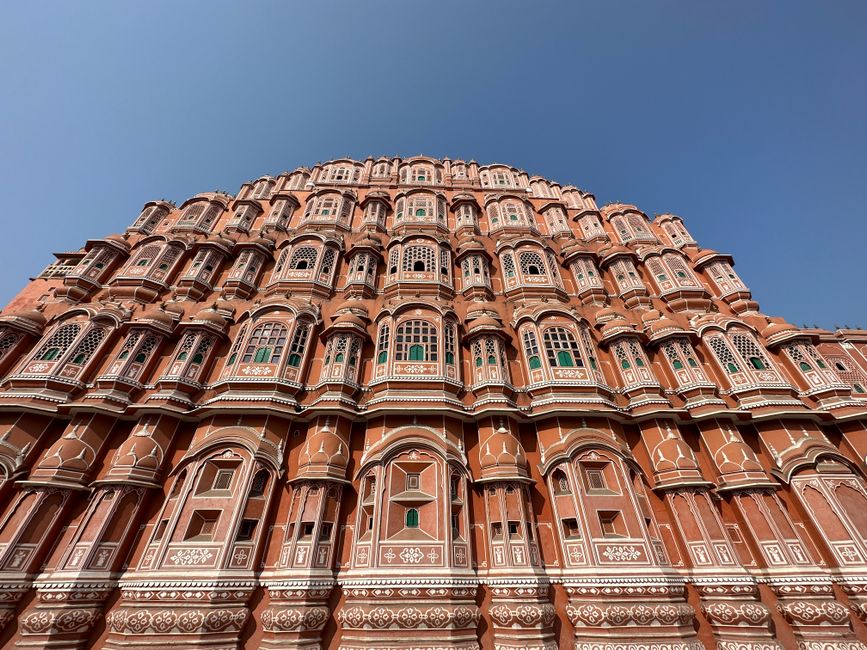
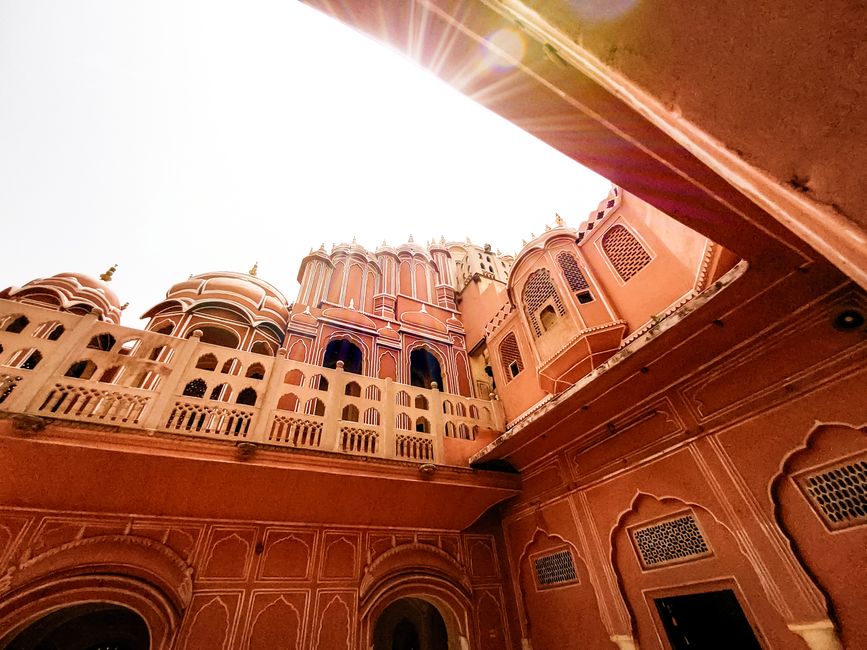
For the best lighting, visit between October and February when the skies are clear and free of summer dust. The golden hour (shortly after sunrise and just before sunset) casts a beautiful warm glow on the terracotta-pink walls of Hawa Mahal and the intricate archways of Patrika Gate.
Plan Your Trip
If you decide to visit during the peak winter months or during major festivals like Diwali or JLF, you must book your trains and accommodation at least three to four months in advance. Premium heritage hotels in the city centre sell out quickly.
Pack layers regardless of when you visit. Even in the sweltering summer, air conditioning on Indian trains and in upscale restaurants is often turned up to freezing temperatures. In winter, a warm jumper and a windproof jacket are essential for early morning auto-rickshaw rides. By choosing the right month for your travel style, Jaipur’s magnificent forts and chaotic, colourful streets will be a highlight of your time in India.