Amber Fort is a magnificent 16th-century hilltop palace located 11 km from Jaipur’s centre. Famous for its intricate Rajput and Mughal architecture, especially the dazzling Sheesh Mahal (Mirror Palace), it is open daily from 8:00 AM to 5:30 PM. Expect to spend 2 to 3 hours exploring the courtyards and ramparts.
If you are planning a trip to Rajasthan, this golden-hued fortress will undoubtedly be on your radar. Built by Raja Man Singh I in 1592, Amber Fort (often called Amer Fort) sits high above the still waters of Maota Lake. It is one of the most spectacular historical sites in the country and a cornerstone of any Jaipur guide.
This guide covers the practical essentials you need to plan your visit. You will find updated ticket prices, advice on navigating the sprawling courtyards, and tips on choosing the most ethical way up the hill.
What is Amber Fort and Why Go?
Before the pink-painted streets of modern Jaipur existed, the Kachhwaha Rajputs ruled their empire from the town of Amer. The fort served as their primary royal residence and military stronghold for over a century, until Maharaja Sawai Jai Singh II moved the capital down to the plains in 1727.
The sprawling complex is built from pale yellow and pink sandstone, combined with gleaming white marble. It is a UNESCO World Heritage site, recognised as part of the Hill Forts of Rajasthan. The sheer scale of the defensive walls, which snake across the surrounding Aravalli hills for kilometres, is breathtaking.
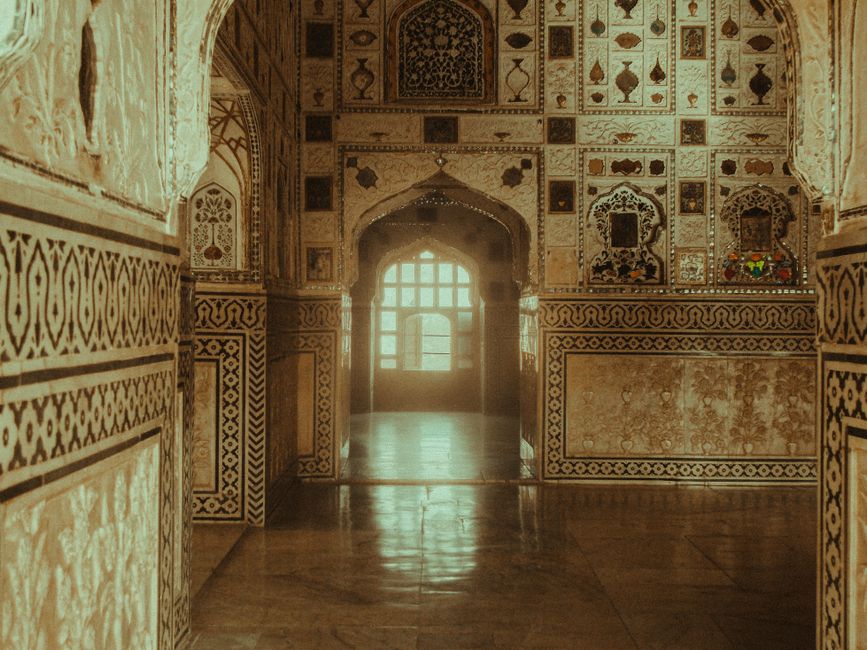
You go to see the seamless blend of Hindu Rajput and Islamic Mughal architectural styles. The fort is divided into four main courtyards, each with its own gate and specific purpose. It offers a rare, well-preserved glimpse into the opulent lifestyle of Rajasthan’s historic rulers.
How to Get There
The fort is located in Amer, roughly 11 km north of Jaipur city centre. The drive takes about 25 to 35 minutes, depending on the chaotic traffic along Amer Road.
- App-based Taxis: Uber and Ola are reliable and cost around $3 to $5 USD each way. Book a return trip or have your driver wait, as getting a ride back from the fort gates can involve heavy haggling with local drivers.
- Auto-rickshaws: A tuk-tuk will cost roughly $4 to $6 USD from the centre. Negotiate the fare firmly before getting in.
- Private Driver: Hiring a car and driver for the day costs between $25 and $40 USD. This is the most efficient option if you are following a full Jaipur Itinerary: How to Spend 1, 2 or 3 Days and want to visit multiple sites without transportation stress.
- Public Bus: AC and non-AC buses run from Hawa Mahal to Amer for less than $1 USD, but they are often crowded and slow.
Tickets, Costs and Opening Times
Ticket prices for Rajasthan’s state-run monuments saw a significant hike in 2026. Always bring a mix of cash and a card, as the digital payment systems at the counter can sometimes lose connection.
| Visitor Type | Amber Fort Ticket Price |
|---|---|
| Foreign Adult | ₹1,000 (approx. $12 USD) |
| Foreign Student (with valid ID) | ₹500 (approx. $6 USD) |
| Indian Adult | ₹200 (approx. $2.50 USD) |
| Indian Student | ₹100 (approx. $1.20 USD) |
Opening hours: The fort is open daily from 8:00 AM to 5:30 PM. There is also a night tourism window from 6:30 PM to 9:00 PM, where the courtyards are beautifully illuminated. Note that some interior rooms are closed during the night session.
Tip: If you plan to tick off the Best Things to Do in Jaipur, ask about the composite ticket at the counter. It covers several major monuments (including Hawa Mahal, Jantar Mantar and Nahargarh Fort) and can save you money if you visit three or more sites over a two-day period.
How Much Time Do You Need at Amber Fort?
Plan for two to three hours to explore the palace complex itself. This gives you enough time to walk through the four main courtyards, admire the intricate mirror work, and take photos of the valley without rushing.
You should also factor in an extra 45 minutes for the journey up the hill from the car park, navigating the ticket queues, and walking back down. If you decide to stay for the evening light and sound show (which requires a separate ticket of around $3 to $4 USD), add another hour to your schedule.
Best Time to Visit
The absolute best time of day to arrive is 8:00 AM, right when the heavy wooden gates open. By 9:30 AM, the large tour buses start rolling in, and the main courtyards become incredibly crowded. Early morning also provides the softest light for photography and keeps you out of the fierce midday heat.
In terms of the calendar year, the winter months from October to February are ideal. Daytime temperatures sit comfortably between 15°C and 25°C (59°F to 77°F), making the steep climb and outdoor exploration much more pleasant. For a detailed breakdown of the weather, check out our Best Time to Visit Jaipur: Month-by-Month Guide.
The Elephant Ride Dilemma: How to Get Up the Hill
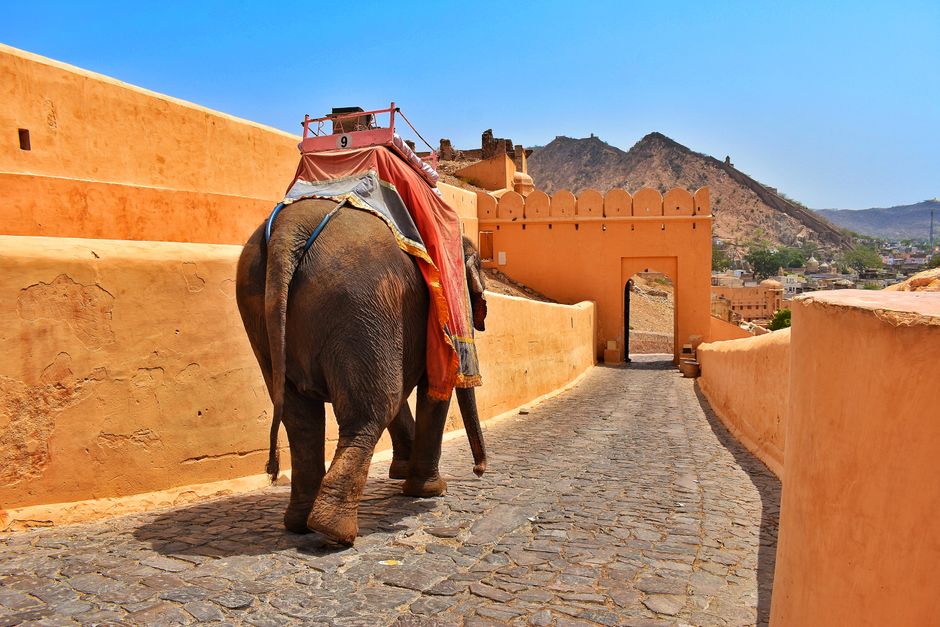
The main entrance to the fort, Suraj Pol (Sun Gate), sits high above the main road. For decades, riding a painted elephant up the steep cobblestone path was marketed as a quintessential royal experience.
However, ethical travel guidelines strongly advise against these rides. The elephants endure long hours on hard surfaces, carrying heavy loads in the heat, and welfare concerns have been raised repeatedly. There are much better, cruelty-free ways to reach the top:
- Walk: The pedestrian path takes about 15 to 20 minutes. It is steep but completely manageable if you have a moderate level of fitness. The views over the geometric gardens in Maota Lake get better with every step.
- Jeep: You can hire a 4×4 jeep from the lower car park for around $6 to $10 USD (shared among passengers). They take a winding back route and drop you near the rear entrance.
- Golf Cart: Small electric carts often run from the base to the main gate for a nominal fee. This is a quick, painless option that avoids animal exploitation.
What to See Inside the Fort
Once you pass through the imposing gates, the fort reveals a series of distinct sections. Jaleb Chowk is the expansive first courtyard where returning armies would display their war bounty to the public. From here, you climb a grand staircase to the Diwan-e-Aam (Hall of Public Audience), featuring a double row of columns topped with elephant-shaped capitals.
As you move deeper, you will encounter Ganesh Pol. This stunning gateway is covered in vibrant frescoes dedicated to the elephant-headed god, Lord Ganesha. Above the gate are intricately carved lattice screens (jalis) where royal women would sit unseen to watch the events in the courtyard below.
The undisputed highlight of the complex is the Sheesh Mahal (Mirror Palace). The walls and ceilings of this chamber are embedded with thousands of tiny, convex mirror fragments. When royal servants lit candles at night, the entire room would sparkle like a starry sky. Look closely at the marble pillars near the base to find the magic flower carving, which reveals different shapes depending on how you cover it with your hand.
Further inside, you will find the Sukh Niwas (Hall of Pleasure). This area used an ingenious ancient air-conditioning system involving water cascading over marble chutes to keep the rooms cool during the brutal Rajasthan summers. Finally, the Zenana (women’s quarters) offers a maze of private chambers surrounding a central courtyard, famously designed so the Maharaja could visit one wife without the others knowing.
Insider Tips and Mistakes to Avoid
Hiring a guide can significantly enhance your visit, as the fort has very little written signage to explain its complex history. Official guides wear ID badges and charge a fixed rate (usually around $5 to $8 USD for a couple of hours). Agree on the price and the exact duration before you start walking.
Watch out for the local monkeys (macaques and langurs) that hang around the ramparts. They are wild animals and can be aggressive if they spot food. Keep all snacks hidden inside your closed bag and avoid holding water bottles loosely in your hand.
Prepare for aggressive hawkers at the lower car park. They will try to sell you umbrellas, turbans, and cheap souvenirs as you walk towards the entrance. A polite but firm refusal and avoiding eye contact is the best strategy.
Carry plenty of drinking water, especially if you are visiting outside the cooler winter months. There are limited places to buy refreshments once you are deep inside the palace complex. Also, the white marble courtyards reflect the sun intensely, so sunglasses and a hat are essential.
What to Combine it With
Because Amber Fort is located well outside the city, it makes sense to bundle it with other nearby attractions. A comprehensive India guide will tell you that the forts of Rajasthan are best seen in clusters to save on transport time.
Directly above Amber sits Jaigarh Fort, originally built as a military structure to protect the palace below. The two are connected by a subterranean passage. You can walk up the tunnel or drive up to see Jaivana, which was once the world’s largest cannon on wheels.
Just a five-minute drive from the fort’s base is Panna Meena Ka Kund, a stunning 16th-century stepwell known for its symmetrical, zig-zagging stairs. It is far less crowded than the fort and makes for incredible photography.
On your way back to Jaipur, ask your driver to pull over at Jal Mahal (the Water Palace). This red sandstone palace appears to float in the middle of Man Sagar Lake. While you cannot go inside, the lakeside promenade is the perfect spot for a quick photo.
If you have the energy late in the afternoon, head up to Nahargarh Fort. It sits on the edge of the Aravalli Hills and offers the best sunset views over the sprawling pink city below.
Plan Your Trip
An early start is the secret to enjoying this magnificent site without the overwhelming crowds. Arrange your transport the night before so you can arrive right at 8:00 AM. Wear comfortable walking shoes with good grip for the uneven stone paths, and skip the elephant ride in favour of a scenic walk up the hill. With a little preparation, exploring this royal stronghold will easily be one of the highlights of your time in Rajasthan.