Welcome to your practical central park guide. Covering 843 acres in the middle of Manhattan, this massive green space requires a bit of planning to navigate effectively. If you want to rent a rowboat, secure the best picnic spot, or walk the tree-lined malls, knowing the layout will save you from exhaustion.
Planning a broader trip? Start with our comprehensive New York City guide and our wider USA guide.
Central Park Guide: The Practical Essentials
Central Park is not just a patch of grass; it is a meticulously landscaped masterpiece designed by Frederick Law Olmsted and Calvert Vaux in the 1850s. Stretching 4 km (2.5 miles) from 59th Street to 110th Street, and 0.8 km (0.5 miles) wide between Fifth Avenue and Central Park West, it is larger than the principality of Monaco.
It remains one of the absolute Best Things to Do in New York City, offering a retreat from the concrete and traffic. You will find woodlands, formal gardens, reservoirs, and performance spaces all within its borders. While it looks entirely natural, almost every hill, lake, and meadow was artificially created, requiring the movement of over three million cubic yards of soil.
Opening Times and Entry Costs
Central Park is completely free to enter. The gates open daily at 6:00 AM and close at 1:00 AM, 365 days a year. While the park itself is free, certain specific attractions inside require tickets.
The Central Park Zoo costs around $20 to $25 for adults. Renting a rowboat at the Loeb Boathouse will set you back about $25 per hour (cash only), plus a deposit. Ice skating at Wollman Rink varies depending on the day and season, usually ranging from $15 to $35 for admission, plus skate rental. Carousel rides cost about $3.50 per person.
How to Get to Central Park
Because the park is so large, your subway stop depends entirely on what you want to see. The subway is the most efficient way to arrive.
- For the Southern End (Zoo, Wollman Rink, The Pond): Take the N, R, or W trains to 59th St-Fifth Avenue, or the A, B, C, D, 1 to 59th St-Columbus Circle.
- For the Middle (Bethesda Terrace, The Lake, Strawberry Fields): Take the B or C trains to 72nd St on the West Side, or the 6 train to 68th St-Hunter College or 77th St on the East Side.
- For the Northern End (Conservatory Garden, The North Woods): Take the 2 or 3 trains to Central Park North-110th St, or the B and C trains to 103rd St or 110th St.
How Much Time Do You Need?
If you are plotting out a New York City Itinerary: How to Spend 1, 2 or 3 Days, allocate at least two to three hours for Central Park. This is enough time to walk a loop through the lower half of the park, taking in the most famous sights without rushing.
| Route | Distance | Estimated Time |
|---|---|---|
| Lower Loop (59th to 72nd St) | 2.7 km (1.7 miles) | 1 to 2 hours |
| Reservoir Loop | 2.5 km (1.5 miles) | 45 minutes |
| Full Perimeter | 9.6 km (6 miles) | 3 to 4 hours |
To walk the entire perimeter or explore the quieter northern half, you would need a full day. Most visitors prefer to tackle the park in targeted chunks rather than trying to see all 843 acres in one go. If you opt for a guided walking or bicycle tour, expect it to last around two hours.
Best Time to Visit
The park transforms dramatically with the seasons. Consulting a Best Time to Visit New York City: Month-by-Month Guide will help you align your trip with seasonal highlights.
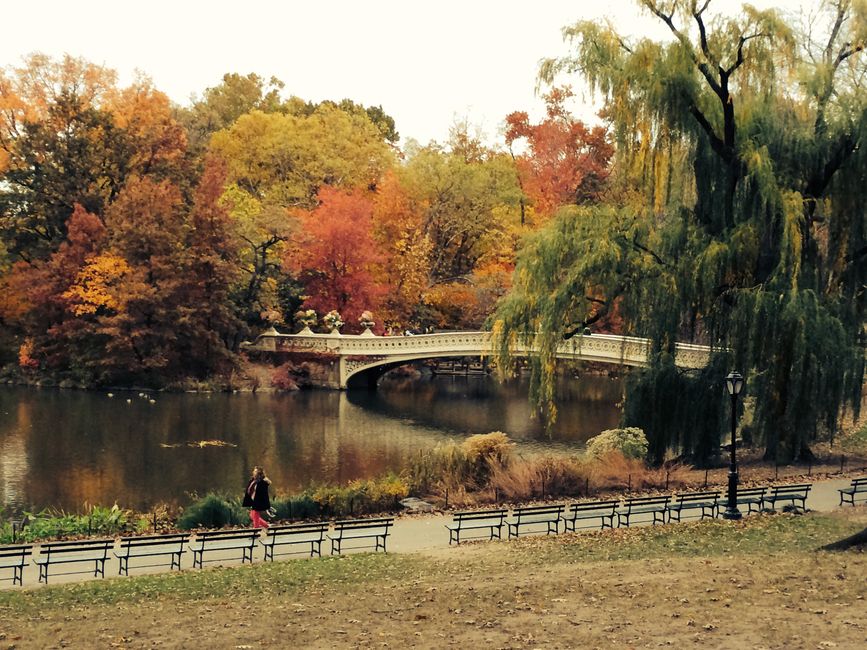
Spring (April and May) brings cherry blossoms, particularly around the Jacqueline Kennedy Onassis Reservoir and Cherry Hill. Temperatures hover around 15°C to 20°C (59°F to 68°F). Autumn (late October to mid-November) offers brilliant fall foliage, best viewed from the Ramble or the Mall, with crisp days around 12°C (53°F).
Summer can be hot and humid, often exceeding 30°C (86°F). If visiting in July or August, go early in the morning before 10:00 AM to beat the heat and the heaviest crowds. Winter is much quieter and colder, but seeing the park blanketed in snow, with ice skaters gliding across Wollman Rink, is a classic New York experience.
Top Landmarks and Areas
Central Park is broadly divided into the South End (busiest, most famous landmarks), the Mid-Park (museums, reservoir), and the North End (wooded, quiet, local). Here is a breakdown of the key sights.
The South End (59th to 72nd Street)
This is the most heavily trafficked area. Start at the Literary Walk and The Mall, a wide, straight pathway lined with towering American elm trees. It is one of the only formal features in Olmsted’s original design and serves as the park’s main promenade.
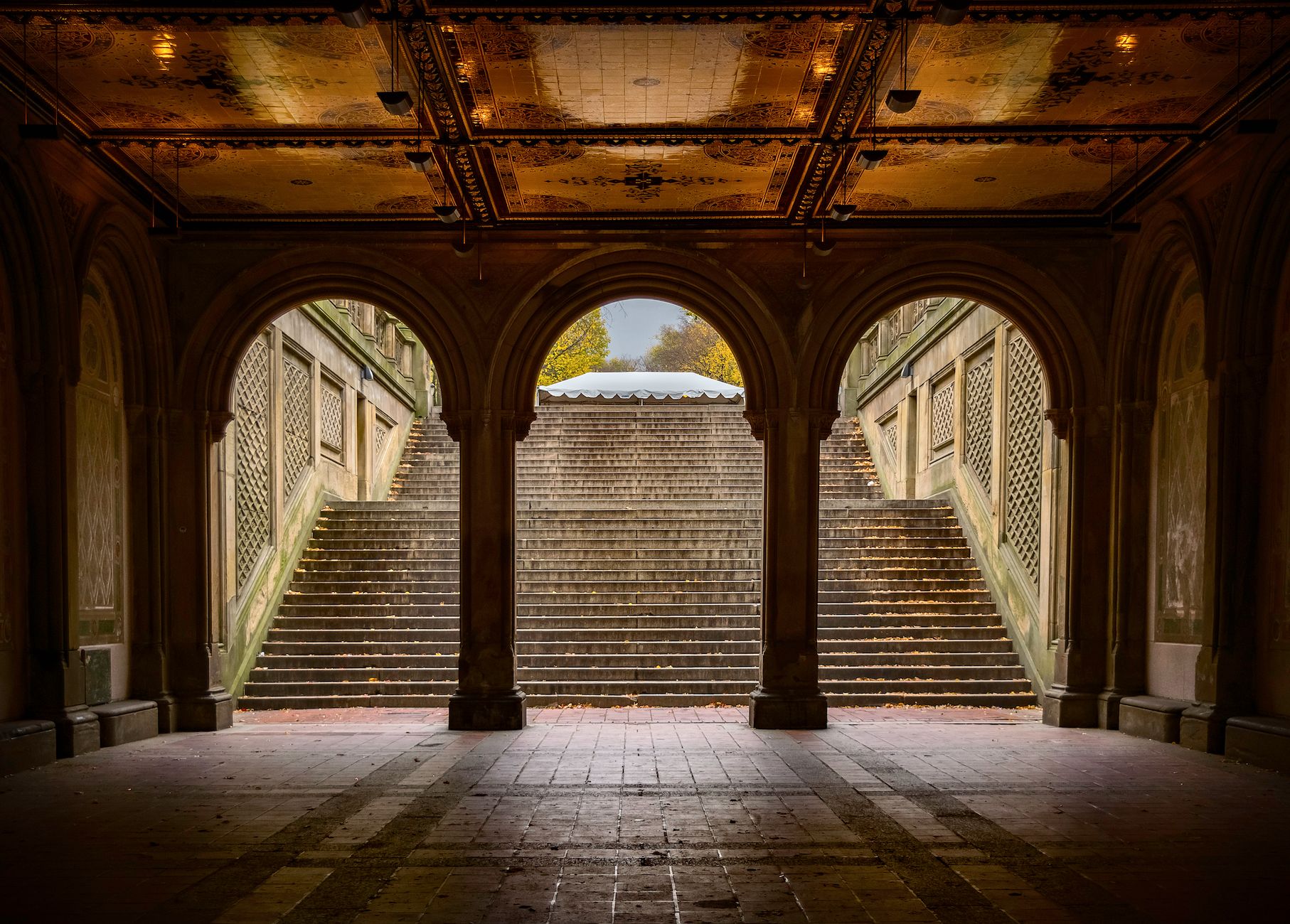
Further north, you will reach Bethesda Terrace and Fountain. Famous for its sweeping staircase and the Angel of the Waters statue, this is the architectural heart of the park. Just west of here is Bow Bridge, the iconic cast-iron bridge spanning The Lake, offering fantastic skyline views.
Near the West 72nd Street entrance lies Strawberry Fields, the teardrop-shaped memorial to John Lennon, located directly across from the Dakota building where he lived. On the eastern side, families flock to the Conservatory Water to sail model boats, flanked by the popular Alice in Wonderland and Hans Christian Andersen statues.
Mid-Park (72nd to 86th Street)
If you want to escape the structured paths, head into The Ramble. This 38-acre woodland maze was designed to feel like the wild forests of upstate New York. It is easy to get lost here, which is entirely the point. It is also a major destination for bird watching.
Overlooking the Ramble is Belvedere Castle. A miniature stone castle built on Vista Rock, it serves as a weather station and offers panoramic views over the Great Lawn and the Delacorte Theater (home to the summer Shakespeare in the Park performances).
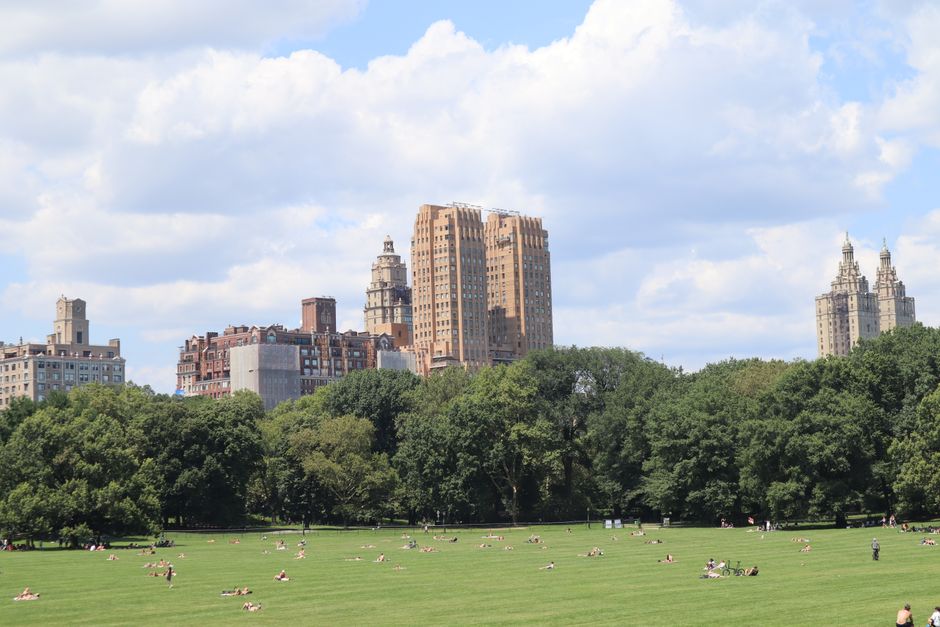
For exercise, the Jacqueline Kennedy Onassis Reservoir provides a 2.5 km (1.5 mile) running track with spectacular views of the Upper East Side and Upper West Side skylines. Note that runners must travel counter-clockwise on this dirt track.
The North End (86th to 110th Street)
Far fewer tourists make it above 86th Street, making it a peaceful retreat. The Conservatory Garden at 105th Street and Fifth Avenue is the park’s only formal garden, divided into French, Italian, and English styles. It is a designated quiet zone, free from runners and cyclists.
In the northwest corner, the North Woods offers rugged trails, waterfalls, and a deep sense of isolation. The Ravine, a steep, stream-cut valley, will make you completely forget you are in the middle of one of the world’s largest cities.
Insider Navigational Tips
Getting lost in Central Park is a rite of passage, but if you need to find your way out, use the lamppost trick. Every cast-iron lamppost in the park has a four-digit number embossed on its base. The first two digits tell you the nearest cross street. For example, if the number is 7214, you are near 72nd Street. The last two digits indicate whether you are on the east or west side: even numbers mean east, odd numbers mean west.
If you plan to cycle, know that bikes are only allowed on the paved loop drives, not on the pedestrian paths. You must ride counter-clockwise. Renting a Citi Bike for short trips between landmarks is often cheaper than hourly rentals from tourist shops, though you will need to dock the bike at stations located just outside the park boundaries.
Mistakes to Avoid
Do not hire a pedicab without agreeing on a clear, total price upfront. Many charge per minute rather than a flat rate, which can result in a bill of hundreds of dollars for a short ride. Always ask for the total cost for your specific route.
Avoid walking in the designated bike lanes on the main loop. Cyclists move very fast, and stepping into the lane without looking is dangerous. Always look both ways before crossing the loop drive.
Finally, do not try to squeeze Central Park into a day where you are already walking miles elsewhere. If you have spent the morning exploring the financial district or securing Statue of Liberty and Ellis Island Tickets, your feet will not survive a three-hour park hike in the afternoon.
Where to Eat Near and In the Park
Food options inside the park are limited and often overpriced. Tavern on the Green and the Loeb Boathouse offer iconic, sit-down dining experiences, but you pay a premium for the setting. For a quick snack, Le Pain Quotidien operates a small cafe near Sheep Meadow. You will also see countless carts selling hot dogs, pretzels, and roasted nuts near the main entrances.
The best approach is to bring your own food. Grab bagels from a local deli, or visit a nearby grocery store like Zabar’s on the Upper West Side, and have a picnic on the Great Lawn or Sheep Meadow. Note that drinking alcohol is technically illegal in New York City public parks, so keep your picnic discreet if you choose to bring wine. For more culinary inspiration, check our What to Eat in New York City: Local Food Guide.
What to Combine With Central Park
Because the park forms a massive rectangle between the Upper East Side and Upper West Side, it pairs perfectly with nearby attractions. If you are deciding Where to Stay in New York City: Best Areas and Hotels, picking a neighbourhood bordering the park gives you easy access to both nature and world-class museums.
The eastern edge of the park runs along Fifth Avenue, known as Museum Mile. You can easily spend a morning in the park and the afternoon at the Metropolitan Museum of Art, the Guggenheim, or the Neue Galerie.
On the western edge, the American Museum of Natural History sits right across the street from the park at 79th Street. Further south, Columbus Circle leads directly into the Broadway theatre district. If you plan your day well, you can finish a park stroll, grab dinner, and use our tips on Broadway Tickets: How to Save to catch an evening show.
If you want to see the park from above, several nearby skyscrapers offer incredible vantage points. Compare the options in our guide to the Best NYC Observation Decks; Top of the Rock provides particularly stunning views looking north over the green expanse.
Plan Your Trip
Central Park is vast, and a single visit will only scratch the surface. Wear comfortable walking shoes, download an offline map on your phone, and do not be afraid to wander off the main paved loops. The beauty of Olmsted’s design is found in the subtle details—the rustic wooden bridges, the sudden clearings, and the quiet lakeside paths.
Because you will be walking extensively, dress in layers. The temperature can drop noticeably when you move from the sunbaked Great Lawn into the shaded, heavily wooded Ramble. Bring a refillable water bottle, as drinking fountains are dotted along all the major running paths and near the restrooms.
If you have extra time in your schedule, consider leaving the city limits entirely. Our guide to the Best Day Trips from New York City offers excellent ideas for exploring the Hudson Valley or Long Island once you have had your fill of Manhattan’s green spaces.