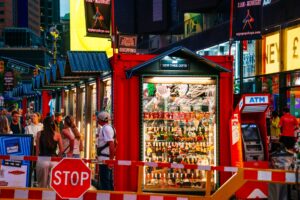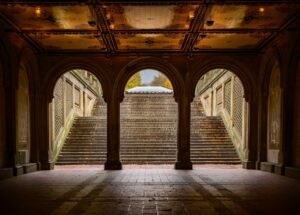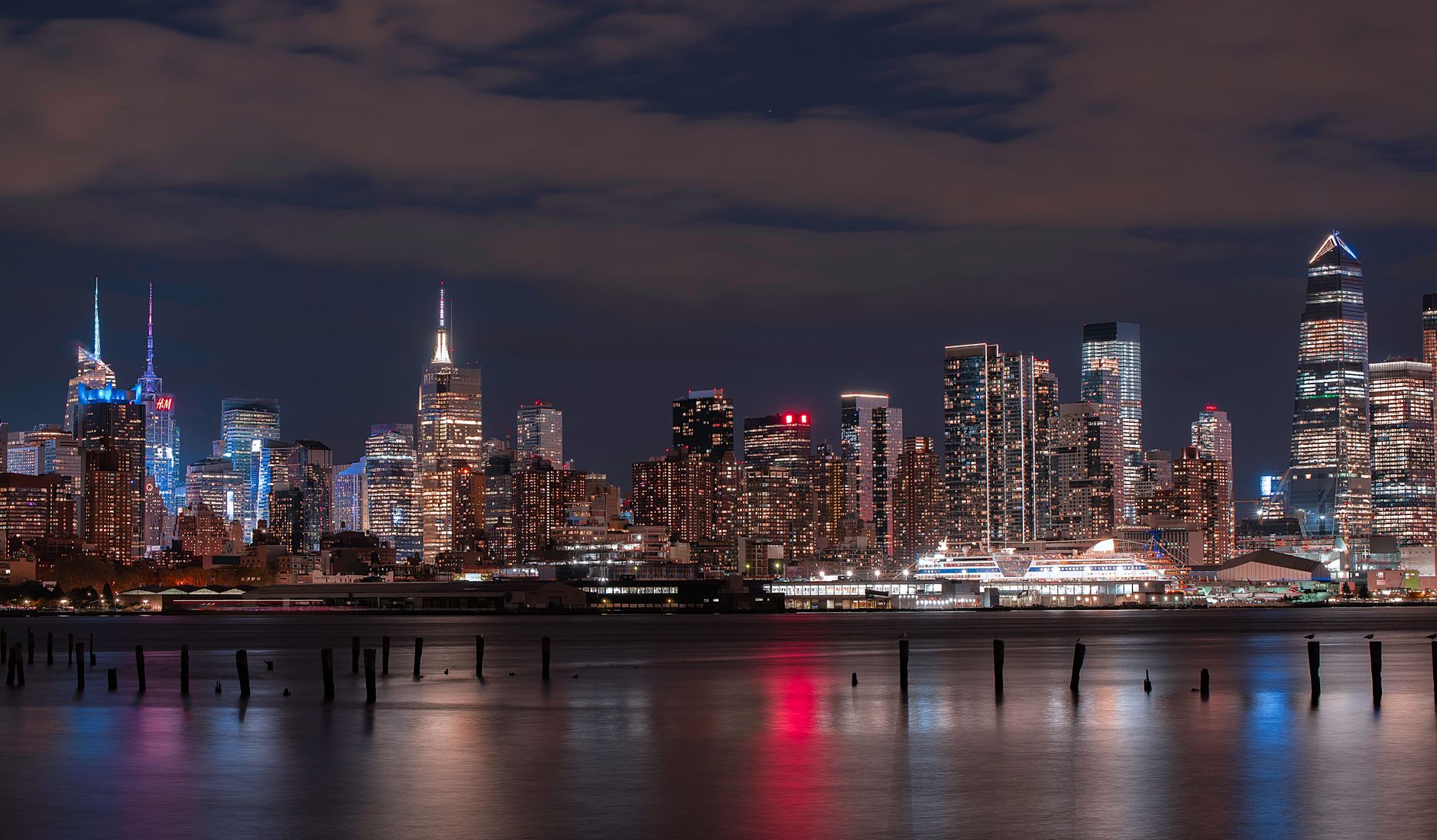
Deciding exactly where to stay in New York City dictates the rhythm of your entire trip. If you want to step out of your hotel and immediately see the bright lights of Broadway, Midtown is your best bet. If you prefer quiet, tree-lined streets and neighbourhood cafes, Greenwich Village or the Upper West Side make far more sense.
New York is massive, and transit times between boroughs can eat into your day. Choosing a base that aligns with your itinerary saves you hours on the subway. This guide breaks down the best neighbourhoods, highlights reliable hotels for every budget, and points out the areas you should skip. For a broader look at planning your trip, start with our full New York City guide and our wider USA guide.
Where to Stay in New York City for First-Timers: Midtown Manhattan
Midtown Manhattan is the beating heart of tourist New York. Stretching roughly from 14th Street up to 59th Street, this is where you will find the Empire State Building, Times Square, Rockefeller Centre, and the Museum of Modern Art (MoMA). For a first visit, staying here means you can walk to many of the headline sights.
The sheer density of subway lines in Midtown is unmatched. Major hubs like Times Square-42nd Street and Herald Square connect you to almost every corner of the city. You can easily catch the N, Q, R, or W trains downtown, or take the 1, 2, or 3 trains up to the Upper West Side.
However, Midtown is loud, crowded, and heavily commercialised. You will not find much of a local neighbourhood feel here, and dining leans heavily towards expensive steakhouses or tourist traps. But for sheer convenience, particularly if you plan to book Broadway tickets or visit the best NYC observation decks, Midtown cannot be beaten.
Area-by-Area Guide: Where to Stay in New York City
If you have visited before, or simply prefer a more residential vibe, Manhattan and Brooklyn offer distinct neighbourhoods that feel worlds away from the neon of Times Square.
Greenwich Village & West Village
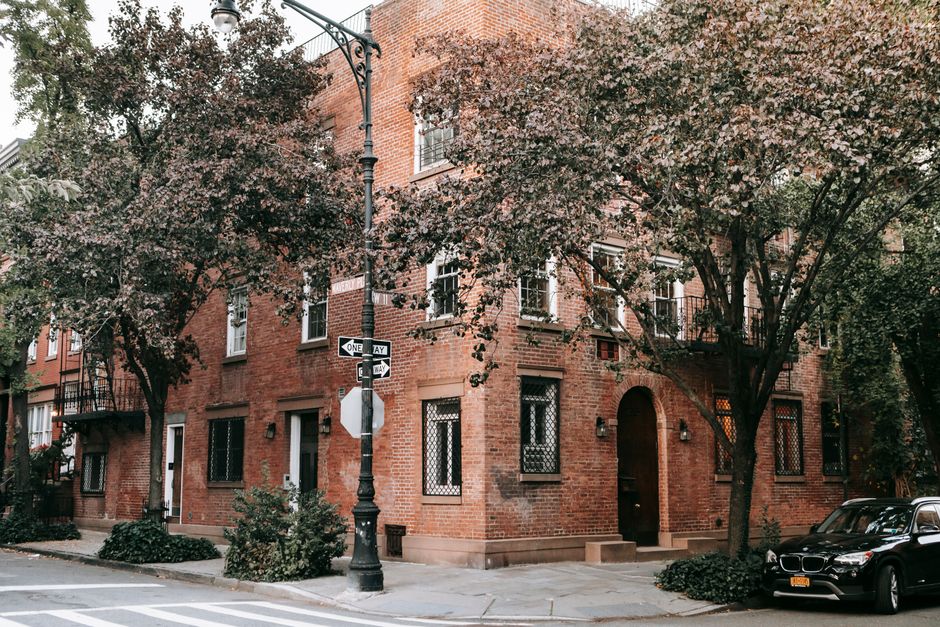
Located below 14th Street, “The Village” is famous for its historic brownstones, diagonal streets, and bohemian history. Centred around Washington Square Park, this area is packed with jazz clubs, independent bookshops, and comedy cellars.
It is arguably the best neighbourhood for dining. If you are researching what to eat in New York City, you will end up here for classic pizza on Bleecker Street or intimate bistro dinners. The main downside is the cost; hotels here are smaller and significantly more expensive.
- Best for: Food, nightlife, and wandering without an itinerary.
- Pros: Beautiful architecture, incredible dining scene, authentic local energy.
- Cons: High hotel prices, smaller rooms, fewer subway lines in the far West Village.
Chelsea & Hudson Yards
Stretching along the west side of Manhattan from 14th to 34th Street, Chelsea is the city’s premier contemporary art district. It is home to the High Line, an elevated park built on a historic freight rail line, and the massive Chelsea Market.
Further north sits Hudson Yards, a gleaming new development with high-end shopping and the Edge observation deck. Chelsea offers a great middle-ground: it is more relaxed than Midtown but more central than the Financial District.
- Best for: Art lovers, architecture enthusiasts, and High Line walkers.
- Pros: Great galleries, excellent food markets, easy access to the west side waterfront.
- Cons: The main avenues (7th and 8th) can be heavily trafficked and noisy.
Lower Manhattan & Financial District (FiDi)
The Financial District, at the southern tip of Manhattan, is home to Wall Street, the 9/11 Memorial, and Battery Park. Because it is primarily a business district, FiDi empties out in the evenings and on weekends. This makes it much quieter than Midtown at night, and hotel rates often drop significantly from Friday to Sunday.
It is highly connected by transit via the Fulton Centre, and it is the perfect launchpad if you need to catch early morning Statue of Liberty and Ellis Island tickets.
- Best for: Budget-conscious travellers and weekend trips.
- Pros: Excellent value hotels on weekends, quiet at night, great subway access.
- Cons: Limited nightlife, many local cafes close by 5:00 PM.
Upper West Side
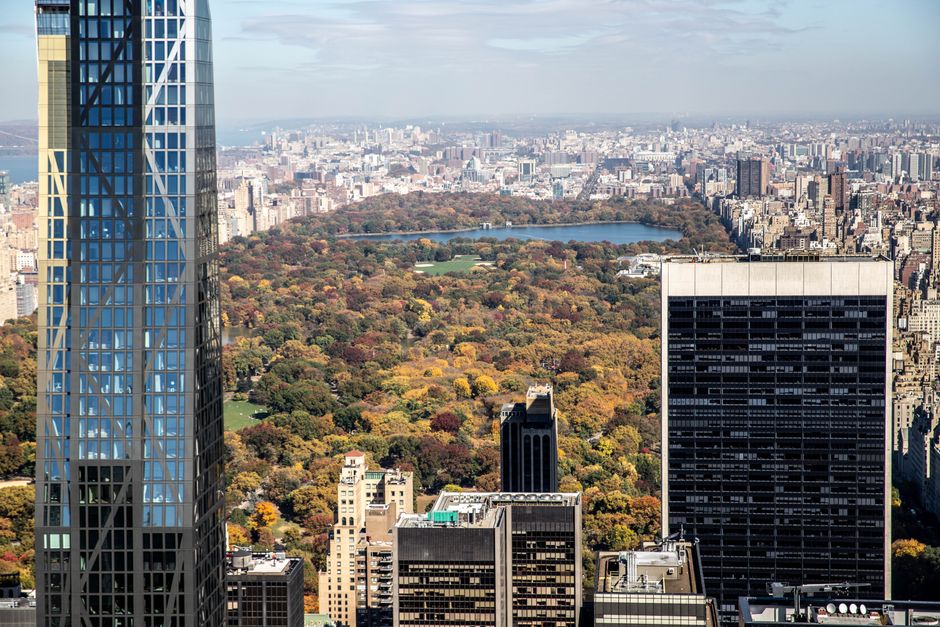
Sandwiched between the Hudson River and Central Park, the Upper West Side (running from 59th to 110th Street) is a classic, wealthy residential neighbourhood. It is home to the American Museum of Natural History, Lincoln Centre, and iconic local grocers like Zabar’s.
If you are travelling with children, this is arguably the best base. The streets are quieter, the pavements are wider, and you have immediate access to our favourite green spaces. Read our Central Park guide to plan your days here.
- Best for: Families, museum-goers, and those seeking a quiet retreat.
- Pros: Very safe, residential feel, immediate park access.
- Cons: Takes 30-40 minutes on the subway to reach Lower Manhattan or Brooklyn.
Williamsburg, Brooklyn
You do not have to stay in Manhattan. Williamsburg, located just one subway stop across the East River via the L train, is Brooklyn’s trendiest neighbourhood. It offers world-class dining, vintage shopping along Bedford Avenue, and vibrant nightlife.
The waterfront parks, like Domino Park, provide spectacular, unobstructed views of the Manhattan skyline. Hotels here tend to be newer, often featuring rooftop pools and spacious lounges.
- Best for: Younger travellers, repeat visitors, and trend-seekers.
- Pros: Incredible skyline views, excellent bars, distinct local culture.
- Cons: You must cross the river to see major Manhattan sights, and the L train gets very crowded.
Best Hotels in New York City by Budget
New York accommodation is notoriously expensive. A standard “budget” room often starts around $150 to $200 per night, while mid-range sits between $250 and $450. Luxury properties easily exceed $600 a night. Here are consistently reliable, well-established options across the city.
Midtown Hotels
- Luxury: The Langham, New York, Fifth Avenue ($700+). Located on 5th Avenue near 36th Street, rooms here are massive by NYC standards, featuring deep soaking tubs and Duxiana beds.
- Mid-Range: CitizenM Times Square ($250-$400). Situated on 50th Street, this high-tech hotel features compact, pod-style rooms with mood lighting, iPad controls, and a fantastic guest-only rooftop bar.
- Budget: Pod 51 ($150-$250). Located on East 51st Street, this micro-hotel offers tiny, efficiently designed rooms. You can choose between private or shared bathrooms to save extra money.
Downtown Hotels (Village, Chelsea, FiDi)
- Luxury: The Beekman, A Thompson Hotel ($500-$900). Located in FiDi, this architectural marvel features a stunning 19th-century nine-story atrium and exceptional dining.
- Mid-Range: Washington Square Hotel ($250-$400). Right on the corner of Washington Square Park in Greenwich Village, this historic, art-deco styled hotel has hosted everyone from Bob Dylan to the Rolling Stones.
- Budget: World Centre Hotel ($180-$250). Located in FiDi, this modern hotel offers floor-to-ceiling windows overlooking the 9/11 Memorial, free hydration stations, and excellent transit access.
Upper West Side Hotels
- Luxury: The Wallace ($400-$700). A recently renovated boutique property on 76th Street offering sleek design, spacious lounge areas, and large bathrooms.
- Mid-Range: Hotel Beacon ($300-$500). Located at 75th and Broadway, this is a rare find because almost every room includes a fully equipped kitchenette. It is perfect for families wanting to cook breakfast.
- Budget: West Side YMCA ($100-$180). Located right off Central Park on 63rd Street. This is bare-bones, hostel-style accommodation with private rooms and shared bathrooms, but guests get access to massive swimming pools and a state-of-the-art gym.
Williamsburg, Brooklyn Hotels
- Luxury: The William Vale ($450-$800). Every room in this striking modern tower features a private balcony. The rooftop pool and elevated public park are major draws.
- Mid-Range: The Hoxton, Williamsburg ($300-$500). Located on Wythe Avenue, this stylish hotel features a bustling lobby, comfortable rooms with brass details, and Laser Wolf, a highly acclaimed rooftop restaurant.
- Budget: Pod Brooklyn ($150-$250). Similar to its Manhattan sister properties, this hotel uses a micro-room concept built around a series of green courtyards and open-air walkways.
Areas to Avoid Staying In
While New York is generally very safe for tourists, some areas are highly inconvenient or unpleasant for a short stay.
Avoid staying on the immediate blocks of Times Square (between 42nd and 47th Streets on 7th Avenue and Broadway). The neon lights shine all night, the pedestrian gridlock is exhausting, and the noise level makes sleeping difficult.
Skip the immediate vicinity of Penn Station and Madison Square Garden (around 34th Street and 8th Avenue). The area is highly transient, gritty, and completely lacks neighbourhood charm. While convenient for trains, it is not a pleasant place to end your evening.
Finally, avoid booking hotels in the deep outer boroughs (like flushing in Queens or South Brooklyn) simply to save money. If you are following a tight New York City itinerary, spending 60 to 90 minutes on the subway each way will quickly ruin your trip.
Neighbourhood Comparison Table
| Neighbourhood | Best For | General Vibe | Avg. Nightly Rate (USD) |
|---|---|---|---|
| Midtown Manhattan | First-timers, Broadway, sights | Bustling, loud, commercial | $250 – $500 |
| Greenwich Village | Foodies, nightlife, wandering | Historic, bohemian, local | $350 – $600 |
| Chelsea | Art galleries, High Line | Trendy, walkable, vibrant | $300 – $550 |
| Financial District | Budget trips, weekend stays | Quiet at night, business-focused | $180 – $350 |
| Upper West Side | Families, park access, museums | Residential, relaxed, classic | $250 – $450 |
| Williamsburg (Brooklyn) | Younger crowds, skyline views | Hip, energetic, industrial-chic | $250 – $450 |
Plan Your Trip
When booking your accommodation, always check the fine print for “destination fees” or “resort fees.” Many New York hotels now add a mandatory $30 to $45 daily charge upon arrival, which covers basic amenities like Wi-Fi and gym access. Factor this into your nightly budget.
Keep the weather in mind. Summer in the city brings high humidity and temperatures around 30°C (86°F), making a hotel with a pool or excellent air conditioning essential. Winter can be bitterly cold. For a detailed breakdown of what to expect, read our guide on the best time to visit New York City.
Book your hotel at least three to four months in advance, especially if you are travelling during the autumn marathon season or the December holidays. Once your base is secured, you can start mapping out the best things to do in New York City or even look into the best day trips from New York City if you want to escape the concrete jungle for a day.